There’s a particular moment many EV drivers describe: the car is silent, the cabin is calm, yet the “front trunk” invites curiosity. People call it a frunk—half convenience, half tease. We think we’re looking at storage capacity, but we’re often watching a design philosophy unfold. EVs with the largest frunks don’t just provide extra space; they rewrite how we imagine everyday carrying—groceries, travel gear, charging cables, even the odd tool kit that always seems to appear at the worst possible time.
This fascination can look simple from the outside. A bigger frunk feels practical. Still, the deeper pull is psychological: it signals clever engineering, an openness to rethinking the mundane, and a new kind of accessibility at the car’s nose. When an EV offers a frunk that feels almost theatrical in volume, it challenges the old combustion-era hierarchy—where the front of the car was mostly machinery, not utility.
Below is a storage-focused comparison of EVs known for their capacious frunks, with an eye on what “largest” truly means. Because frunk size isn’t only about cubic centimeters. It’s about geometry, usability, and the quiet choreography of doors, liners, and compartments.
Why frunks exist in EVs (and why the biggest ones feel different)
Internal combustion vehicles reserve the front bay for the engine and related hardware. EVs, by contrast, typically relocate major components toward the floor and rear or center architecture. That design shift liberates space where drivers once expected complexity but found little convenience.
The largest EV frunks often represent more than “leftover volume.” They’re shaped by packaging decisions that protect high-voltage systems, preserve crumple-zone safety, and maintain cooling pathways. Even the simplest-looking opening is the result of restraint—engineers carving out usable interior space while guarding integrity.
What makes the biggest frunks feel different is that they’re frequently engineered for real-world stacking. The opening height matters. The lip at the edge matters. The way the liner conforms to corners matters. A large number on paper can be less satisfying if the space is oddly angled or cramped at the corners.
Storage capacity vs. storage usability: the hidden measuring tape
When people compare “largest frunks,” they usually think in raw volume. Yet usability is the real metric. A frunk that swallows a suitcase comfortably earns its keep. One that traps items behind a narrow crease becomes a storage puzzle.
Consider three practical factors: load-in clearance, effective base area, and accessibility under cover. Some EVs offer generous volume but require awkward placement because the floor subtly rises toward the center. Others maintain a flatter plane, allowing duffel bags and tote stacks to sit with fewer compromises.
Even the lid mechanism plays a role. A longer opening arc can feel minor until you’re balancing a heavy bag in one hand and trying to avoid scraping your knuckles with the other. Comfort is engineered, not improvised.
Design cues in leading EV frunks: compartments, liners, and the art of organization
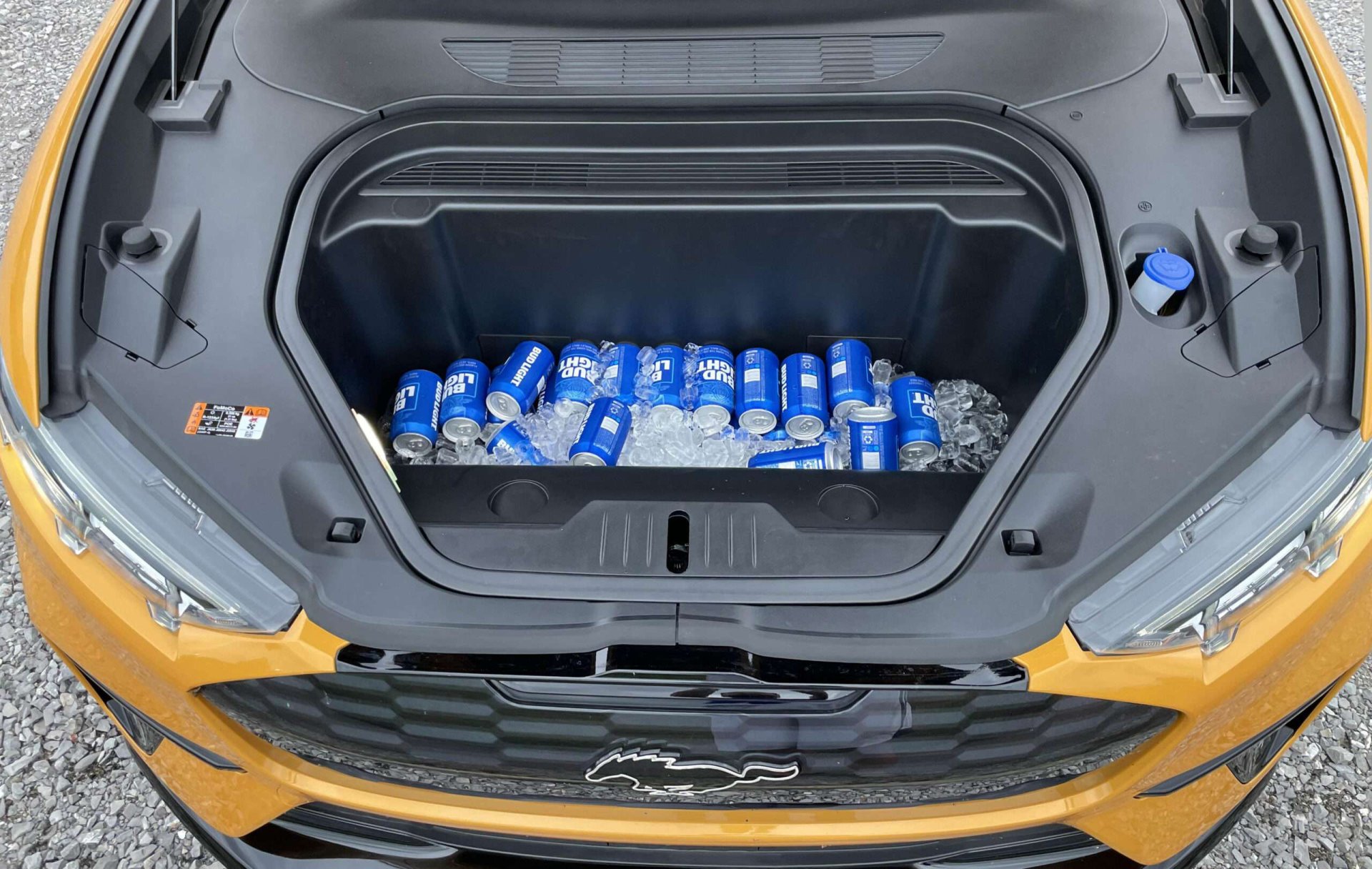
The most impressive frunks often include intentional segmentation—zones that prevent chaos. Instead of treating the whole space as a single bucket, designers create intentional boundaries: bins for charging accessories, anchor points for straps, and shaped sections for first-aid kits or roadside tools.
These features may look like extra details, but they influence daily behavior. People use storage more effectively when items don’t migrate. A frunk that provides tactile anchors encourages spontaneous packing: the driver can drop items in without thinking, then retrieve them without digging.
Even the material matters. A durable, easy-clean liner resists scuffs from shoes, wet umbrellas, and errant hardware. In the largest frunks, where you’re more likely to carry larger objects, surface resilience becomes a quiet advantage.
Top contenders for “largest” frunk storage: what to compare across models
EVs with notably large frunks tend to share a few architectural patterns. First, the front end is packaged to maximize the volume behind the bumper while preserving crumple structures. Second, the EV’s high-voltage and thermal components are positioned to avoid intruding into the storage bay. Third, the frunk cavity often uses the vehicle’s width more effectively—reducing the “wasted” volume that comes from thick central structures.
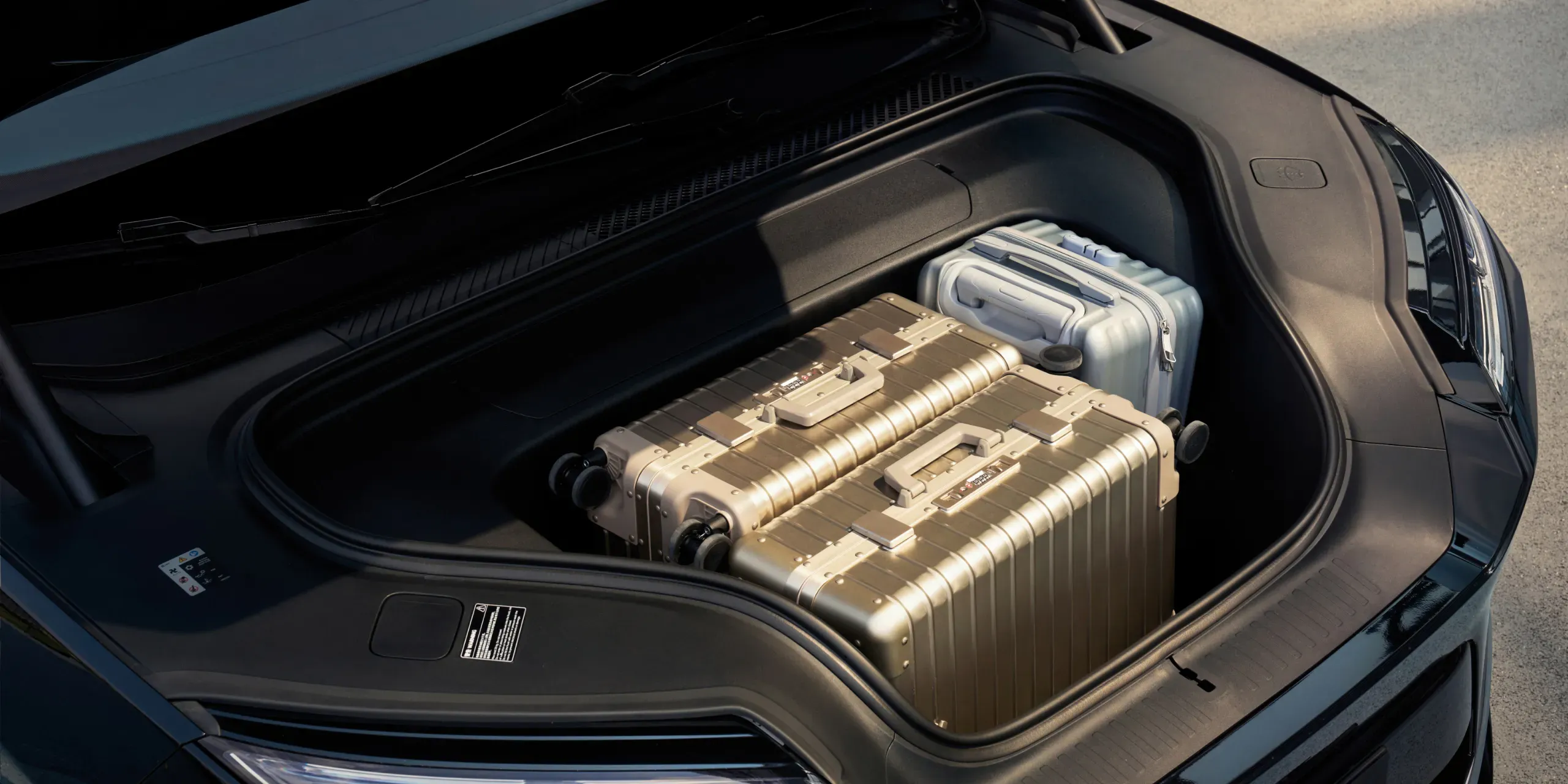
When comparing across models, focus on how the frunk accommodates everyday items. Can you slide in a grocery box without turning it sideways? Can you fit a medium suitcase with wheels? Does the lid close without pressing down on irregular items? These are the tests that reveal the difference between “large on paper” and “large in life.”
Some vehicles are optimized for a clean, minimal look, emphasizing a broad opening and smooth cavity shape. Others lean into modularity—offering deeper compartments and adjustable setups. Both approaches can be impressive, but they cater to different routines.
The “grocery test” and the “road-trip kit” test: real use cases
Imagine the first errand: a weekend shop with two paper bags, one reusable tote, and a box of fragile items. In many cars, this becomes an awkward arrangement. With a truly large EV frunk, you can stage items with separation—keeping delicate packages away from bulkier gear.
Now shift to a road trip. The front trunk becomes a staging ground for cables, adapters, jumper supplies (even if you rarely need them), a flashlight, a spare tire kit, and snacks. A large frunk offers more than space—it offers a sense of readiness. Long before you stop at a charger, you already feel prepared.
The fascination deepens here. The frunk is a tiny theater of preparedness at the front of the vehicle. It makes the EV feel less like a gadget and more like a capable companion.
Frunk constraints: why “largest” still has boundaries
Even the most expansive frunks have limits. The front of an EV must still protect safety zones and manage deformation in a collision. That requirement shapes the outer volume and influences inner geometry.
Thermal systems also constrain packaging. Heat exchangers and cooling pathways may sit near the front corners. Some models route components in ways that steal a little usable space. The largest frunks overcome this through careful placement, but they don’t eliminate constraints altogether.
Another subtle factor is sealing and weatherproofing. Larger cavities sometimes require stronger seals to preserve resistance against water ingress and dust. Strong seals are beneficial—yet they can alter how the lid feels and how liners fit.
How frunk access design changes the experience (not just the size)
A big frunk can still feel frustrating if access is awkward. The best designs anticipate real hands and real gravity. They provide helpful clearance when the lid is open. They reduce the need to twist your body. Some vehicles also integrate opening behavior that feels smooth and predictable.
Then there’s the question of closure effort. A heavy lid can become annoying over time. A well-balanced lid encourages consistent use. When the act of opening becomes effortless, drivers are more likely to rely on the frunk daily—turning it from novelty into routine.
That’s where fascination matures. It stops being curiosity and becomes habitual utility.
Storage strategy: maximizing a large frunk without turning it into clutter
Space invites accumulation. A large frunk is a gift, but it can become a storage black hole if packing is unplanned. A practical approach is to use containers: a flat bin for cables and adapters, a water-resistant pouch for first-aid and essentials, and a tote for daily carry.
Long items require restraint. If you toss a broom handle or ski bag inside without thinking, you might end up blocking other access. Use the front corners intentionally. Reserve the center for broader, flatter items that benefit from full-width placement.
One underrated method is “tiered packing.” Heavier items go deeper and closer to the base. Lighter, softer items sit on top or toward the opening. This reduces shifting and makes retrieval faster.
So, are the largest EV frunks actually worth it?
Yes—especially for people who regularly carry more than they expect. If your routine involves groceries, gear, strollers, sports equipment, or frequent errands, a large frunk meaningfully expands your cargo behavior. It also reduces pressure on the rear seats and trunk space.
But the worth goes beyond utility. Large frunks represent a design mindset: EVs are not merely cars with batteries swapped in. They’re reorganized platforms that dare to make the front practical again. That’s the deeper reason people feel a spark when they see a capacious frunk—there’s a sense of possibility, like the vehicle is quietly offering new options.
Final thoughts: the frunk as fascination made tangible
The biggest EV frunks don’t just store objects. They reframe what the car is for. They transform the front of the vehicle from a mechanical necessity into an everyday asset. When you compare frunks by usability—not only by volume—you start to notice the engineering decisions that shape how life fits inside a silent chassis.
In the end, the largest frunk is less about being “the biggest” and more about being the most accommodating. It’s storage with personality: structured enough to organize, open enough to surprise, and practical enough that curiosity eventually becomes habit.