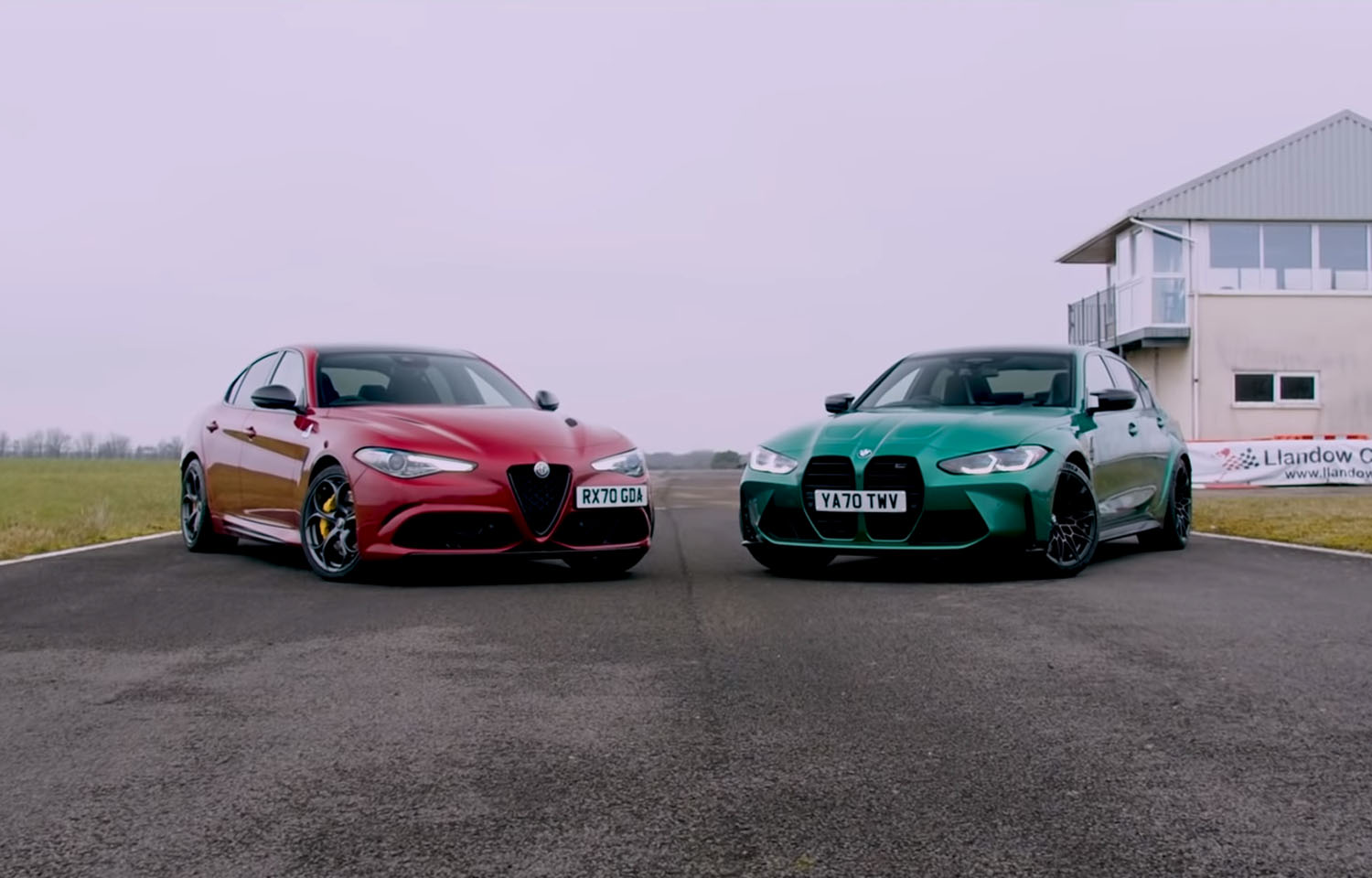
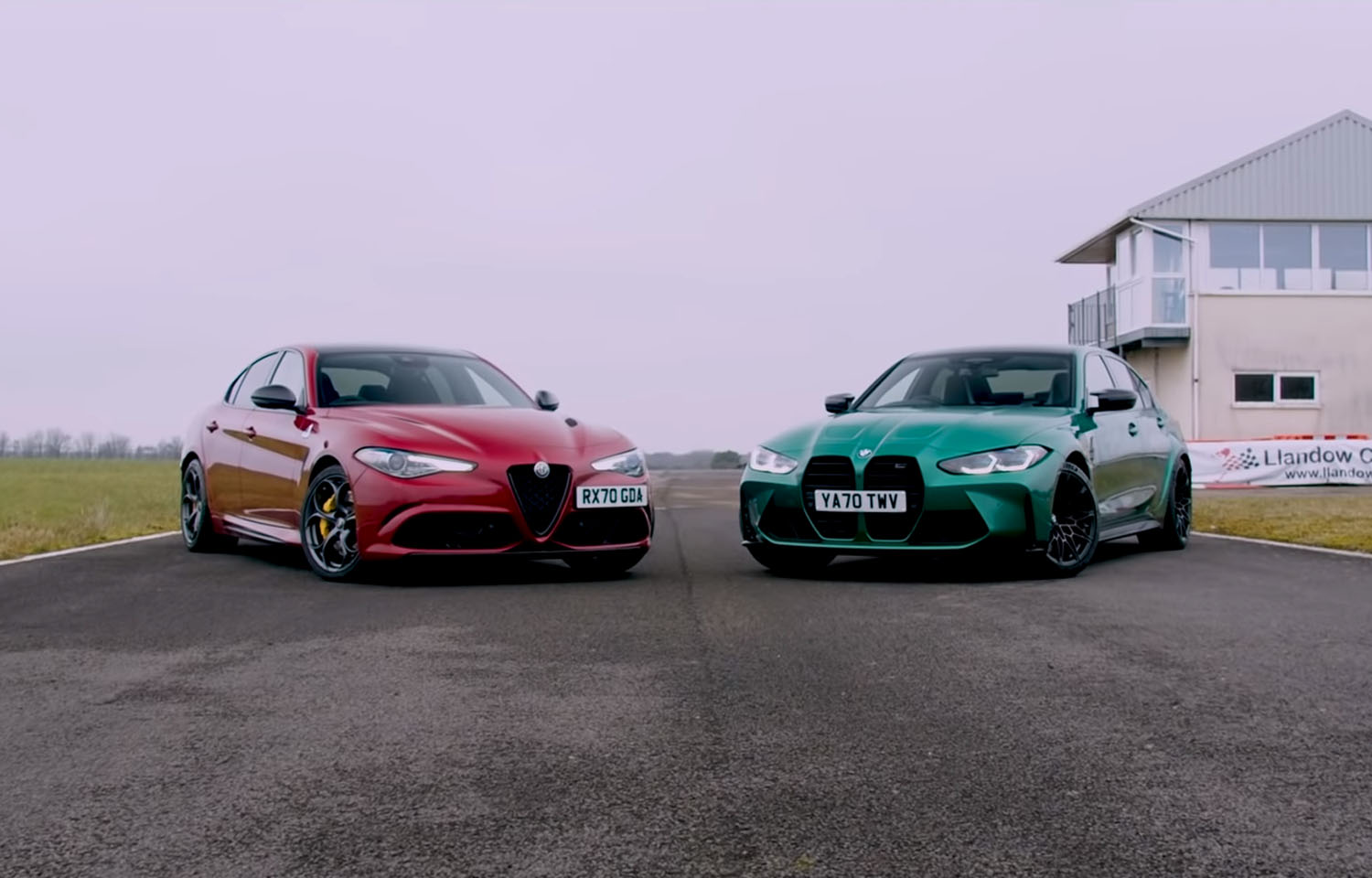
The Alfa Romeo Giulia Quadrifoglio and the BMW M3 arrive at the same intersection of desire: precision, speed, and the kind of steering feel that makes a driver smile before the engine even clears its throat. Yet beneath the shared promise of “sport sedan,” each car follows a different philosophy. The Giulia leans toward theatrical connection—communication through the chassis, a certain Italian exuberance in response. The M3, by contrast, is an exercise in German synthesis: consistency, composure, and a relentlessly adjustable sense of confidence. When it comes to handling, the question isn’t which is faster around every circuit. It’s which feels more alive in the moments between brake and throttle, which one rewards finesse instead of brute force, and which one turns cornering into a conversation rather than a command.
In this comparison, expect a full spectrum of handling topics: steering calibration, balance and weight transfer, ride compliance under load, braking stability, traction strategy, and the way each car behaves when the driving line becomes messy. Along the way, readers will find both quick-hit interpretations and deeper, methodical insights into how these sedans behave at the limit.
Steering Feel: Precision vs. Personality
Steering is where character becomes measurable. The Giulia Quadrifoglio typically presents a weighty, tactile sensation—one that feels stitched to the road rather than simply “reported” by the wheels. You turn in, and the front axle answers with a brisk clarity that can feel almost mischievous. The car’s feedback isn’t merely about weight. It’s about texture: micro-corrections, tire slip cues, and subtle indications of how load is building across the axle.
The BMW M3 often feels more electrically composed, even when it’s doing something genuinely physical. Steering response tends to be highly linear, with the sensation of on-center stability that encourages aggressive late braking and sharper rotation. It’s not usually as overtly emotive as the Giulia, but it can be more predictable—particularly when the pavement texture changes mid-corner.
As a result, drivers who favor “feel-first” inputs may gravitate toward the Giulia. Drivers who prefer “signal-first” predictability may find the M3 easier to drive at the edge repeatedly, lap after lap.
Corner Balance: Rotation and the Art of Weight Transfer
Corner balance is the invisible choreography of handling. As the car turns, weight migrates forward and outward, and the suspension tries to manage that load transfer without letting the tires lose their grip. The Giulia Quadrifoglio often feels eager to rotate once loaded correctly. There’s a sense of balance that rewards committing to the turn-in. If you arrive with too much speed or too abrupt a steering angle, the front can demand correction. But with the right approach, it offers a confident arc through the apex.
The M3’s balance is frequently described as composed and steadfast. It tends to resist the kind of sudden balance shifts that can unsettle less experienced drivers. Rotation is still present, but it may feel more gradual—like the car is inviting you to build momentum rather than snap into the corner. That gradual progression can be a tactical advantage on tracks with heavy braking zones and uneven corner sequences.
In both cars, the best lap depends on managing weight transfer intelligently. The difference is the tone: Giulia can feel more reactive; M3 more methodical.
Chassis Compliance Under Load: Firmness vs. Forgiveness
Handling isn’t only about stiffness. It’s about how suspension compliance interacts with tire contact. The Giulia Quadrifoglio often delivers a firmer, more immediate connection, yet it can still maintain composure over irregular surfaces when driven with smooth intention. Over sharp impacts, the car may transmit a bit more vibration and tire information to the driver, which can be thrilling on a clean track and slightly busy on rough roads.
The M3 typically balances firmness with engineering restraint. Even when the suspension is set to emphasize sport response, the ride character tends to remain controlled. It can absorb impacts without turning them into a dramatic event—useful when you’re dealing with broken asphalt, expansion joints, or the chaotic geometry of real-world driving lines.
This is where different reader expectations come into play. Some will love the Giulia’s “hands-on” immediacy. Others will prefer the M3’s ability to keep the chassis stable so the driver can concentrate on steering angles and throttle modulation rather than surface-induced drama.
Braking Stability: Endurance, Modulation, and Confidence
Braking is handling’s prelude. The initial bite, pedal progressiveness, and stability under deceleration determine how late you can brake and how confidently you can trail your braking into corner entry. The Giulia Quadrifoglio usually offers strong deceleration performance with a pedal feel that encourages modulation. It can feel like it’s asking for a precise, consistent squeeze rather than sudden changes. In spirited driving, that can lead to a controlled, composed nose-down stance.
The BMW M3 often excels in repeatability. The pedal tends to feel predictable, and the car’s stability under threshold braking can inspire a sense of safety. This matters especially when you brake multiple times in quick succession. A driver seeking endurance-style confidence—where the car doesn’t transform into a different personality after a few laps—may appreciate the M3’s steadiness.
For content readers who crave specifics, consider how braking traits influence technique. The Giulia may reward finesse and a smooth transfer of weight. The M3 may enable more aggressive, consistent braking points with fewer “surprises” as tires heat and pads settle.

Traction and Throttle Response: How Grip Is Managed
When you exit a corner, traction becomes a negotiation between drivetrain, tire compound, and traction-control strategy. The Giulia Quadrifoglio is often perceived as quick to translate throttle input into forward motion. It can feel agile at the point where the car transitions from rotation to propulsion. If the driver demands too much too early, the car will communicate traction limits—sometimes with a sharper edge than expected. Yet when throttle is timed well, the grip feels cohesive and purposeful.
The M3 tends to deliver a more “managed” traction experience. It often feels like the system keeps the rear composed even during abrupt throttle changes. That doesn’t mean it’s numb. Instead, it tends to maintain stability so the rear tires remain planted long enough for the driver to maintain momentum through the exit.
Different drivers will notice different things. Enthusiasts may enjoy how the Giulia “teases” the limits. Drivers who prioritize controllability might prefer the M3’s consistent traction behavior, especially in damp conditions or on surfaces with inconsistent grip.
Limit Behavior: Predictability When the Tires Say “No”
Every performance car has a ceiling. Handling excellence is how the car behaves as you approach it. The Giulia Quadrifoglio can feel dramatic near the edge—there’s often an audible, tactile sense that the tires are working hard. When pushed improperly, it may require more active correction to keep it aligned with the intended trajectory. But that reactivity can be a gift for experienced drivers who interpret feedback quickly.
The M3, with its broader stability control calibration and chassis balance, is frequently more predictable at the limit. It can be less theatrical and more reassuring. When traction starts to fade, the car often provides a structured path back to control. That structure is particularly valuable for drivers who want to explore performance gradually rather than abruptly.
For reader expectations, this section matters most. Handling isn’t just the apex. It’s the moment beyond it—the recovery, the steering correction, and the way the car encourages or discourages further aggression.
Driving Experience Across Settings: Sport, Comfort, and Real Roads
Both cars offer dynamic modes and adjustable characteristics, but the way those modes change behavior differs. The Giulia Quadrifoglio often feels more sensitive to configuration choices. Switch between modes and the car’s personality may alter more noticeably—steering weight, throttle mapping, and suspension response can produce a distinct sensation behind the wheel.
The M3 tends to adjust behavior with a more uniform progression. The differences between modes can still be significant, but the car’s baseline composure remains intact. This can make the M3 an easier companion for mixed driving: spirited runs followed by errands, with fewer compromises in the transition.
Real-road handling is a different discipline than circuit handling. Expansion joints, crowned asphalt, and imperfect traction demand a chassis that remains calm. In day-to-day performance, the M3’s consistency can feel like an advantage. On a well-prepared track, the Giulia’s personality can become the feature.
Which Feels Better to Which Driver?
The answer depends on how you define “better.” If you want immediate feedback, a steering sensation that feels more intimate, and a balance that can feel vividly responsive when driven with intent, the Giulia Quadrifoglio may feel like the more engaging partner. If you want repeatable performance, stable braking behavior, and traction that stays calm under pressure, the BMW M3 often delivers a more confidence-centric approach.
Consider your driving habits. Do you prefer precision and consistency, or do you enjoy active communication from the chassis? Are you a smooth-line driver who trails braking deep into the corner, or do you prefer a sharper, more abrupt turn-in and throttle snap? The cars can both satisfy, but they speak different dialects of speed.
Final Verdict: A Handling Comparison in One Breath
Alfa Romeo Giulia Quadrifoglio and BMW M3 both aim for the summit of sport sedan handling, but they take different routes. The Giulia tends to feel more character-driven—interactive, expressive, and keen to reflect your input as a living dialogue. The M3 often feels more engineered for repeatability—stable, confidence-forward, and structured as you press toward the limit.
Choose the Giulia if you want steering and balance that feel intimately connected to the road’s every nuance. Choose the M3 if you want composure, consistency, and a chassis that stays predictable even when conditions become complicated. Either way, you’re stepping into a world where handling isn’t merely measured—it’s felt.