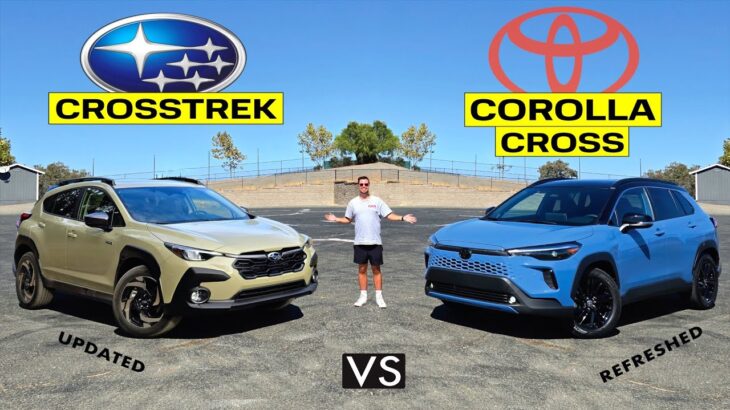
You’ve narrowed it down to two familiar silhouettes in the subcompact SUV arena: the Toyota Corolla Cross and the Subaru Crosstrek. Both promise daily usability, both wear their versatility like a badge, and both can be equipped with All-Wheel Drive. But here’s the playful question that matters: if a puddle of chaos, a gravelly back road, and a sudden winter squall showed up in the same afternoon, which one would you actually trust to keep the momentum on your side?
Consider this a friendly challenge—because choosing between the Corolla Cross and the Crosstrek isn’t just about specs. It’s about temperament. One aims for measured calm and efficient practicality. The other leans into a more instinctive, outdoorsy confidence. Let’s take a thorough walk through the differences, from AWD personality to cabin feel, and from cargo ergonomics to the realities of ownership.
First Impressions: Two Styles, Two Attitudes
The Corolla Cross projects a composed, city-friendly presence. Its styling tends to read as polished and approachable, with surfaces that feel designed for easy visual harmony in everyday life. This is the kind of SUV that looks at home in parking lots, school drop-offs, and quick errands.
The Crosstrek, by contrast, often lands with a more adventurous posture. It carries the vibe of a vehicle that expects to be mischief-adjacent—like it already knows there’s a trailhead within reach. Even when it’s just commuting, it seems to be mentally packing recovery gear.
And that’s the first hint: you’re not only choosing a crossover. You’re selecting a mood. The Corolla Cross favors steadiness; the Crosstrek courts spontaneity.
AWD Reality Check: When the Road Gets Uncooperative
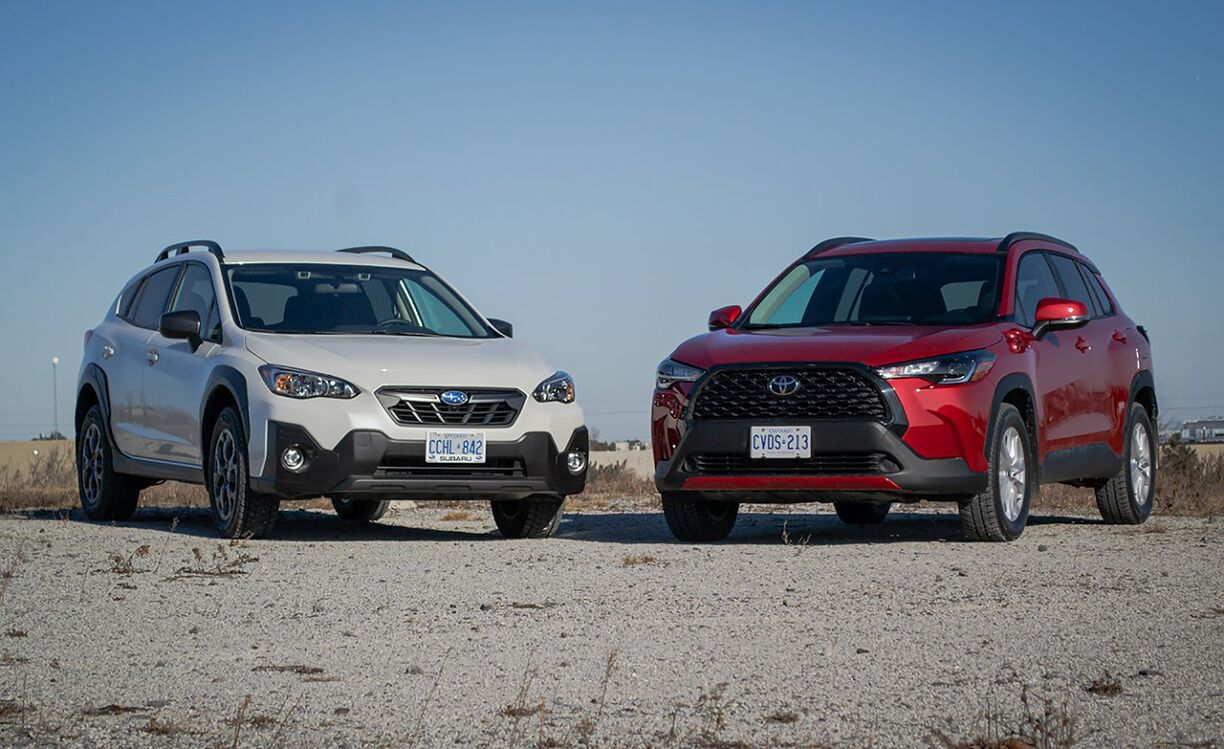
Let’s talk AWD, because it’s the pivot point for many buyers. All-Wheel Drive isn’t merely a badge—it’s a system’s ability to distribute traction when the driving surface turns slick, loose, or unpredictable.
Subaru has built a reputation around its AWD approach, often associated with confident grip across changing conditions. The Crosstrek’s AWD typically pairs well with the sensation of being “on rails” when the pavement loses its manners. You feel it most on wet roads, during snowy interludes, and when you’re cornering on uneven surfaces.
Toyota’s AWD on the Corolla Cross can certainly improve stability and traction compared with a front-wheel-drive setup. It’s practical and confidence-boosting, especially in routine weather. Still, the Crosstrek tends to be the one people reach for when they anticipate frequent challenging terrain—or simply want that reassurance without overthinking the situation.
Playful challenge reminder: which AWD do you want when the road turns opportunistically treacherous?
Powertrains and Drivability: Smooth Effort vs Responsive Instinct
Both vehicles are designed for everyday driving, not drag-strip heroics. Yet they can feel meaningfully different in daily motion.
The Corolla Cross tends to deliver a calm, efficient driving experience—an “open-road quietly” kind of character. The throttle responses often feel linear and predictable, which can be a relief in stop-and-go traffic. Short drives feel uncomplicated. Long drives feel less fatiguing.
The Crosstrek is often more eager to react. It can feel more alert when you merge, climb, or adjust speed quickly. That responsiveness becomes particularly noticeable when roads are less cooperative—where traction shifts and the vehicle’s behavior needs to feel trustworthy, not merely compliant.
Translation: the Corolla Cross leans toward serenity. The Crosstrek leans toward agility.
Handling and Ride Quality: Composure or Character
Subcompact crossovers live in a balancing act: ride comfort vs control, stability vs surfacing imperfections. Here, the Corolla Cross often aims for smoothness and straightforward handling. Its suspension tuning tends to keep most daily impacts from feeling dramatic. Road imperfections are filtered rather than flaunted.
The Crosstrek often exhibits a slightly more rugged-bent demeanor. It can feel better suited to broken pavement, rougher roads, and situations where the “fast lane” ends sooner than expected. Some drivers love this because it creates a sense of preparedness.
So the question becomes: do you want a ride that feels like it’s smoothing out the world, or one that feels like it’s ready to wrestle with it?
Ground Clearance and Trail Credibility
Ground clearance is one of those specs that turns into a real-world advantage more often than people expect—curbs, driveway approaches, washboard roads, and uneven parking structures can all become surprise obstacles.
The Crosstrek frequently carries a more outdoors-forward credibility, with ground clearance and styling cues that suggest trail readiness. It’s the type of vehicle that feels less awkward when the route deviates from the paved plan.
The Corolla Cross is still capable, especially for typical suburban driving and moderate detours. Yet it usually feels more optimized for the “mostly paved” reality of everyday life.
If your lifestyle includes frequent gravel, dirt access roads, or winter ruts, the Crosstrek’s stance may feel less like a marketing story and more like a practical benefit.
Interior Comfort and Ergonomics: Who Feels Better After an Hour?
Inside, both vehicles prioritize usability. But the vibe changes.
The Corolla Cross often emphasizes simplicity and intuitive layout. Controls feel logically placed, and the cabin can feel uncluttered—an underrated virtue for long days. The overall impression is “easy living,” with materials that aim to be durable and low-drama.
The Crosstrek tends to offer an interior that feels more adventure-oriented, especially in how it invites a slightly rugged, outdoorsy lifestyle. Sightlines can be encouraging, and the driving position often feels supportive, like it’s built for scanning the road ahead with intent.
Try this test: imagine your next hour-long drive. Which cabin makes you forget about the vehicle more quickly?
Technology, Infotainment, and Practical Features
Infotainment systems are the modern campfire—people gather around them, debate them, and rely on them. Both the Corolla Cross and the Crosstrek come equipped with modern connectivity features, but the experience depends on trim and year.
What matters most is the usability: screen responsiveness, the clarity of menus, and how quickly you can access navigation and audio without performing a cognitive scavenger hunt.
Beyond the screen, check practical features like driver-assistance tech, USB ports, and storage compartments. The Crosstrek often appeals to buyers who want straightforward, outdoors-ready convenience. The Corolla Cross often appeals to buyers who want smooth daily integration.
In short: both can stay technologically relevant, but their “default personality” differs.
Safety and Confidence: The Long Game
When people buy AWD, they’re not only planning for fun—they’re planning for the unpredictable. Safety systems, crash protection engineering, and driver-assistance technologies become especially important when weather conditions degrade visibility or traction.
Both vehicles typically offer a suite of driver-assistance features that help reduce workload and improve situational awareness. Yet your comfort level will come down to how well the system behaves in real driving—how smoothly it alerts, how consistently it assists, and how intuitive the interface feels.
Confidence isn’t just about accident avoidance. It’s about feeling calm before things happen.
Cargo Space and Daily Utility: Suitcases, Groceries, and Life Stuff
Subcompact SUVs are often evaluated like Tetris boards: can you fit the week inside? Both models are designed to handle everyday cargo with reasonable practicality.
The Corolla Cross generally offers a straightforward cargo layout that works well for groceries, shopping bags, and school gear. It’s the sort of utility that feels uncomplicated and easy to live with.
The Crosstrek can be slightly more appealing for owners who carry outdoor items—coolers, equipment, or luggage intended for imperfect roads. Its packaging often matches that identity, making it feel ready for gear-heavy plans.
Here’s the challenge again, this time with a bag test: which vehicle makes your typical load feel easier to organize and access?
Fuel Economy and Ownership Costs: Efficiency vs Enthusiasm
Driving costs add up, and AWD can influence fuel consumption. The Corolla Cross typically emphasizes efficient day-to-day operation, which can mean less time thinking about fuel and more time doing what you meant to do.
The Crosstrek can be slightly less efficiency-focused depending on powertrain and driving conditions, especially if you explore rougher routes. But some buyers accept that trade-off because the payoff is a more capable feel in varied environments.
Ownership confidence includes more than fuel: maintenance schedules, parts availability, and the overall durability reputation both brands aim to deliver. It’s wise to compare trim availability, warranty coverage, and local service support for your region.
Which One Should You Choose?
If your world is mostly paved, your commutes are frequent, and you want an AWD-enabled crossover that prioritizes calm predictability, the Toyota Corolla Cross is an excellent candidate. It’s approachable, efficient, and designed to feel easy from the first drive.
If your priorities lean toward real-world traction confidence, a more outdoorsy presence, and a vehicle that seems prepared for messy roads, the Subaru Crosstrek is often the more instinctive match. It tends to invite adventure with a steadier sense of “go ahead.”
And now, the final playful question—make it a challenge to your next test drive: which one makes you grin just a little as you turn out of the parking lot, knowing the road ahead might not be perfectly friendly?
Outro: The Best AWD Partner Isn’t the Same for Everyone
The Corolla Cross and Crosstrek both bring AWD potential and everyday practicality, but they’re tuned for different kinds of drivers. One offers measured comfort and simple efficiency. The other offers a more adventure-ready sensibility and traction confidence that feels instinctive.
Choose based on your actual routes, your weather realities, and your lifestyle rhythm. When the road gets surprising, the “right” SUV won’t just match your needs—it will match your mindset. And that’s the real showdown.