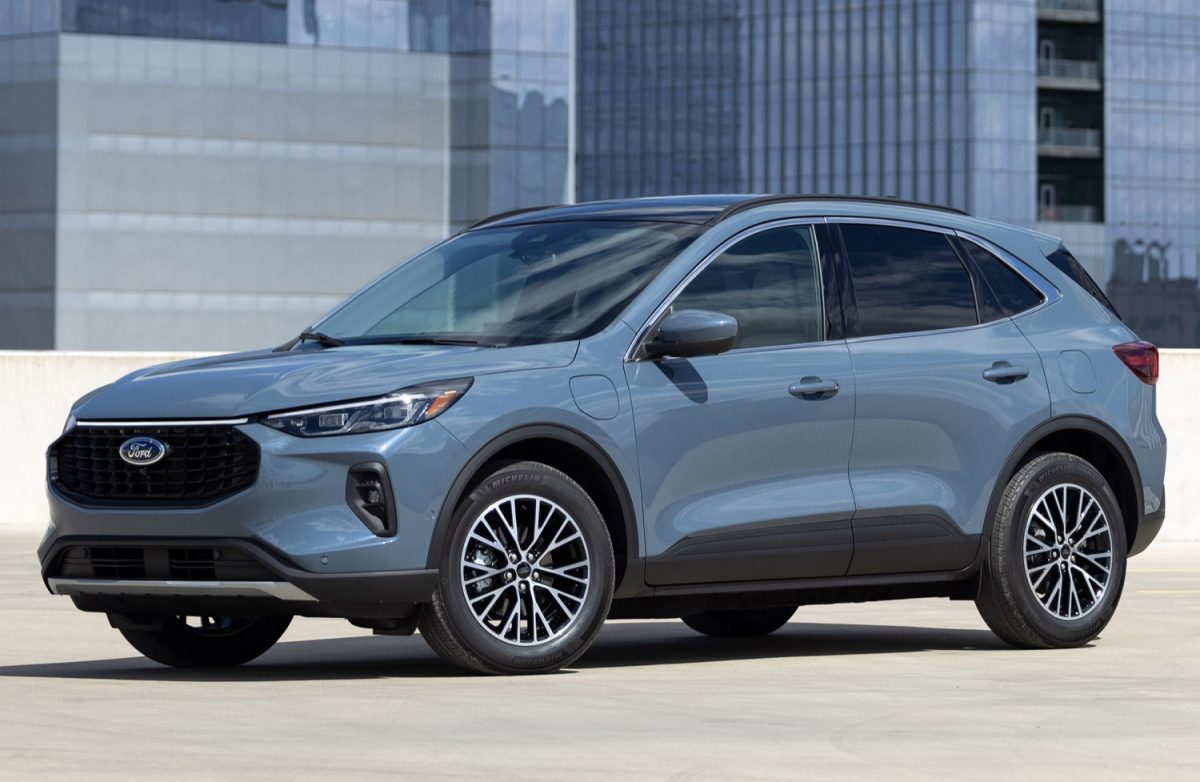
The Ford Escape has always worn practicality like a tailored jacket—unfussy, versatile, and ready for the daily commute as easily as it handles weekend detours. Yet the world has begun to shift beneath it. Batteries are no longer a niche curiosity; they’re becoming the new mainstream language of mobility. So here’s a playful question to tug at the edge of the curtain: could an electric Ford Escape be on the way? The idea has the scent of possibility. And it also carries the weight of a potential challenge.
Because when an automaker reshapes a familiar nameplate, the changes can be exhilarating—or disorienting. Electric drivetrains bring a different rhythm to driving, a different ecosystem of charging, and a different set of expectations from customers who want convenience without compromise.
Why the Escape Is Positioned for an Electric Glow-Up
The Escape sits in a sweet spot: it’s compact enough for city parking negotiations, but capable enough to handle errands, road trips, and everything in between. That “do-it-all” temperament is exactly what electric vehicles need to succeed in the mass market. Many buyers want electrification to feel natural, not like a technical homework assignment.
An electric Escape would likely inherit the model’s strengths—comfortable packaging, sensible infotainment, and the kind of daily usability that doesn’t demand heroics. Electric powertrains also tend to deliver instant torque, turning everyday merging and stoplight starts into something quietly thrilling. Short bursts. Smooth pull. A sense of ease.
And yet, ease can be deceptive. The question isn’t only whether electric technology can fit inside Escape-sized form factors. The real question is whether the entire experience—range expectations, charging behavior, and ownership confidence—can stay as frictionless as the Escape’s traditional persona.
The Electrification Spectrum: PHEV First or Full EV?
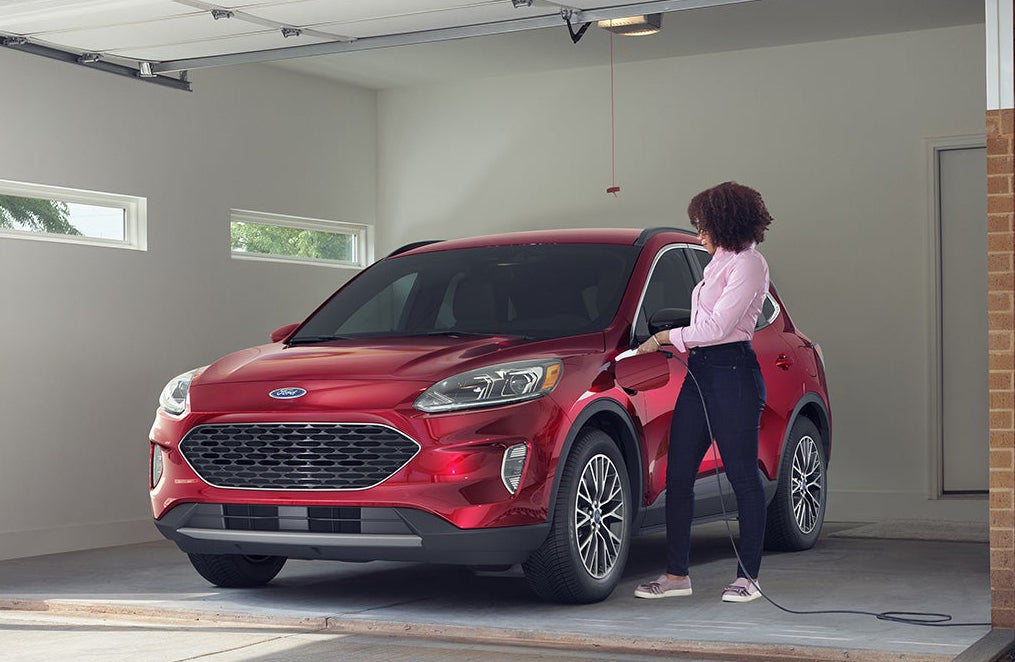
Before an all-electric Escape arrives, the industry often travels the layered road of electrification. Plug-in hybrid electric vehicles (PHEVs) can bridge the gap for drivers who are curious but cautious. They offer an “electric-first” lifestyle while retaining the safety net of conventional power.
A PHEV Escape could be an intermediary stepping stone—less dramatic in daily logistics, more forgiving for longer trips, and easier to adopt for households where charging is inconsistent. It can also help an automaker refine the calibration of energy management: how the vehicle decides when to lean on electric power, when to invoke the engine, and how to prevent the driving experience from feeling like two personalities fighting in the same suit.
But there’s the challenge—one that doesn’t sound dramatic until it becomes frustrating. If a PHEV provides only partial electric utility, drivers might feel tugged in two directions. The electric experience may be inconsistent, and that inconsistency can dilute enthusiasm. For some buyers, predictability is everything.
Meanwhile, a full EV Escape would be the cleanest statement: one drivetrain, one operating philosophy, and a charging routine that—over time—becomes habit. It would also demand more upfront alignment with customer needs: accessible charging at home or work, realistic range planning, and a clear understanding of charging speeds under different conditions.
Range Reality: The Silent Deal-Maker
Range is the talisman customers clutch when they evaluate electrification. But range isn’t just a number on a spec sheet. It’s a behavioral contract. It’s how the vehicle performs when the weather turns moody. It’s how efficiently it manages highway cruising. It’s whether the battery can preserve warmth, reduce energy waste, and still deliver the “I can get there” confidence.
An electric Escape would need to translate efficiency into everyday assurance. A practical EV for the masses should feel like a reliable companion, not a math problem. The vehicle’s thermal management matters. Tire selection matters. Even the design of the cabin and aerodynamic details can become quiet heroes.
Then comes the challenge: range anxiety is rarely about distance alone. It’s about uncertainty. If charging stations are sparse, or if reliability fluctuates, the driver’s mental load increases. An Escape could be an excellent EV technically—and still stumble if the ecosystem around it doesn’t feel dependable.
Charging: Convenience vs. Chaos
Charging is where electrification can become either seamless or mildly chaotic. If an electric Escape targets mainstream buyers, it must fit into real-world schedules. Home charging offers consistency, turning overnight time into tomorrow’s mobility. But not everyone has a driveway, garage, or easy access to a power source.
For apartment dwellers and renters, public charging availability becomes the make-or-break variable. Reliability, pricing transparency, and connector compatibility all matter. Even the simplest question—will the charger be working when it matters?—can determine whether an owner feels empowered or stranded.
Ideally, Ford would pair any electric Escape strategy with thoughtful charging guidance: intuitive routing, clear battery preconditioning suggestions, and charging estimates that don’t feel like guesses. Short sentences can carry a lot of reassurance here. “Arrive with margin.” “Charge time in context.” These aren’t marketing lines. They’re emotional safety rails.
Performance and Driving Feel: Instant Torque, Adjusted Expectations
Electric power changes the sensation of driving. Acceleration can feel like an invisible hand gently but firmly pushing you forward. That can make the Escape feel more responsive than drivers expect from a compact SUV.
However, there’s a nuance worth considering: not every driver wants the same kind of smoothness. Some prefer a more gradual throttle mapping, others like a sharper response. Brake feel matters too, especially with regenerative braking. Regeneration can be effective and efficient. It can also take a little adaptation—like learning a new rhythm for the same song.
A well-tuned electric Escape would likely aim for “naturalness.” It should mimic familiar patterns while delivering the distinct benefits of electricity. The steering calibration, suspension behavior, and tire compliance will all determine whether the vehicle feels like a true Escape, just powered differently.
Design and Interior: Familiar Form, Futuristic Function
One of the biggest concerns with an electric variant is the risk of overcomplication. EVs can arrive with dense interfaces and too many settings. But the Escape’s heritage suggests a different approach: usability, not overload.
A smart electric Escape would keep the cockpit intuitive—clean controls, legible displays, and an experience that feels calm even when technology hums in the background. The battery packaging should also respect interior space. Buyers care about cargo room and rear-seat comfort more than they care about engineering diagrams.
And then there’s the playful paradox. Electric drivetrains can reduce mechanical noise, making the cabin feel more refined. Yet electric vehicles also introduce new “sounds” in the form of fan systems and alert tones. The challenge is to make those sounds discreet. To let the cabin remain a quiet refuge rather than a techno theater.

The Potential Challenge: Manufacturing, Pricing, and Ownership Confidence
Even if an electric Escape is technically plausible, the real-world challenge is economic and logistical. Electric vehicles often carry higher upfront costs due to battery production and supply chain complexities. If the price rises too quickly, the Escape’s core audience may hesitate.
Ford would need to balance cost with value. That means not only the car’s sticker price but also the total cost of ownership: insurance considerations, maintenance expectations, tire wear, and charging expenditures. Electric vehicles can reduce some routine service needs, but they also introduce different considerations, such as battery-related warranties and diagnostics.
Ownership confidence is an emotional commodity. People want clarity. They want to know that if something goes wrong, service support is reachable and parts are available. They want warranty coverage to feel like protection rather than fine print.
There’s also a subtler challenge: consumer education. Drivers who are “electric curious” need guidance that doesn’t sound like a technical lecture. Simple explanations, realistic comparisons, and practical tips can turn skepticism into comfort.
So… Is an Electric Escape on the Horizon?
The question remains playful, but the signals in the market are serious. Electrified lineups are expanding, and consumer interest keeps climbing. An electric Ford Escape would fit naturally into that momentum, especially given the model’s mainstream appeal and the opportunity to deliver a smoother, more effortless driving experience.
Yet the road from possibility to reality includes obstacles: range credibility, charging accessibility, pricing discipline, and the need for an experience that feels familiar even as the drivetrain changes. If those hurdles are handled thoughtfully, an electric Escape could become less of a novelty and more of a new default.
In the end, the Escape’s power has always been adaptability. If Ford can match that adaptability with a charging-friendly, everyday-electric lifestyle, the electric variant wouldn’t just be “on the way.” It would be ready.
And until the next official announcement lands, the playful question lingers—because sometimes the best way to imagine the future is to ask whether the familiar can evolve into something delightfully different.