There’s a particular rhythm to highway commuting: the steady drum of tires on asphalt, the cadence of merge lanes, and the brief, ever-present question—“What if traffic changes faster than I do?” The 2025 Nissan Rogue with ProPILOT Assist aims to answer that question with a calm, anticipatory presence. Not by replacing the driver, but by acting like a vigilant co-pilot for the long stretches between errands, meetings, and family obligations. In this review, the focus stays on what matters during real drives: how ProPILOT Assist behaves when the road is routine, when it becomes chaotic, and when the commute demands patience.
The best part of a commuter-focused assist system is how it disappears into the background when conditions are favorable. The next best part is how it helps you recover when conditions turn unpredictable. Below, you’ll find what readers can expect to learn—from system fundamentals and everyday usability to practical scenarios, limitations, and the kind of confidence that feels earned rather than marketed.
What ProPILOT Assist Does on the Highway
ProPILOT Assist is engineered for highway life, where sustained speeds and lane geometry create opportunities for assistance. At its core, it blends driver-assist technologies to support tasks such as maintaining a lane and managing speed relative to traffic. The result is less “micro-management” of driving and more “maintained awareness,” especially when traffic flows in predictable bands.
Think of it like cruise control that learned manners. Instead of simply holding a set speed regardless of what’s ahead, it adapts. When vehicles in front slow down, the Rogue tends to respond smoothly. When they move again, acceleration is typically restrained and deliberate—helpful in keeping the commute from feeling jerky or overly dramatic.
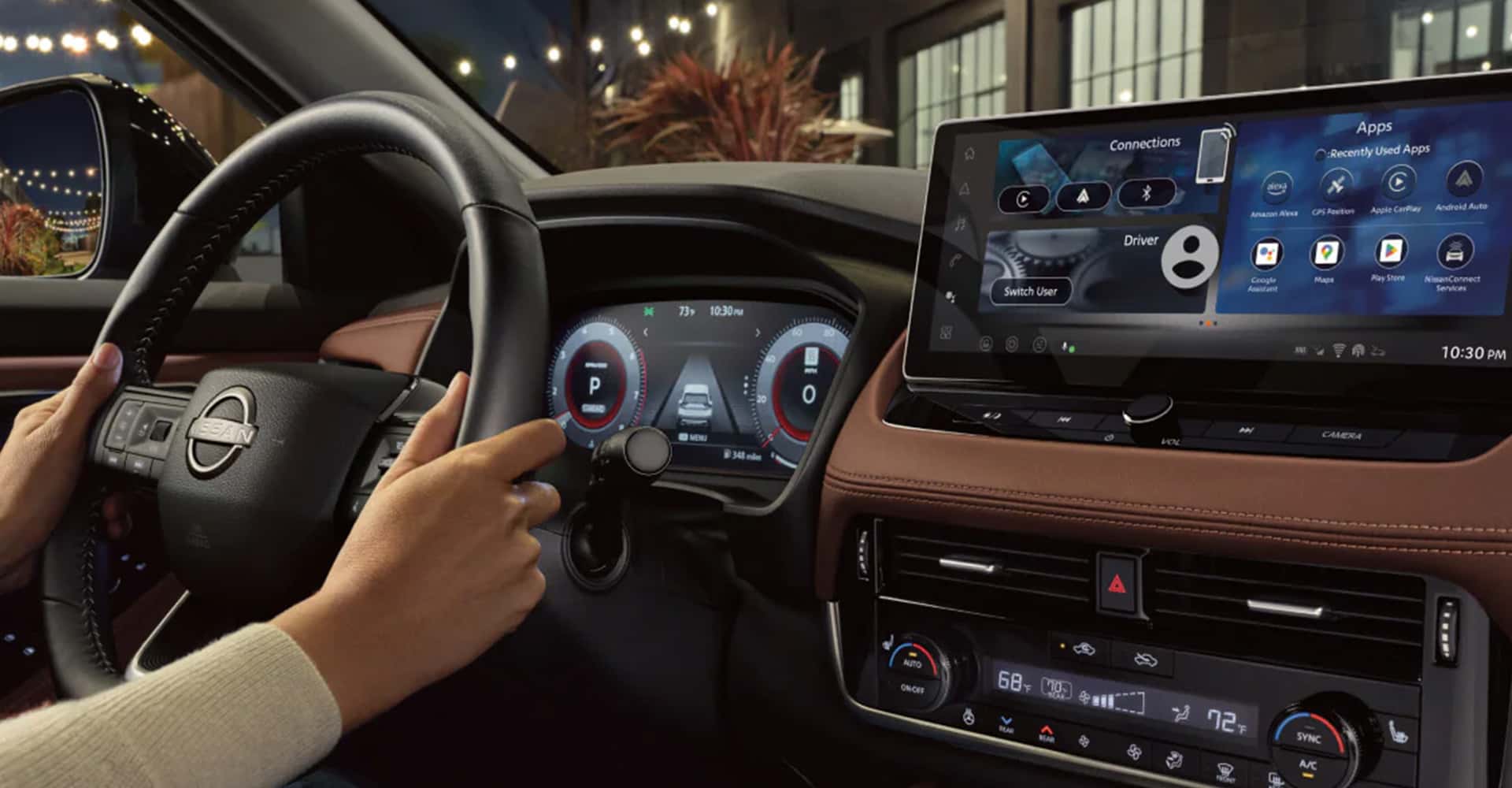
Lane Guidance: Keeping Your Line Without the Wrestling Match
Highway commuting is often about staying centered. Your hands don’t need to be locked in place, but they do need to remain attentive. ProPILOT Assist contributes by monitoring lane markings and helping keep the vehicle aligned. When the road is crisp—clear striping, consistent lane boundaries—the system can feel remarkably natural.
In practice, lane guidance assistance can reduce the fatigue that builds during long drives. A commuter’s shoulder tension often comes from subtle corrections made every few seconds. By assisting with centering, the Rogue can help shrink that correction frequency, turning your attention toward what’s happening further down the roadway.
However, lane-keeping is not magic. When lane lines fade, are obscured by glare, or disappear into construction zones, system behavior becomes more conservative. In those moments, the assist may require quicker driver input or may reduce involvement. The transition is usually designed to be readable, yet the takeaway is straightforward: the driver remains the ultimate authority.
Adaptive Speed: The Art of Following Traffic Calmly
Few things elevate commuting stress like inconsistent spacing. One car drifts forward, another brakes early, and suddenly you’re adjusting your speed more often than your schedule allows. ProPILOT Assist’s adaptive approach helps smooth those dynamics by maintaining a safe distance from vehicles ahead.
Long, straight stretches can turn into a gentle flow state. When traffic is moderate, the system’s ability to match pace contributes to a steadier ride. Shorter interactions—like a car cutting in—also matter. The Rogue’s responsiveness in those scenarios is about maintaining comfort as much as safety. If the vehicle ahead changes speed abruptly, the system typically tries to follow without turning the cabin into a braking roller coaster.
In practical terms, that means fewer sudden speed changes and less frequent foot-to-foot transitions. Your commute becomes a sequence of anticipated adjustments rather than reflexive ones.
Merge Lanes and Lane Changes: Where Confidence Meets Courtesy
Highways aren’t merely about staying inside a lane. Commuters live in the choreography of merges. ProPILOT Assist’s lane and speed assistance can make it easier to handle those moments, but it also highlights the boundaries of automated capability.
During merges, the system is most helpful when lane markings remain legible and the vehicle’s path is clear. It can assist with staying aligned after you complete the maneuver, which is often when drivers feel most “spaghetti-brained”—you’ve moved over, the car is re-settling, and you want to stop thinking about it.
When lane changes are actively performed by the driver, the system generally expects intentional input. That’s a good thing. Assist features should support decision-making, not compete with it. The result is a more natural partnership: the Rogue helps with continuity, while the driver handles intent.
Traffic Density: Light Commutes Versus Gridlock
Commute conditions come in flavors. Some days are smooth; others are a slow crawl with brake lights blooming like signals in fog.
On lighter-traffic days, ProPILOT Assist can feel like a steady companion—holding lane position and pacing with a quiet confidence. You’ll still watch mirrors and anticipate exits, but the vehicle can reduce the repetitive workload of maintaining speed and lateral stability.
In heavier traffic, the system’s adaptive behavior becomes more valuable. However, it’s also where drivers tend to notice the limits most clearly. Extremely stop-and-go patterns require continuous situational awareness, and the system may not feel as seamless if traffic conditions fluctuate rapidly. The best outcome comes when you treat assist as a stabilizing influence, not a substitute for driving discipline.
Weather and Visibility: Glare, Rain, and the Unexpected
Highway commutes rarely stay perfectly clean. Rain polishes the road into mirror-like glare. Fog softens contrasts. Construction brings uneven striping. ProPILOT Assist relies on sensors and lane visibility, so environmental factors matter.
In steady daylight with well-defined lines, the experience can feel silky—less effort, more consistency. In poor visibility, the system may reduce its level of assistance. That doesn’t mean it fails; it means it respects the uncertainty. For commuters, that’s important. The most comfortable driver-assist systems are the ones that know when to step back.
So, consider ProPILOT Assist an ally with boundaries. Those boundaries keep you safe and keep expectations grounded.
Driver Engagement: Keeping Hands and Mind in the Loop
A commuter system should never encourage complacency. ProPILOT Assist is best approached with active supervision. Even when the car is assisting, the driver’s job remains: scanning ahead, monitoring traffic flow, and reading the road like a story unfolding in real time.
That’s where the design philosophy shines. The assistance aims to reduce workload without removing responsibility. Short, long, and medium stretches become easier to manage because your attention can stay forward instead of constantly re-centering the vehicle and adjusting speed.
Engagement also includes recognizing transitions: when the system is active, when it requires more input, and when it disengages. That awareness becomes part of the commuter’s routine—almost like learning a new habit that gradually improves with use.
Comfort Over Time: Reducing Fatigue on Long Days
Fatigue is the hidden cost of commuting. It’s not just the duration; it’s the repetitive nature of the tasks you perform behind the wheel—tiny steering corrections, speed micro-adjustments, and the mental effort of staying patient during delayed exits.
ProPILOT Assist addresses fatigue through delegation. The vehicle handles portions of lane maintenance and adaptive pacing, allowing the driver to conserve energy for higher-value decisions, such as lane selection for upcoming turns and negotiating surrounding drivers’ unpredictable behavior.
Long sentences of traffic become shorter in your head. Not because the road changes, but because the car’s assistance makes the ride feel more coherent.
Common Questions: What Drivers Should Expect
Many commuters want straightforward answers. Here are the expectations that tend to shape satisfaction:
1) Smoothness: Assistance is designed to feel controlled and measured, avoiding sudden movements when conditions are stable.
2) Responsiveness: When traffic ahead changes, adaptive behavior helps you avoid abrupt braking and re-accelerations.
3) Transparency: The system’s involvement becomes less pronounced when lane markings are unclear, and driver input becomes more important.
4) Partnership: The best experience comes from using assist while actively driving, not passively “trusting” the vehicle.
Real-World Highway Use: A Day-in-the-Life Scenario
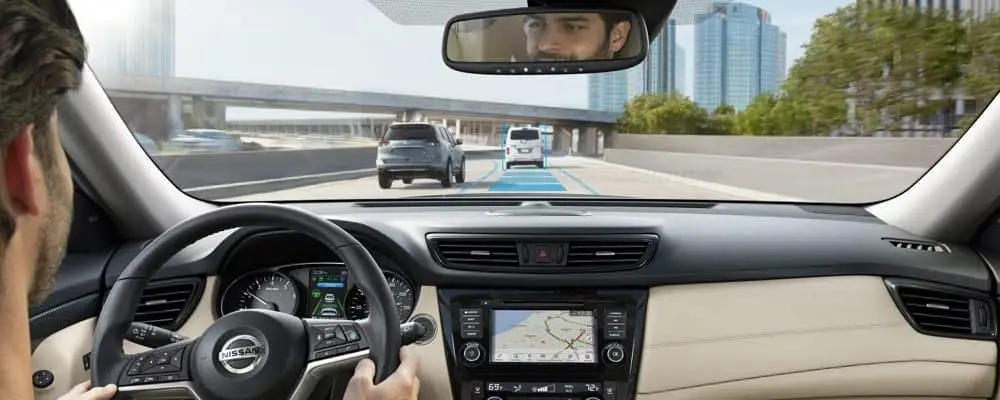
Picture a typical morning: you merge onto the highway, your route already planned, your coffee cooling at a pace that matches traffic inertia. As you settle into the flow, ProPILOT Assist can help keep the Rogue centered and pacing smoothly. When a vehicle moves into your lane, the system adapts the following distance, reducing the need for immediate reactivity.
Then comes the construction stretch—lane lines fade, orange cones appear, and the road briefly becomes less cooperative. This is where driver involvement matters. The system may not feel as hands-off, and that’s acceptable. You stay attentive, reassert control when required, and after the road clears, assistance can return to a more supportive role.
By the time you approach your exit, you’re not worn out by repetitive corrections. You’re simply ready to drive the last few minutes with clarity.
Bottom Line for Highway Commuters
The Nissan Rogue ProPILOT Assist experience on the highway is best described as stress-reduction with guardrails. It aims to reduce the monotony of lane centering and speed pacing, while maintaining an insistence on driver supervision. For commuters who spend significant time on multi-lane roads, it can transform long drives from an exercise in vigilance into a more balanced partnership.
Every commute will differ—weather, road markings, traffic density, and driving styles all influence the feel of assistance. But when the conditions cooperate, ProPILOT Assist offers something rare: less strain, steadier progression, and the quiet reassurance that the vehicle is paying attention too.
In the end, the best commuter technology doesn’t make driving easier by removing thought. It makes driving easier by organizing it—turning a demanding highway into a sequence of manageable moments you can handle, mile after mile.