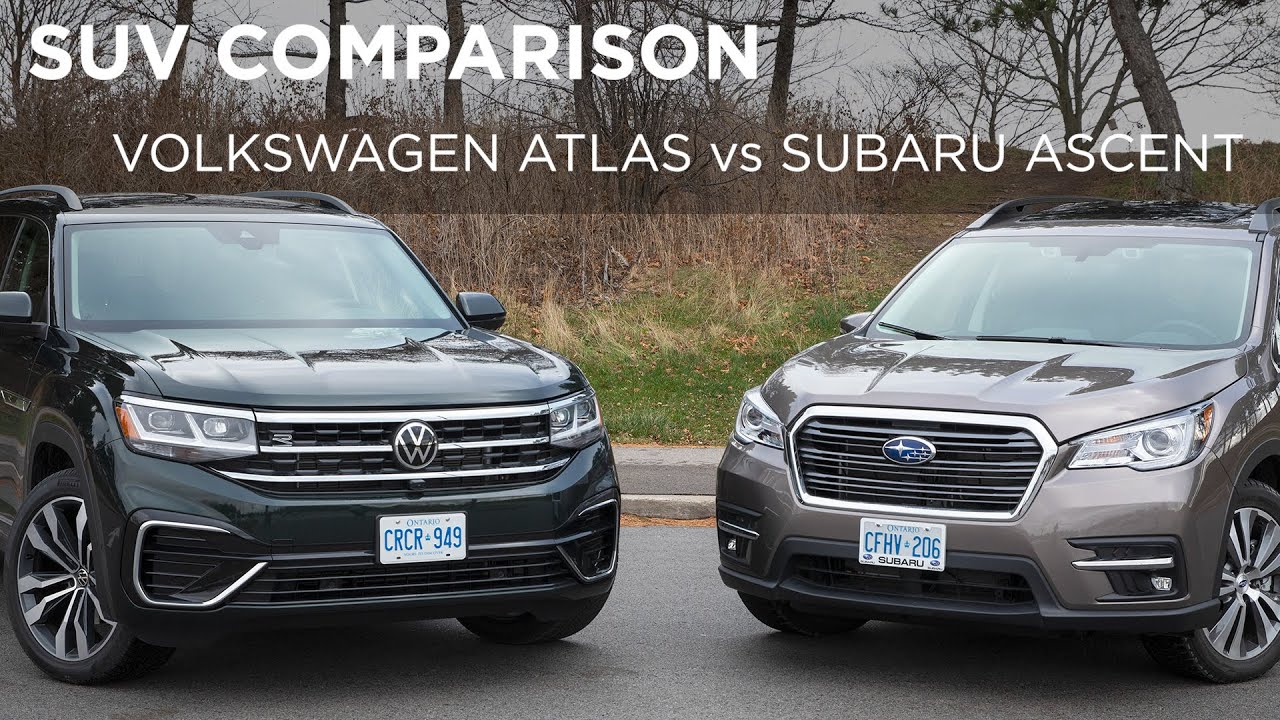
The driveway debate is back, only this time it arrives with more cargo, more capability, and a more urgent question: which 3-row AWD family hauler truly earns its keep? The 2025 Subaru Ascent and the 2025 Volkswagen Atlas both promise the usual essentials—space for the whole crew, confident road manners, and the kind of practicality that turns errands into effortless errands. Yet they approach the job from different design philosophies. One leans into all-weather competence and an outdoorsy sensibility; the other leans into spacious comfort and a broadly polished feel. This 3-row AWD face-off isn’t simply about numbers on a spec sheet. It’s about how each SUV behaves when the schedule gets messy, the weather turns theatrical, and the road turns from “easy” to “interesting.”
What readers can expect is a complete tour: performance and drivetrain character, interior layout and third-row realism, technology and infotainment quirks, safety-first architecture, and the ownership picture that often decides the final choice. Along the way, the narrative will move from the heart of the vehicles to the places you notice only after you’ve lived with them—storage cubbies, visibility, noise texture, and the overall sense of calm they deliver at 7:00 a.m. on a Monday.
All-Wheel Drive Intentions: How Each SUV Attacks the Road
Both the Subaru Ascent and Volkswagen Atlas wear AWD badges for good reasons, but their instincts differ. The Ascent’s AWD character tends to feel purpose-built for variable conditions. When traction is compromised—slippery pavement, patchy snow, or gravelly driveways—the system communicates stability in a way that feels deliberate rather than accidental. Short inputs, subtle corrections, and a generally reassuring balance become the story.
The Atlas, meanwhile, plays a different game. Its AWD tuning often feels geared toward everyday smoothness and confidence during spirited highway merges. It’s the kind of setup that aims to make the SUV feel “planted,” with the steering and power delivery working together to reduce the sense of bulk. In other words: the Atlas often feels like it wants to glide rather than bristle.
In a family setting, that distinction matters. If your week includes early-morning commutes with unpredictable weather, the Ascent’s traction confidence can feel like an insurance policy. If your typical route is longer stretches of highway with varying speeds and payloads, the Atlas’s composed rhythm can be more satisfying.
Engine Feel and Driving Dynamics: Power Delivery vs. Poise
Power in a 3-row SUV is more than acceleration—it’s how the vehicle behaves when you’re already loaded with people and belongings. The Ascent’s driving experience often emphasizes steadiness and predictable response. It doesn’t rely on theatrics. Instead, it favors a consistent tempo that feels manageable when you’re navigating school zones, passing slower traffic, or climbing into higher elevations.
The Atlas tends to lean into a more buoyant sensation during throttle application. It can feel like it’s more comfortable with momentum, especially when you need to merge decisively. The ride quality often balances comfort and control, helping the SUV feel less like a tall vehicle and more like a well-damped, everyday cruiser.
Both SUVs can handle family life—what separates them is the emotional texture of the ride. One can feel quietly resolute; the other can feel broadly polished.
Third-Row Reality Check: Seating Comfort That Holds Up
Many 3-row SUVs advertise space, but fewer deliver it in a way that kids—or adults—will actually enjoy. The Ascent and Atlas both offer seating for passengers in the third row, yet the experience can vary by body type, seat position, and how often you fold and unfold the layout.
The Ascent’s third-row usability often benefits from an approachable cabin design and an overall ergonomics-first approach. Getting in and out can feel more straightforward, and headroom/legroom tend to be sufficient for typical family use—especially when the second row is set with practical compromise in mind.
In the Atlas, the third row can feel more “lived-in,” particularly for longer trips. The Atlas often aims for a comfort-forward cabin atmosphere, and that philosophy can extend to rear seating. Additionally, the Atlas’s wider stance and general interior spaciousness contribute to a more open sensation in the back.
For readers weighing everyday scenarios—carpooling, road trips, weekend sports events—the most meaningful question is not whether the third row fits, but whether it stays tolerable once you’ve settled into your routine.
Interior Design and Storage: Where Practicality Becomes Invisible Magic
The best family SUV interiors don’t announce themselves. They quietly solve problems. A place for water bottles. A spot for chargers. A storage bin that doesn’t become a junk magnet overnight. Both the Ascent and Atlas bring thoughtful touches, but their storage personalities differ.
The Ascent often feels like it’s been designed for frequent, real-world use: compartments in sensible locations, controls that aim for intuitive reach, and a layout that supports quick transitions between driving and life. When your day involves groceries, strollers, and shifting schedules, this kind of design reduces friction.
The Atlas, on the other hand, often leans toward a more spacious, “wraparound” cabin feel. Storage can feel more abundant, and the interior tends to reward passengers who appreciate a bit of extra room to set personal items down without turning the floor into a staging area.
Both SUVs can accommodate families. The difference lies in whether you prefer a more functionally organized cabin (Ascent) or a more expansive, comfort-oriented storage feel (Atlas).
Technology and Infotainment: Navigation, Connectivity, and Driver Comfort
Modern family drivers aren’t just looking for a screen—they want a system that reduces stress. Updates, connectivity reliability, and how quickly the interface responds can determine whether a drive feels serene or irritable. In both vehicles, infotainment and connectivity features aim to support smartphones and navigation needs.
The Ascent tends to focus on usability and straightforward control paths, which can be especially helpful for drivers who keep their attention on the road rather than on menu trees. The interface experience can feel calm, and that matters when you’re switching between music, navigation, and hands-free calls in traffic.
The Atlas often feels like a more traditional “command center,” with an emphasis on comfort and readability. If you’re the family member who manages navigation, phone calls, and entertainment playlists, the Atlas’s larger, more open cabin presentation can make daily tech interactions feel less cramped.
Readers should also consider how often passengers use ports for charging and how legible controls are from different seating positions. Those details rarely make headlines, but they define the lived experience.
Safety and Driver Assistance: Built for the Unpredictable
A 3-row AWD SUV earns its keep by protecting everyone when the unexpected arrives—whether that’s sudden braking in a rain-slick intersection, a pedestrian stepping into view, or a lane change that feels inevitable. Both the Ascent and Atlas are positioned as family-oriented machines, and each aims to deliver a layered approach to safety.
The Ascent’s safety philosophy often emphasizes confidence in varied conditions, pairing driver-assistance features with the reassurance of AWD traction. The overall sensation is one of vigilance without alarm. It’s the kind of setup that helps drivers anticipate rather than react.
The Atlas also brings a comprehensive set of driver assistance technologies, often with an emphasis on ease of use and clear alerts. When you’re managing a busy family schedule, driver assistance should be helpful—not distracting. A well-calibrated safety suite can be the difference between “mostly safe” and “noticeably calmer.”
Ride Quality and Cabin Atmosphere: Noise, Compliance, and Calm
How an SUV rides can be as important as how it goes. The Ascent often delivers a composed ride with a focus on stability, especially over uneven pavement. It can feel grounded, with suspension tuning that aims to reduce harsh impacts while keeping the vehicle controlled.
The Atlas generally offers a comfort-forward cabin atmosphere, often described in the language of smoothness. The SUV’s road manners can feel more muted, with fewer “sharp edges” from the roadway entering the cabin. For long family trips, that reduction in fatigue can matter more than peak performance.
Think about the kind of roads your family typically covers. If they include frequent cracks, potholes, and uneven surfaces, the Ascent’s stability can be comforting. If your routes are smoother but longer, the Atlas’s calm ride can feel like a reward.
Space for Gear: Cargo Volume, Flexibility, and Practical Loading
Loading isn’t a one-time event. It’s a weekly ritual: groceries, sports equipment, luggage for weekend escapes, and the random items that appear only when you’re on your way out the door. Both SUVs provide the kind of cargo flexibility families need, but their best traits show up in different ways.
The Ascent’s cargo setup tends to support an organized approach. Folding and storing gear can feel intuitive, and the overall layout encourages practical packing. It’s a vehicle that feels ready for the next activity, not just the last one.
The Atlas often feels like it has more room to spread out—especially when you’re using the third row selectively and want ample space behind it. That flexibility can reduce the compromise factor during road trips when everyone wants “just a few” essentials.
Fuel Economy and Ownership Costs: The Numbers Behind the Feel
Even the most emotionally satisfying SUV must fit into a budget. Fuel economy and long-term costs influence the decision more than most drivers expect. Both vehicles can vary depending on configuration, driving style, and terrain, so the best approach is to compare real-world expectations rather than assume every mile behaves the same.
Readers should also think about insurance costs, maintenance intervals, and how AWD use impacts efficiency. If you drive in conditions that demand frequent traction support, the “cost of capability” can be higher. Yet for many families, reliability and safety comfort can be worth that trade-off.
Which One Fits Your Family: A Narrative Tie-Breaker
If your family’s life revolves around unpredictable weather, uneven roads, and the desire for a traction-focused companion, the 2025 Subaru Ascent can feel like the steadier choice. Its all-weather intentions and pragmatic interior vibe align with real schedules.
If your family values roomy comfort, a calmer highway experience, and a cabin that feels expansive even with a full roster, the 2025 Volkswagen Atlas may be the more fitting match. Its broad comfort philosophy extends from the front seats to the ways you live with cargo.
Either way, you’re choosing a capable 3-row AWD SUV built for daily motion. The winning decision comes down to which emotional priority matters more: the Ascent’s grounded confidence or the Atlas’s comfort-rich spaciousness.


Final Thoughts: The Three-Row Decision That Should Feel Clear
The best 3-row SUV isn’t the one with the longest headline—it’s the one that fits your week so seamlessly you stop thinking about it. The 2025 Subaru Ascent and 2025 Volkswagen Atlas both offer the essentials: AWD confidence, family-oriented layouts, and technology meant to keep journeys smooth. Yet their personalities remain distinct. One leans into traction reassurance and practical ergonomics. The other emphasizes comfort, spaciousness, and a polished highway demeanor.
Choose the SUV that matches the way you actually drive—how often you face rough weather, how frequently you load and unload cargo, and what “comfort” means to your passengers once the novelty of a new SUV fades. When that choice aligns, every school run, road trip, and weekend detour feels less like logistics and more like momentum.