Family wagons have a way of turning “just transportation” into a living arrangement for sticky fingers, wet sneakers, and the occasional grocery avalanche. Yet the choices are never purely practical. They’re also emotional—an alignment of space, comfort, and the quiet confidence that tomorrow’s road trip won’t end in compromise.
In 2025, that conversation often circles two names that feel familiar, but not interchangeable: the Subaru Outback and the used Buick Regal TourX. One carries a reputation built on persistent capability and weather-ready composure. The other offers a more cultivated, almost cinematic interpretation of wagon life—sleeker lines, grown-up manners, and a distinct sense that the journey matters as much as the destination.
What happens when you pit these two against one another in the used market? More importantly, what shift in perspective does that comparison unlock? Because the “right” wagon isn’t always the one with the most obvious strengths. It’s sometimes the one that changes how you think about your family’s everyday rituals.
Why Used Matters in 2025: The Wagon Era Isn’t Waiting
Buying used is no longer the compromise it once was. It’s become a strategy—an opportunity to step into a segment that traditionally demanded more than a new-car shopping budget. In 2025, the used wagon ecosystem is particularly interesting because it captures vehicles that were engineered to last, then refined enough to still feel current in daily life.
With the Outback, longevity is practically part of the mythology. With the Regal TourX, it’s more about stewardship—finding a well-kept example can mean inheriting a calmer, more premium driving temperament. Either way, the used market rewards patience. A careful buyer doesn’t just save money; they harvest value.
And value is where curiosity begins. If both wagons can host a week’s worth of family chaos, what else distinguishes them—beyond badge and brand reputation?
The Subaru Outback: A Practical Philosopher in Crossover Form
The Outback has never been interested in being merely stylish. It’s designed to be useful in a way that feels almost automatic. Even before you load anything, it communicates preparedness—higher sightlines, a cabin that seems to expect real life, and a layout that favors movement.
Family routines thrive on predictability. The Outback’s strengths often show up in the small moments: how easily you can stow gear, how comfortably passengers settle in for long stretches, and how steadily the vehicle handles variable conditions. Rain that turns puddles into hidden hazards. Gravel that appears without warning. Winter mornings that feel reluctant to wake up.
Its wagon-crossover hybrid identity is not a contradiction; it’s an invitation to treat roads as suggestions rather than commandments.

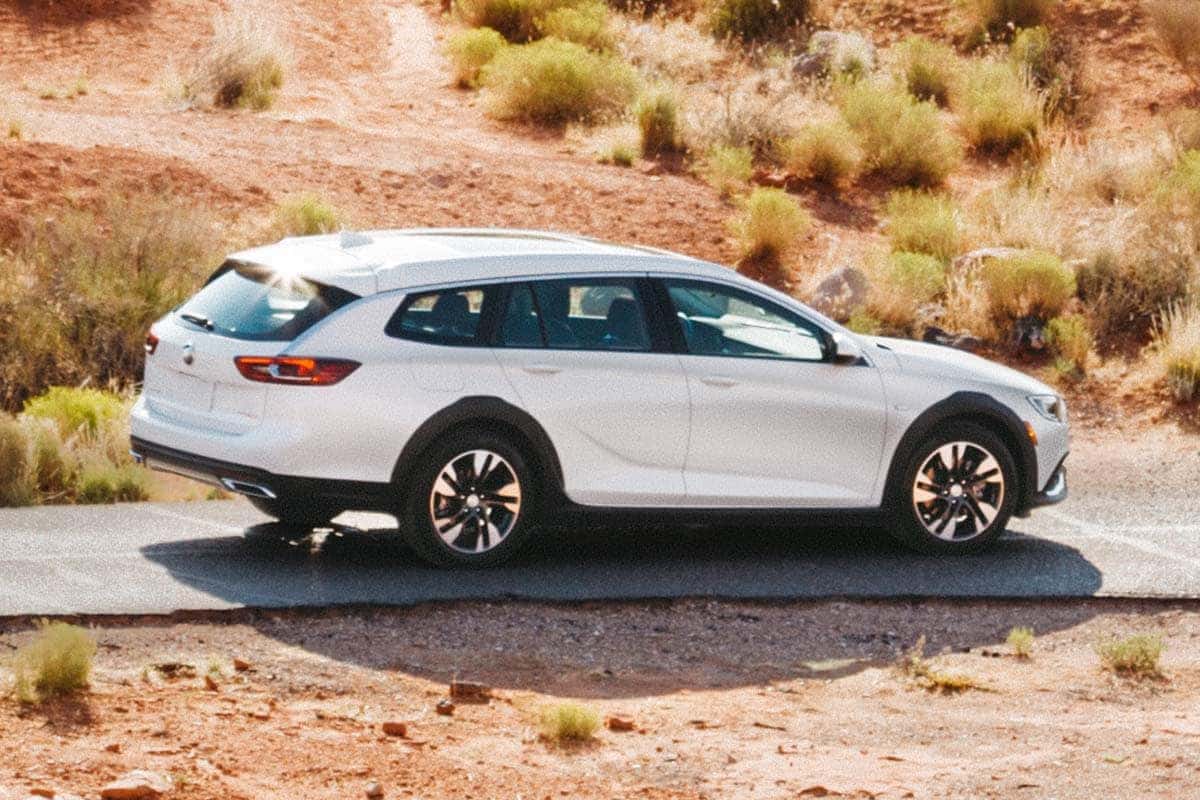
The Buick Regal TourX: Premium Restraint and a Subtler Kind of Confidence
The Buick Regal TourX doesn’t shout “adventure.” It whispers it—through posture, steering feel, and a cabin presence that feels more like a lounge than a utility station. If the Outback is a toolset, the TourX is a curated space.
For families, that matters. Kids notice the vibe before they notice the cup holders. Adults notice how fatigue arrives—whether it creeps in like humidity or pounces like a sudden storm. The TourX’s promise in a used form is that you can combine wagon practicality with an upscale sense of composure.
This is the shift in perspective that surprises people: a wagon doesn’t have to feel like you’re sacrificing refinement. With the TourX, daily driving can feel less transactional. It can feel deliberate.

Space and Cargo: The Real Test Begins at Loading Time
On paper, wagon dimensions can look similar enough to blur. In practice, the experience of loading a car tells a different story. Think about the everyday cargo choreography: soccer gear in one moment, school supplies in the next, then a weekend run with blankets, coolers, and the kind of “just in case” items families always pack.
The Outback’s reputation for utility isn’t accidental. Its cargo access and overall usability encourage frequent use. The TourX, however, brings a more polished approach to practicality. Its wagon body doesn’t just swallow items—it does so with a layout that feels coherent, the way a well-designed closet makes organization feel inevitable.
For families, both wagons can meet the basic requirement: moving people and belongings without drama. The differentiator is your preference. Do you want the vehicle that makes every load effortless, even when your hands are full? Or do you want the vehicle that makes every load feel like part of a comfortable routine?
Ride Quality and Daily Comfort: Who Brings Calmer Energy?
Here’s where the comparison stops being a checklist and becomes an atmosphere. The Outback is often tuned for steadfast control—composed through imperfect surfaces, confident when the road gets unruly. That translates into less mental load for the driver.
The TourX tends to offer a more relaxed, passenger-friendly sense of refinement. It’s the kind of ride that can make commuting feel less like endurance. Smoothness becomes a form of family protection: fewer jarring impacts, a more connected cabin, and a sense that everyone is traveling together rather than enduring the journey separately.
Short trips benefit from these qualities, too. When you’re running errands between appointments, comfort compounds. It’s not about whether the wagon can handle a road trip; it’s about whether it can make every day feel manageable.
Powertrain Character: Different Personalities, Similar Intentions
Both vehicles were built to meet the needs of family life, but they tend to deliver driving character differently. The Outback leans toward balanced capability and steady progress. Even when you ask for more, it aims to do so in a predictable manner—helpful when traffic moves unpredictably or when you’re merging while managing distractions.
The TourX can feel more spirited and composed, depending on model year and configuration. It’s often the kind of car that rewards smooth inputs. If you like to drive with a lighter touch—anticipating, gliding through gaps, and treating acceleration as a suggestion rather than a performance event—the TourX can feel surprisingly satisfying.
Curiosity comes from the contrast: one feels engineered for versatility under changing conditions, while the other feels engineered for refinement under changing schedules.
All-Weather Readiness vs. Polished Temperament
Families don’t only drive for fun; they drive for reliability. The Outback is widely associated with all-weather confidence, which is more than marketing—it’s a psychological benefit. Knowing the vehicle is prepared can make you less tense when weather turns unexpectedly.
The TourX offers a different promise. It’s less about brute readiness and more about composed control, the kind that can keep you comfortable in everyday situations. It’s a wagon for families who prioritize smoothness and everyday elegance, even when the schedule doesn’t cooperate.
Ask yourself a question: do your roads demand adaptability, or do your routines demand comfort? Both are valid. That’s the heart of the shift in perspective.
Technology and Family-Friendly Features: What You’ll Actually Use
Infotainment isn’t just entertainment; it’s logistics. Navigation helps you avoid detours. Phone integration reduces friction. Driver-assistance features can ease the stress of school-zone commutes and highway cruising.
The Outback’s strength often lies in its practical, driver-focused integration—things that make driving simpler rather than distracting. The TourX tends to lean toward a more premium-feeling interface and cabin experience, which can make long drives feel less monotonous.
Since these are used vehicles, the most important step is verification. Trim level matters. Feature availability varies. A great wagon isn’t the one with the biggest feature list; it’s the one whose features match your daily reality.
Ownership Reality: Maintenance, Resale, and the Art of Buying Right
When shopping used, ownership isn’t theoretical. It’s a blend of maintenance costs, parts availability, and how a vehicle holds value when the next decision arrives.
The Outback often benefits from strong community awareness and a reputation for durability. That can translate into easier confidence when choosing a specific example and smoother planning for maintenance over time.
The TourX, while more niche, can offer outstanding value if purchased carefully. The key is diligence: confirm service history, inspect wear points, and ensure the car matches the promises made by its condition.
Buying right is a kind of creativity. It turns the used market from a bargain hunt into a tailored acquisition.
Which Wagon Fits Your Family in 2025?
The question isn’t “Which is better?” It’s “Which aligns?” If your family’s life includes frequent weather shifts, gravel detours, and a constant need for adaptability, the Outback feels like the default—capable, practical, and resilient.
If your family wants wagon functionality wrapped in a more premium atmosphere—something that makes the cabin feel composed and the driving experience feel quietly upscale—the Regal TourX can be an inspired alternative.
The most compelling outcome is realizing that both can serve a family well. The difference is the emotional contract you’re signing with your next car: preparedness versus refinement, versatility versus composure, everyday utility versus premium restraint.
Final Thoughts: The Wagon That Changes Your Drives
Family wagons aren’t only vehicles; they’re stagecraft for real life. Kids grow. Schedules mutate. The grocery run becomes a mini expedition. The car you choose becomes part of that narrative.
In 2025, the Subaru Outback and used Buick Regal TourX offer two distinct routes to the same destination: a life that moves smoothly, with cargo where it should be and comfort where it counts. One builds confidence through weather-ready capability. The other builds it through a more elegant, lounge-like calm.
Choose the wagon that doesn’t just carry your family—it improves the way your family experiences the road. That’s the promise beneath the comparison, and it’s the reason this decision feels more interesting than it first appears.