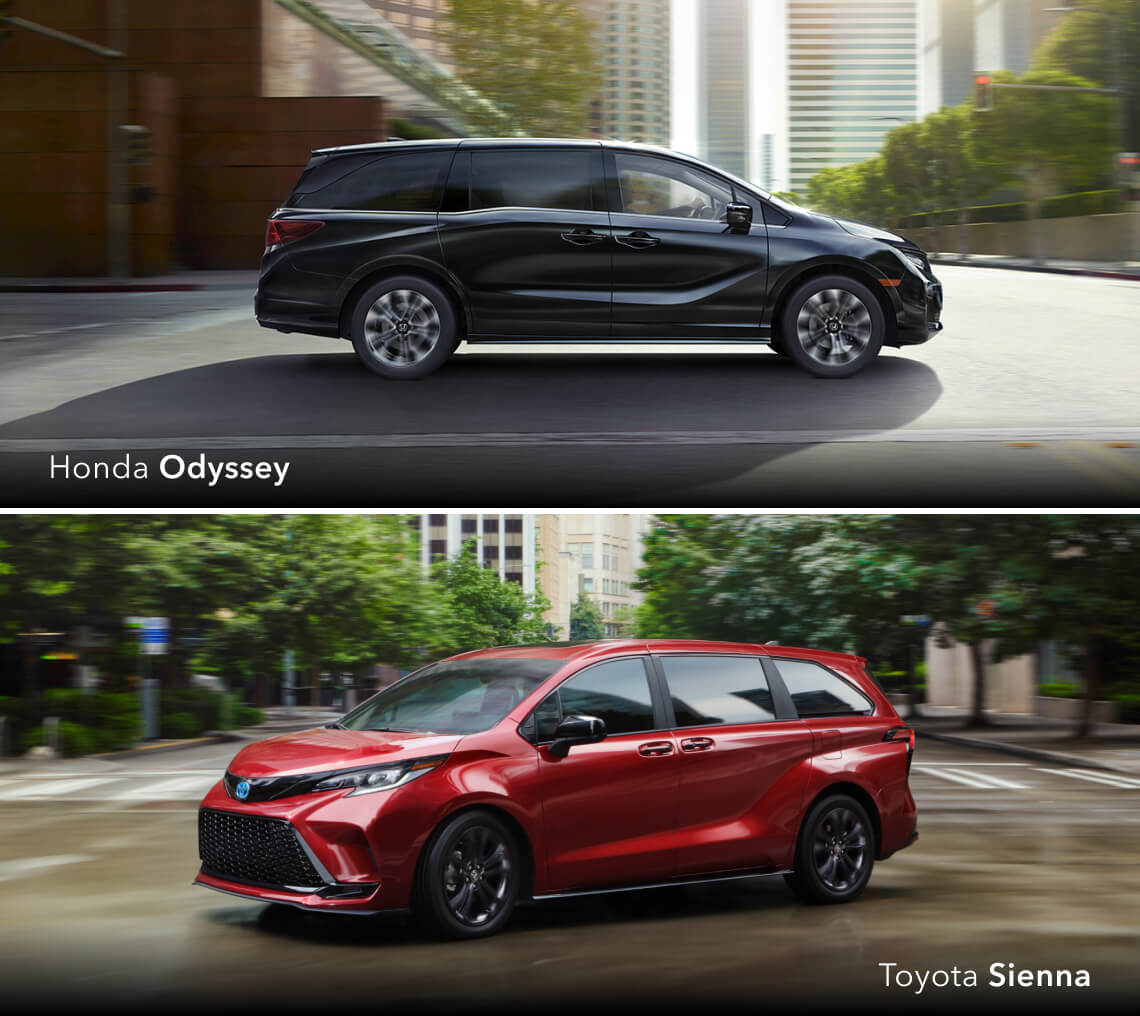
Shopping for a minivan in 2025 is no longer just about family logistics—it’s about cargo choreography. The right vehicle doesn’t merely “carry stuff.” It anticipates how bags spill, how boxes wobble, and how everyday life turns a trunk into a temporary workshop. In this cargo comparison, three popular choices enter the ring: the Toyota Sienna, the Honda Odyssey, and the Kia Carnival. Each has its own philosophy of practicality, and the differences become clear when you consider real-world hauling—groceries, sports gear, weekend luggage, and the occasional bulk purchase that makes normal trunk sizing feel like a myth.
Below, the focus stays steadfastly on cargo: how space behaves when seats are upright, how it transforms when seats fold, and how the design details—openings, floor shape, tie-down points, and second-row practicality—change the experience from “it fits” to “it fits comfortably.”
Why cargo layouts matter more than headline numbers
Numbers alone rarely tell the full story. A minivan can list generous volume while still feeling awkward to load. The true test is the user journey: approach the vehicle, reach for the liftgate handle, negotiate the opening height, place items onto the cargo floor, and then secure everything so it doesn’t become a moving obstacle during braking.
In the 2025 minivan class, cargo layout influences everything. A flat(er) load floor can make bulky luggage less stressful. A wide opening reduces the need to twist or rotate awkwardly. Strategically placed tie-downs and available accessories turn chaos into order. Even the rear door shape can affect how easily a long item slides in without catching on trim.
Readers can expect the comparison to highlight these “invisible advantages”—the ones that feel small in a brochure but large on the first real trip.

Baseline cargo space: when seats stay upright
Most days, minivan owners don’t fold seats immediately. They operate in the everyday zone: backpacks, a cooler, a stroller folded with practiced ease, and shopping bags stacked like a modest Jenga tower. That’s where cargo space with the second and third rows in place becomes crucial.
The Toyota Sienna typically appeals to shoppers who value family-ready functionality—its design tends to prioritize convenient access and a practical rear area for daily items. The Honda Odyssey often leans into versatility; its cargo area frequently feels approachable, as if it’s designed for frequent loading and unloading. The Kia Carnival brings a more SUV-like ease to the cabin, which can translate to straightforward cargo management.
While each model has strengths, what stands out is the balance between usable space and how that space is shaped. The winner in day-to-day packing usually isn’t simply the largest number—it’s the most accommodating geometry for common household loads.
Folding transformations: how each minivan reshapes into a hauler
When the moment arrives—moving from school runs to weekend travel or a surprise home improvement supply run—seat folding becomes the deciding factor. A great cargo layout should shrink the cognitive load. It should feel intuitive: fewer steps, fewer awkward angles, and a final result that’s stable rather than “almost flat.”
For cargo transformation, readers should pay attention to how the floor changes. A flatter cargo surface reduces the risk of rolling items. It also makes it easier to slide in a large suitcase or a box without performing contortionist maneuvers.
The Sienna’s reconfiguration typically supports an efficient transition for families. The Odyssey’s approach often emphasizes user-friendly access, with the folding sequence feeling designed for regular use, not just occasional trips. The Carnival, known for its family practicality, aims to deliver a straightforward transformation that can be performed quickly when plans change.
Expect the comparison to examine how the rear area feels once seats are folded—whether cargo lands on a level plane, how thresholds influence loading, and how the back row’s storage behavior affects what fits.
Cargo floor behavior: flatness, steps, and the reality of bulky items
Bulky items are where minivan layouts reveal their secrets. A corrugated moving box won’t behave like a garment bag. A cooler doesn’t glide; it slides with stubborn intent. If the cargo floor has steps or irregular transitions, loading becomes slower and more complicated.
When comparing the Sienna, Odyssey, and Carnival, look beyond “volume” and focus on the cargo floor contour. A more even surface generally supports better stacking. It can also help keep items from shifting during stop-and-go traffic.
In daily life, small inconsistencies matter: the way a long board edges past the opening, the angle of the rear sill, and how easy it is to set something down without it tipping. Readers should expect commentary that treats cargo as a system, not an afterthought.
Load-in and load-out: opening size, accessibility, and leverage
Even with adequate cargo volume, loading can fail if access is compromised. The most frustrating scenario is when the opening is just slightly too narrow, or the height is just slightly too high for a comfortable lift. Cargo accessibility is where ergonomics takes the spotlight.
The minivan door opening and the presence of roofline constraints can significantly influence how items enter the space. Wide openings reduce the need for awkward tilting, and the rear step height affects how much you strain your back during frequent trips.
Expect the comparison to explore how each minivan’s rear access supports quick loading. The goal isn’t elegance—it’s repeatable convenience. A vehicle that’s easy to load once must also be easy to load every time.
Securing cargo: tie-downs, anchor points, and motion control
Loose cargo turns a road trip into a game of “find what rolled.” Secure mounting points—tie-downs, anchor locations, and compatible accessories—help prevent shifting. Motion control matters most for items like grocery totes, sports bags with hard edges, or tools stacked in a way that’s stable only on flat ground.
When evaluating cargo systems, readers should consider whether the minivan offers practical tie-down placement. Are anchors reachable from multiple angles? Can straps be threaded without fighting plastic trim? Are there meaningful options for securing large and small loads?
Odyssey, Sienna, and Carnival each bring their own approach, but the common requirement stays universal: a minivan should make it easier to keep cargo where it belongs.
Third-row versatility: seating needs versus hauling needs
A minivan is a compromise vehicle in the best sense—one that can be both people-hauler and cargo hauler. But the degree of flexibility determines how often you’ll actually use that third row.
For families, third-row convenience influences whether you keep it up for guests, fold it for extra space, or partially reconfigure for a mixed load—like keeping a child’s seat and stowing the rest of the week’s supplies.
In a cargo-focused comparison, this is where the narrative becomes personal. Will the third-row arrangement feel like a true option or a reluctant chore? When it folds, does it disappear into a clean, usable space? After all, a minivan’s cargo advantage is only as valuable as its readiness to switch modes.
Real-world scenarios: groceries, sports gear, road trips, and “oops” purchases
To make the cargo comparison tangible, it helps to frame it in moments. Picture the grocery run: multiple bags, a heavy jug, and one item that never sits flat. Now picture sports gear: padded bags, a ball net, and a couple of awkwardly shaped items that demand a little extra clearance.
Then come road trips. Luggage isn’t just bulky; it’s also long-lived, often stacked into a single efficient tower. A minivan cargo area works best when suitcases don’t demand renegotiation every time you open the liftgate.
Finally, there’s the “oops” purchase—bulk storage bins, a boxed appliance, or a contractor’s bundle from a weekend errand. This is where cargo volume meets practicality. It’s not about fitting in theory. It’s about fitting without rearranging your whole life every time you stop.
Who should choose which cargo personality
The Sienna often appeals to shoppers who want family-ready practicality with an emphasis on efficient use of interior space. It tends to feel like a calm utility machine—more “plan it” than “improvise it.”
The Odyssey frequently attracts drivers who value versatility with a familiar, user-friendly workflow. If you regularly move between structured schedules and unpredictable weekend plans, its cargo behavior often feels like it’s designed for frequent reconfiguration.
The Carnival tends to suit buyers who want an approachable layout with SUV-like ease, wrapped in minivan utility. Its cargo personality leans toward quickness—getting items from outside to inside without turning loading into an extended project.
Choose based on your lifestyle rhythm: do you pack daily and load repeatedly, or do you haul bigger items more occasionally? Cargo preference isn’t just space—it’s frequency.
Bottom line: the best cargo minivan is the one that fits your habits
When comparing the 2025 Toyota Sienna, Honda Odyssey, and Kia Carnival, the best answer emerges from behavior, not speculation. Cargo space is a living thing in real life: it changes with how often you fold seats, how you stack items, and how quickly you need to load and unload.
If you want a minivan that supports smooth daily hauling, evaluate how easily items fit when rows stay upright. If you anticipate weekend expansions, scrutinize floor behavior and access during seat reconfiguration. If you often secure gear for sports or trips, prioritize anchor usability and motion control.
In the end, the “winner” in cargo comparison isn’t only the one with the greatest capacity. It’s the one that makes packing feel effortless—where the vehicle seems to anticipate what you’ll bring next.