There’s a particular moment that repeats itself in driveways and parking lots: the hatch lifts, the third row stands—or folds—then the real question arrives. Where does everything go? Many people buy a three-row SUV for its promise of togetherness, only to discover that “togetherness” has logistics. The trunk-like space behind the third row can make or break weekend plans, school-season routines, and spontaneous getaways.
In 2025, the most interesting SUVs aren’t just the ones with larger numbers on a spec sheet. They’re the ones that feel thoughtfully engineered when you’re doing the luggage test—when suitcases, duffels, and bags aren’t politely stacked like samples. This article explores 2025 SUVs with the most space behind the third row, the way those spaces behave in real life, and why the fascination is more than practical. It’s almost cinematic: the suspense of fitting the last item, the quiet relief when the hatch closes without compromise.
Why the “Behind the Third Row” Space Matters More Than You Think
A common observation is that most shoppers focus on first-row comfort and second-row legroom. Those are visible, immediately measurable in minutes, and easy to appreciate. But third-row utility lives in the shadows, revealed only when you’re preparing for departure—when the vehicle stops being a showroom object and becomes a moving container.
Space behind the third row directly influences how many people a trip can serve without turning the cargo area into an improvised shuffle. It affects whether you need rooftop carriers, whether you can keep bags dry and secure, and whether you can actually store gear instead of relocating it into the cabin.
There’s also a deeper reason people obsess over this measurement. Psychologically, it represents “control.” The more usable space you have behind the third row, the less the trip feels like a puzzle with missing pieces. The luggage test becomes a ritual that restores confidence.
The Luggage Test: How We Evaluate Real Cargo Capacity
The most revealing part of evaluating SUVs isn’t a brochure photo. It’s a method. The luggage test treats cargo like a dynamic system: dimensions, access, and how contents behave when stacked.
Here’s what the luggage test typically captures:
1) Usable depth from the back of the third row to the liftgate opening. Depth determines how well tall suitcases fit without tipping forward.
2) Width between wheel wells where bag placement can become oddly constrained. Some SUVs provide more “psychological room” than their specs suggest; others feel cramped because the wheel-well profile bites into usable corners.
3) Cargo shape: a nearly rectangular cargo area is an efficiency champion. Odd angles and inset contours turn otherwise “large” space into awkward voids.
4) Load floor height and whether the platform feels like an invitation—or a hurdle. Even a few inches of step can influence how many items you can pack smoothly.
5) Access to the trunk when the third row is upright. Some SUVs offer a wide liftgate view, which makes loading faster and less stressful.
What’s fascinating is how these factors interact. A vehicle with moderate volume may outperform a larger one if its geometry stacks luggage with less wasted air.
What “Most Space” Often Looks Like in 2025 SUVs
When you’re chasing SUVs with the most space behind the third row, you’re usually looking for design decisions that prioritize cargo volume even with a third-row seatback in place. That means engineering choices such as a taller cargo opening, more favorable packaging around the rear suspension area, and careful placement of structural components that otherwise steal space.
In practical terms, “most space” tends to look like:
A deeper cavity behind the third row, allowing standard suitcases to sit upright.
Fewer obstructions that interrupt stacking. Some SUVs have a cargo well that reads “wide” but behaves “narrow” once you start packing.
Smart tie-down ecosystems that keep bags from sliding, especially on turns or during sudden braking. Space that can’t be secured feels smaller, emotionally and functionally.
People underestimate how much friction there is between “space” and “use.” A cargo bay can be large yet difficult to use if the opening is narrow or the loading angle forces awkward repositioning.
Spotlight: SUVs That Excel When the Third Row Stays Up
Let’s talk about the vehicles that reliably deliver during the luggage test—those that keep behind-third-row storage from collapsing into a thin shelf. The best performers typically share one trait: they treat third-row occupancy as a normal condition, not an edge case.
In 2025 models, the rear-end packaging is more refined. The cargo bay isn’t merely an afterthought; it’s shaped to accept real objects. Some SUVs feel like they were designed for families who travel frequently rather than families who travel rarely.
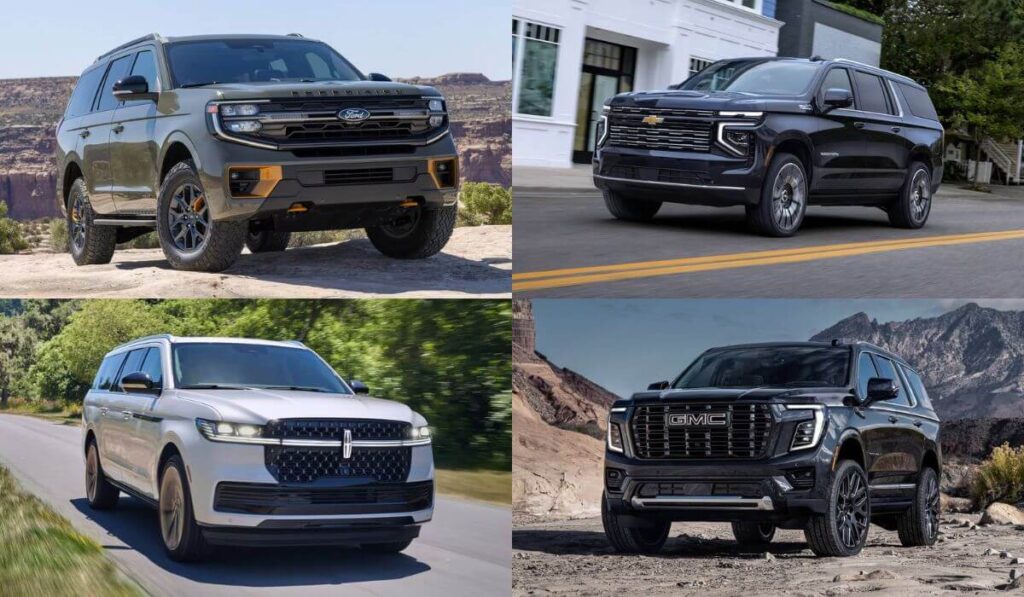
That’s where fascination begins. When you load a third-row SUV and it doesn’t fight you, the vehicle stops feeling like compromise. It starts feeling like intention.
Third Row Up vs. Third Row Folded: Two Different Universes
It’s tempting to compare only maximum capacity with the third row folded. Yet many real trips happen with the third row upright—especially when a group is traveling, or when you need a stable seating configuration for the kids, passengers, or friends.
When the third row folds, you’re not just gaining volume; you’re changing the geometry. Flat floors reduce the chaos of uneven stacking, and the cargo bay often becomes closer to a single continuous plane. But the question that matters for “most space behind” is: how usable is the area before you fold anything?
In the luggage test, this distinction is visible immediately. A SUV can look impressive in folded form and still disappoint when the third row stays in service. The best 2025 options balance both worlds without demanding constant seat choreography.
Depth, Shape, and Access: The Cargo Geometry That Wins
Two SUVs can have similar behind-third-row volume, but one will pack more efficiently. Depth helps you accommodate longer items—like garment bags and tall rolling suitcases—without forcing them to lean against the seatbacks. Width matters too, but not in a simplistic way; you need usable corners and not just the illusion of wide placement.
Access changes how quickly you can load. If the liftgate opens high and the opening is wide enough, you can drop items into position with fewer adjustments. Short sentences can explain it best: Less wrestling. Faster packing. Calmer departures.
Then there’s the floor. A lower load floor can reduce the physical strain of lifting bags, but more importantly, it keeps luggage from rebounding or shifting when you set it down. Stability translates into security.
Deeper Reasons People Fall for “Third-Row Cargo” Greatness
Space behind the third row isn’t only about luggage. It’s about how a vehicle signals readiness. It suggests that the car understands real schedules—sports gear, stroller detours, weekend groceries, and the inevitable “we brought extra” moment.
It also offers a kind of aesthetic satisfaction. There’s something unexpectedly gratifying about a cargo bay that looks organized rather than accidental. An SUV that supports tidy packing feels less like a container and more like a system.
When you can pack with intention, the entire trip feels more deliberate. That’s why the luggage test can feel almost addictive. People don’t just want space. They want harmony between space and life.
Tips to Make the Most of Rear Cargo Space in 2025 SUVs
Even with the best behind-third-row capacity, smart packing matters. The most effective approach is to treat cargo like a three-dimensional puzzle rather than a pile.
Use compartmentalization: compress soft bags and place flatter items into the widest sections.
Keep weight low: heavier items closer to the floor help stability and reduce bag shift.
Mind the wheel-well corners: fit shorter duffels where the bay narrows, and reserve full-height rolling bags for the deeper spans.
Leverage tie-down points: security tools prevent cargo from “walking” during acceleration and braking.
These practices don’t just maximize space; they preserve the quality of space. A roomy cargo bay becomes truly generous when it stays controlled.
Choosing the Right 2025 SUV for Your Luggage Test Priorities
To select wisely, align cargo capacity with your lifestyle. If your third row is often used, prioritize behind-third-row usability over pure maximum volume. If you regularly travel with mixed passenger groups, examine not only depth but also liftgate access and how seats affect the cargo opening.
Also consider how often you’ll load alone. Some vehicles are easier to pack due to accessible angles and fewer awkward obstructions. That matters when you’re doing the luggage test for real—when time is tight and you want to avoid the frustration of rearranging on the curb.
The best choice is the SUV that turns your “maybe” into “yes.” Yes, the bags fit. Yes, the hatch closes smoothly. Yes, you can bring what you need without converting the third row into storage.
Conclusion: Space Behind the Third Row as the Ultimate Practical Luxury
In 2025, the SUVs with the most space behind the third row aren’t simply larger in dimension. They’re more coherent in purpose. They reduce the friction of packing and increase the serenity of departure. They make families and groups feel less like they’re negotiating with their vehicle—and more like they’re traveling with it.
During the luggage test, the winners reveal themselves quickly. Depth accommodates tall items. Shape prevents wasted corners. Access keeps loading efficient. Security keeps cargo stable. And beyond all that, the fascination remains the same: space that feels ready for your life rather than merely measured for a chart.
When the third row is up and the hatch closes without drama, you don’t just store luggage. You store momentum—ready for the road ahead.