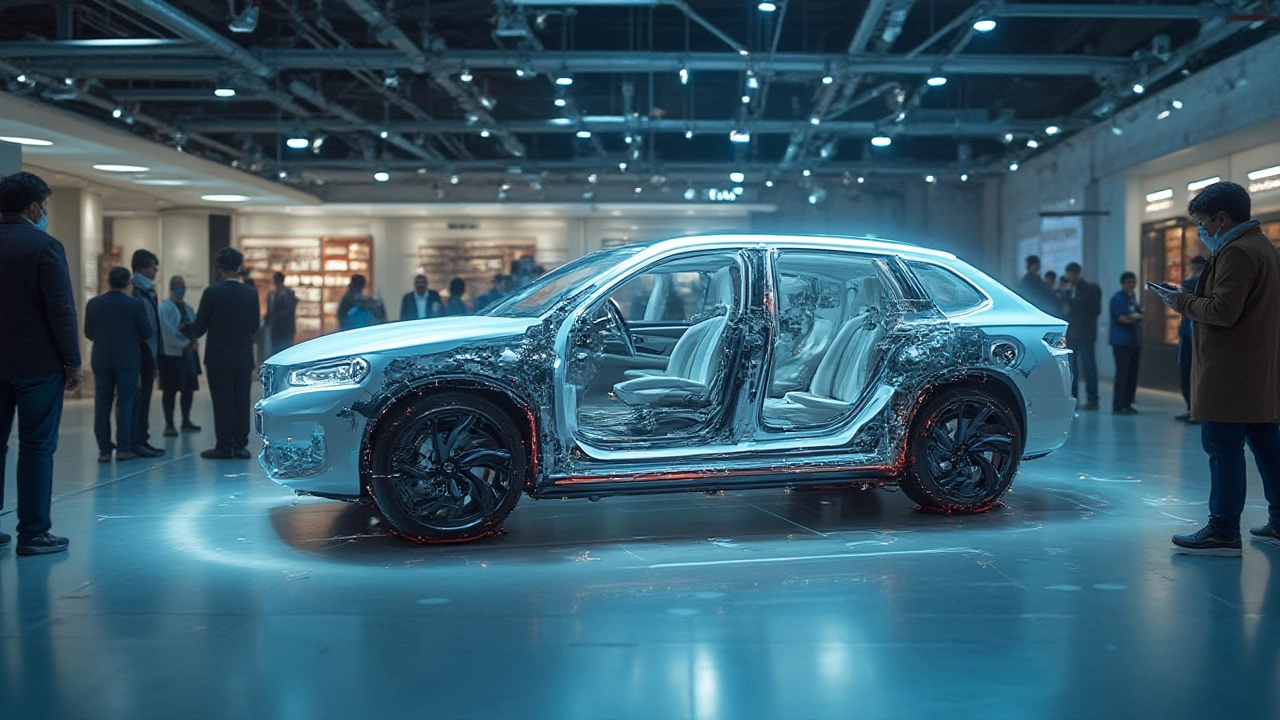
Family life has a way of turning small details into big promises. A quick grocery run becomes a lesson in stability. A school-day commute becomes an exercise in vigilance. And somewhere in that everyday choreography, rear side airbags quietly earn their place—less as a headline feature and more as a guardian of the moments we rarely get to redo.
In 2025, the fascination around rear side airbags continues to grow, even among buyers who may not always know the exact difference between “comfort” and “consequence.” It’s a common observation: people notice the word “airbag,” but overlook where it’s positioned. Then, after learning what rear side airbags actually do, the same buyers start asking deeper questions—Why do some cars feel more protective than others? Why does the same safety rating translate into different levels of real-world reassurance?
This guide looks at Most 2025 Family Cars with Rear Side Airbags, framed as a safety list. The intent is not to reduce vehicle choice to a checklist. Instead, it’s to help you recognize the hidden architecture of modern crash protection—where sensor logic, inflation design, and occupant geometry converge to reduce harm.
Why Rear Side Airbags Matter for Families
Rear side airbags are designed for occupants seated on the outboard sides—typically the rear seats where children, teens, and sometimes older passengers travel most frequently. During side-impact collisions, the body experiences a different kind of acceleration than in frontal impacts. The result can be intrusive lateral forces against the thorax, pelvis, and head.
Rear side airbags aim to create a protective cushion between the occupant and hard interior surfaces—such as door panels and pillars. That “buffer effect” is not merely theoretical. It can mean a reduction in direct contact, reduced intrusion, and a more controlled deceleration profile. Short sentence, simple reality: fewer harsh contacts can translate into better outcomes.
There’s also a psychological component. Parents often describe a subtle calm when they know rear passengers are protected by more than just the seat belt. The fascination isn’t vanity; it’s an instinctive response to layered protection. When a system supports you, you trust it more.
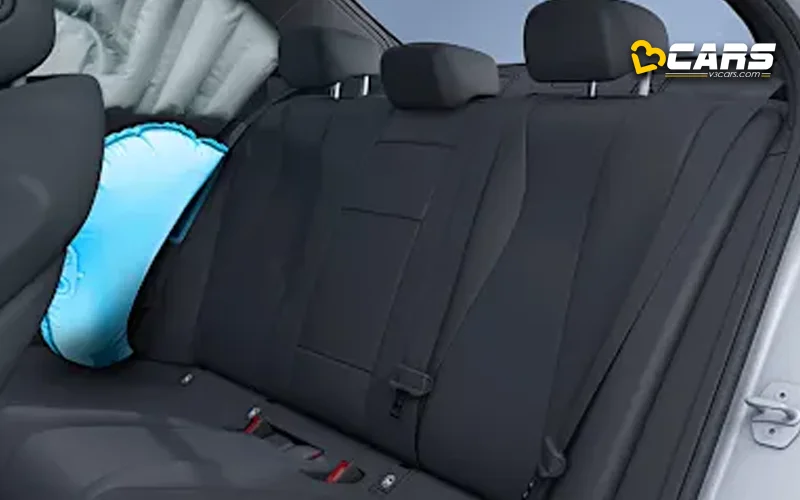
Understanding How Rear Side Airbags Deploy
Deployment is often misunderstood as a simple on/off event. In practice, it’s a coordinated decision—made in milliseconds—by the vehicle’s restraint control modules. A crash event triggers sensors that evaluate impact direction, severity, and side intrusion cues.
When conditions meet deployment thresholds, the airbag inflates rapidly through designed vents and material pathways. The inflation speed matters. Too slow is ineffective; too fast could be destabilizing. The engineering sweet spot forms a cushion that supports the occupant without causing abrupt secondary movement.
Families should also consider seating posture and restraint synergy. A rear side airbag complements the seat belt, not replaces it. A well-latched belt positions the torso and reduces the tendency to slide toward the impact zone. The system’s geometry is tuned for real occupants—small bodies, taller teenagers, and the occasional “I fell asleep on the ride” moment that becomes a safety variable.
Key Selection Criteria for 2025 Family Cars
Choosing a car for family use is rarely only about rear side airbags. Still, it’s a powerful anchor feature. Before narrowing options, consider these deeper factors—because the same airbag label can mean different implementation details across models.
1) Coverage consistency: Is the rear side airbag offered for both outer seats, or only specific seating positions?
2) System integration: Does the airbag package come with robust side curtain coverage as well?
3) Occupant detection and compatibility: How does the car manage children seated with correct restraint systems?
4) Interior stiffness and design: The effectiveness of an airbag can be influenced by door structure, pillar configuration, and trim materials.
5) Safety ecosystem: Look for a broader suite—stability control, side impact protection logic, and intelligent crash response.
Short version: rear side airbags are a key piece, but the full puzzle is the vehicle’s entire safety strategy.
Most 2025 Family Cars with Rear Side Airbags: The Safety List
Below is a structured safety list of popular family-oriented vehicles expected to offer rear side airbags in their 2025 lineups. Because trims vary, treat this as a selection starting point—then confirm availability for the exact variant you’re considering.
1) Premium Sedans and Crossovers with Rear Side Airbags
Premium sedans and crossovers often prioritize occupant protection across all seating positions. In these cars, rear side airbags typically appear as part of a more comprehensive restraint strategy.
Family reason: these models are commonly purchased for long commutes and mixed passenger loads—adults in front, kids behind, and grandparents on weekends. Rear side airbags add a consistent protective layer during side impacts, which is especially relevant when parking lots become crowded and door-opening proximity increases.
What to look for: confirm rear side airbag presence for the outer rear seats, and cross-check with side curtain airbags for additional head protection.
2) Mid-Size SUVs That Cater to Daily Life
Mid-size SUVs have become the default family choice due to seating flexibility, ride comfort, and cargo practicality. Many 2025 variants now include rear side airbags, reflecting the industry’s move toward “coverage by default” rather than “safety as an upgrade.”
Long-drive realism: in stop-and-go traffic, side collisions can happen at surprisingly low-to-moderate speeds. The damage may look minor, but the lateral forces can still be significant for rear occupants. Rear side airbags are designed for precisely this zone of everyday risk.
What to look for: ensure the rear seat airbags are included in your chosen trim and that the vehicle’s crash testing documentation aligns with your comfort expectations.
3) Three-Row Family Vehicles (Where Rear Protection Gets Even More Crucial)
Three-row vehicles add complexity—and therefore, more reasons for fascination. The farthest seats are often the most frequently used during family road trips. When everyone piles in, the probability of someone riding out of the protective “comfort zone” increases.
Rear side airbags in these vehicles can become a highlight feature because the rear passenger area is where side impacts can threaten the thorax and head region through door-adjacent intrusion. While seat belts remain essential, the airbag cushion is the extra layer that helps during high lateral energy moments.
What to look for: verify airbag coverage for the rear rows and confirm whether curtain airbags also deploy along the same side-impact profile.
4) Compact Family Cars with Advanced Restraint Design
Compact cars used by families sometimes carry the myth of “less safety due to smaller size.” That’s outdated. Many 2025 compact family cars incorporate rear side airbags and sophisticated restraint logic, proving that engineering—not only size—shapes protection.
Here’s the deeper reason people become captivated: compact cars are often chosen because they fit daily routines. If a compact model provides rear side airbags, it becomes a practical reassurance—safety without sacrificing urban agility.
What to look for: check that the rear side airbags are not absent in certain entry trims. Some manufacturers reserve advanced protection for mid-to-higher variants.
Trims, Variants, and the “You Might Have It, But Not Exactly” Problem
One common confusion persists: buyers see rear side airbags advertised but discover the exact trim they selected doesn’t include them. Safety equipment can be packaged differently—by region, by dealer offer, by budget tier, and by optional bundles.
To avoid disappointment, confirm through the vehicle’s official spec sheet or the exact brochure for your market and trim. Look for wording that explicitly indicates rear side airbags (and for which seating positions).
Short sentence: verify, don’t assume.
How Rear Side Airbags Fit into the Broader Safety Ecosystem
Rear side airbags do not work alone. They sit within a network of protective features: seat belts with pretensioners, crash sensors, stability systems, and often advanced driver assistance technologies. Even the best airbag system depends on proper occupant position and belt usage.
In real family life, these systems matter most when distractions are highest. That’s when children fidget, teenagers shift seats, and adults reach for cups. Layered safety reduces the penalty of imperfect moments.
What Families Should Do After Buying a Car with Rear Side Airbags
Ownership is where safety becomes habit. Use child seats correctly, ensure seat belts are fastened every time, and keep rear seats free of loose cargo that could become a secondary projectile. Teach rear passengers simple rules: feet on the floor, seat belt on, windows closed when conditions demand it.
Also, practice smart loading. Rear side protection is most useful when occupants are positioned as intended. If a child seat is installed incorrectly, the airbag’s relationship to the body changes. Rear airbags can’t compensate for improper restraint setup.

Conclusion: Choosing Reassurance, Not Just Transportation
Most 2025 family cars with rear side airbags share a common philosophy: protection should not be selective. It should be continuous—covering the passengers who spend the most time in the rear, where side collisions can deliver the most unsettling injuries.
The fascination you feel after learning about rear side airbags makes sense. Safety features aren’t just gadgets; they’re quiet choreography between sensors, inflators, and the geometry of everyday movement. When you choose a car with rear side airbags, you choose an added layer of reassurance—one that supports family life when the unexpected arrives.
Confirm the exact trim, validate coverage for the rear seating positions, and then move forward with confidence. In a world that changes in seconds, that confidence is worth its weight in peace.