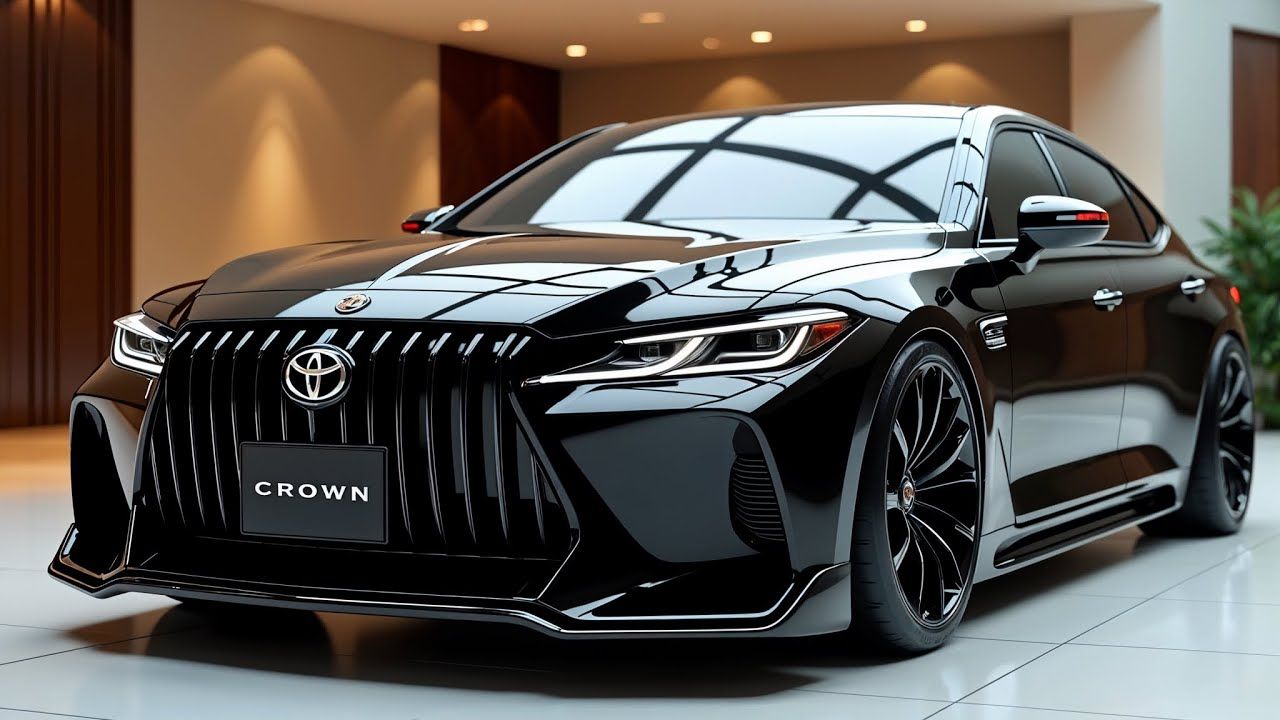
The first time the 2025 Toyota Crown comes into view, it performs a subtle sleight of hand. It looks upscale—clean lines, confident proportions, and a quiet confidence that doesn’t need to shout. Yet the real fascination begins one layer deeper. Many drivers assume a “family sedan” is automatically a compromise: competent but forgettable, composed but plain. The Crown challenges that assumption. It doesn’t merely transport. It curates a sense of occasion for everyday routines, as if the mundane commute and the long weekend are worthy of the same design discipline.
In this review, the Crown’s appeal is treated as more than a visual impression. The way it moves, the way it’s equipped, and the way it supports people inside it all contribute to a broader idea: a modern sedan can be both dignified and practical without becoming sterile. That balance is rarely accidental. It’s engineered.
Design Philosophy: A Formal Presence Without the Formal Attitude
From the front quarter to the rear profile, the Crown communicates refinement through restraint. The surface details are purposeful rather than decorative. Light is treated like a material, not an afterthought—daytime running elements and headlamp design help define the vehicle’s expression, especially in motion.
It’s tempting to call the Crown “elegant,” but elegance alone doesn’t explain why it draws a second glance at a stoplight. The deeper reason is proportion. The stance feels planted, while the bodywork avoids visual clutter. Even the most casual observer senses that the designers wanted the sedan to look composed under all lighting conditions—morning sun, overcast afternoons, and night-time reflections alike.

Cabin Atmosphere: Luxury That Doesn’t Demand Permission
Step inside and the Crown’s character becomes more intimate. This is where many family-sedan debates start—whether comfort is merely “soft” or genuinely supportive. The Crown leans toward the latter. Surfaces feel considered, layouts appear to anticipate real-world use, and the overall environment discourages distraction.
There’s a particular kind of calm that happens when materials are chosen with tactile intention. It’s not only about how the cabin looks in photos; it’s about how it feels during the thousand small moments that make up ownership: settling into the seat, adjusting mirrors, navigating nighttime glare, or reaching for a cup during a hectic schedule.
Family life is dynamic, and the Crown’s cabin is shaped for that. It accommodates everyday clutter without turning the interior into chaos. It also gives passengers a sense of space—visually and psychologically—which matters more than people expect.
Infotainment and Controls: Smooth Convenience Over Friction
Modern drivers tolerate technology only when it behaves like a reliable companion. The Crown’s interface aims for that kind of steadiness. Menus are meant to be intuitive, and controls are arranged to reduce the “hunt-and-peck” behavior that can turn a short drive into a distraction fest.
Sound quality and screen clarity aren’t luxury gimmicks. They affect mood. On days when the schedule is tight, smoother navigation and more predictable interaction can lower stress. That’s a subtle advantage, but it’s a real one.
There’s also a deeper fascination: a well-designed cockpit makes drivers feel less like they’re operating a machine and more like they’re guiding a refined instrument. That shift changes the entire relationship between person and vehicle.
Powertrain Behavior: The Crown’s Talent for Quiet Momentum
Performance in a family sedan should be judged by how it disappears into the drive. When acceleration feels effortless, merging becomes less ceremonial and more automatic. When braking is composed, sudden stops feel controlled rather than abrupt.
The 2025 Toyota Crown aims for a driving experience that balances responsiveness with serenity. The goal is not to turn every trip into an adrenaline event. Instead, it turns the Crown into a vehicle that stays composed across varied conditions—city stop-and-go, highway cruising, and those in-between stretches where traffic flow is unpredictable.
Power delivery matters here. Smoothness is often mistaken for weakness, but in practice, it prevents the car from feeling temperamental. Drivers notice this during longer drives, where consistent behavior reduces fatigue.

Ride Comfort and Handling: Stability That Feels Like Confidence
One common observation about sedans is that they either ride like clouds or handle like athletes—rarely both. The Crown tries to reconcile the mismatch. It aims for a ride quality that absorbs imperfections while maintaining a coherent sense of direction.
That “coherent direction” phrase matters. A vehicle can be comfortable and still feel vague, like it’s second-guessing. The Crown’s chassis tuning works toward stability without erasing the road’s information entirely. The result is a confident carriage through corners and lanes, even when the surface isn’t perfect.
For families, this becomes practical: fewer abrupt motions mean less passenger discomfort. It also encourages relaxed driving habits, especially during wet or uneven pavement where composure is a safety feature disguised as comfort.
Safety and Driver Assistance: Less Worry, More Presence
Safety technology can easily become a checkbox. The better question is how it supports real driving behavior. The Crown’s driver-assistance features are designed to reduce workload. They help with lane centering, monitoring traffic flow, and supporting braking readiness in challenging situations.
This is where deeper reasons show up. When safety systems feel predictable and appropriately calibrated, drivers stop treating them like mysterious guardians and start using them as quiet support. That shift improves confidence, and confidence changes how people drive—smoother inputs, better attention, and fewer last-second corrections.
In family life, that emotional steadiness is just as valuable as any measurable rating.
Space, Storage, and Family Usability: Where Thoughtfulness Becomes Habit
A family sedan earns its role in the details. The trunk matters for grocery runs, school supplies, and weekend errands. Rear-seat space matters not only for comfort but for posture and ease during longer stretches.
The Crown’s practicality is shaped to feel natural. Storage bins and cabin placement are meant to keep essentials within reach without cluttering the interior. The goal is to reduce the “where did we put that?” cycle that always arrives with busy days.
This is another layer of fascination. Luxury is often described as ornamentation, but here it reads as ergonomics—an approach that makes daily routines less labor-intensive.
Value and Ownership Experience: Refinement That Doesn’t Fade Into Obscurity
Owning a premium-leaning sedan often comes with a hidden anxiety: will the experience stay satisfying as the miles accumulate? The Crown’s appeal hinges on whether it feels consistently put-together, not just impressive at the showroom.
From build quality to the continuity of ride character, the Crown signals that it’s built to remain coherent over time. That matters because the best “family” vehicles aren’t the ones that impress once. They’re the ones that remain agreeable through seasons, routines, and changing passenger needs.
Just as importantly, it offers a sense of dignity. The Crown doesn’t feel like a compromised choice aimed at a narrow audience. It feels like a deliberate solution for families who want more than basic transportation.
Who the 2025 Toyota Crown Is For
The Crown fits drivers who want an upscale presence without abandoning daily practicality. It suits households that value comfort, calm, and thoughtful engineering—people who dislike loudness, clutter, and the constant negotiation that comes with lesser interiors.
If your idea of a good sedan includes smooth merges, composed handling, supportive technology, and an interior that makes time pass more pleasantly, the Crown aligns naturally.
Final Thoughts: The Crown’s Real Luxury Is Its Calm
The 2025 Toyota Crown Review could easily end with surface-level praise—its styling, its cabin, its refined demeanor. But the lasting impression is different. The Crown offers calm as a feature. It turns a commute into a quieter ritual. It makes family travel feel less like logistics and more like a shared experience.
That’s the deeper reason for fascination: the Crown understands that luxury is not just what you see—it’s what you feel when you’re driving, waiting, arriving, and living with the vehicle day after day. In a category full of compromises, the Crown feels unusually intentional, as if it was designed to make everyday life look—and feel—better.