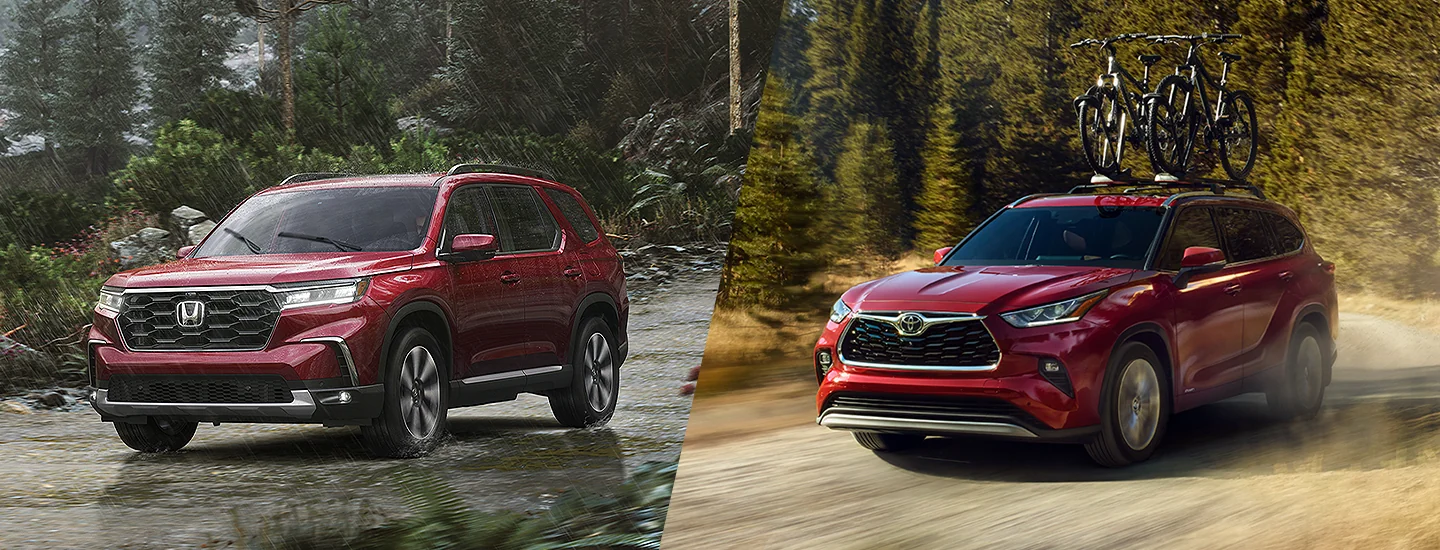
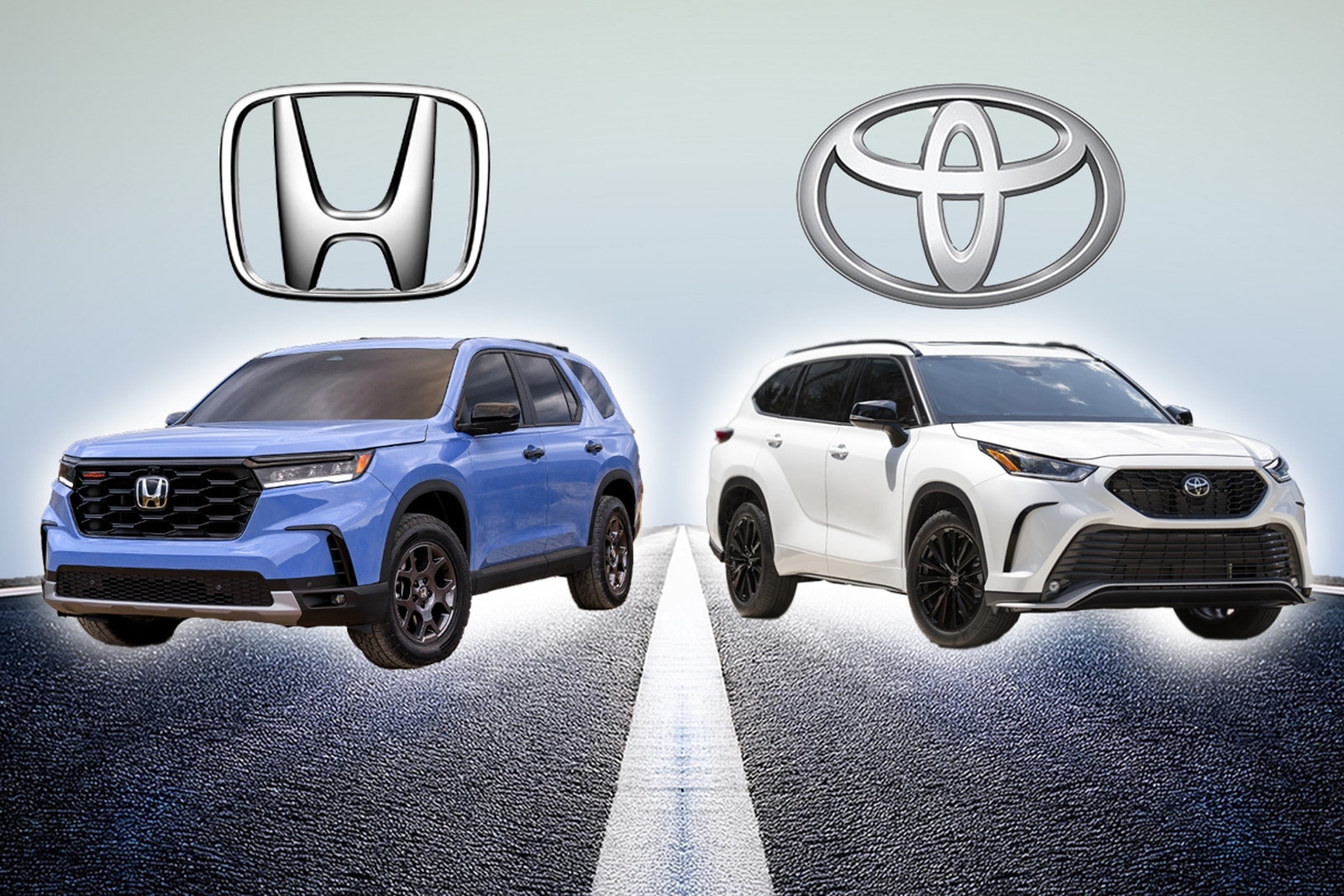
There’s a particular kind of weekend anticipation that only a three-row SUV can summon. It starts with a parking-lot glance—three rows of possibility lined up like chapters waiting to be read—and ends with a decision that feels less like shopping and more like choosing a future routine. The 2025 Honda Pilot and the Toyota Highlander both court that future, but they do so with distinct personalities. One leans into Honda’s pragmatic versatility, while the other leans into Toyota’s reputation for steady composure. This isn’t merely a comparison of badges. It’s a shift in perspective: instead of asking which vehicle is “better,” the question becomes which one best fits the way your life actually moves.
In this 3-row showdown, the goal is not to drown the reader in minutiae. It’s to trace the shape of each SUV’s promise—space, comfort, capability, technology, and the quiet details that change everything once the kids, groceries, and weekend gear start stacking up. By the end, you’ll feel less like you’re shopping and more like you’re decoding your own priorities.

First impressions: the architecture of comfort
It’s easy to assume that three rows automatically mean three equal experiences. Reality is more nuanced. The 2025 Honda Pilot is designed around a sense of effortless adaptability. Its interior layout tends to feel like it was planned for real life—doors opening to a cabin that wants to be used, not merely admired.
The Toyota Highlander, meanwhile, often carries an air of familiar restraint. It feels composed, with an emphasis on a calm ride and a cockpit that doesn’t beg for attention. That difference matters. When you’re loading and unloading for school, sports, and weekend errands, comfort is less about luxury theater and more about how quickly the vehicle becomes second nature.
Look closely and you’ll notice how each SUV handles the “in-between” moments: walking from the front seats to the middle row, reaching back for a water bottle, or settling into the third row after a long day. These transitions are where personality becomes practical.
Room to breathe: second-row versatility and third-row reality
Many three-row shoppers focus on maximum seating capacity, then discover that capacity is only part of the story. The more revealing metric is how the space functions. Does the middle row invite easy access to the third row? Does the third row remain usable beyond brief trips?
The Pilot typically excels with a layout that prioritizes movement. Seats and configurations are often engineered to make changes feel less like a puzzle and more like a routine. This helps when passengers need to come and go frequently, or when you’re switching between “people mode” and “cargo mode.”
The Highlander, known for its family-friendly approach, tends to offer a third-row experience that works well for everyday use—especially when the passengers aren’t necessarily expecting limousine-level legroom. The Highlander’s strength is that it doesn’t feel awkward in the way some third rows do. It’s a workable arrangement with an emphasis on stability and comfort.
Here’s the pivot point: the “best” SUV for your family depends on how often you actually use the third row. If the third row is a daily destination, the Pilot’s flexibility can feel like a quiet advantage. If it’s more occasional—weekend guests, road trips, overflow seating—the Highlander’s balanced approach can be perfectly satisfying.
Driving feel: calm confidence vs quietly eager control
Once the seats are settled, the road takes over. The Pilot often aims for an approachable driving experience—smooth, confident, and easy to live with. The steering typically communicates enough feedback without turning every commute into an engineering audition. It’s the kind of driving demeanor that encourages trust.
The Highlander, on the other hand, often feels designed for composure. It’s a vehicle that tends to emphasize predictability—power delivery that doesn’t surprise you, ride quality that stays levelheaded, and handling that feels reassuring instead of restless.
Both SUVs can handle the typical demands of family driving: merging with authority, navigating parking-lot turns, and maintaining a steady rhythm on highways. The choice becomes less about raw thrill and more about the emotional tone you want behind the wheel. Do you crave a more flexible, “do-everything” feel, or a steadier, “set your course and glide” sensation?
Power and efficiency: where expectations meet the throttle
Under the hood, the story shifts from vibe to specifics. Modern buyers want power that responds when needed—without turning fuel economy into a daily negotiation. The Pilot and Highlander both seek to balance capability with efficiency, but they can feel different in how they deliver momentum.
The Pilot’s character often feels tailored for versatility—ready to handle full loads, errands, and road trips with minimal fuss. The Highlander’s approach frequently lands on smoothness, with an efficiency-minded philosophy that fits the rhythm of long drives.
To make the right call, consider your pattern: is your driving mostly urban stop-and-go, or do you spend long stretches on highways? Your answer will shape how you perceive acceleration, gearing behavior, and the way each SUV “prepares” itself for the next demand.
Technology and infotainment: the cockpit as a command center
Modern family life runs on screens and signals. Navigation clarity matters. Audio quality matters. Connectivity matters. When tech works, it disappears into the background. When tech stumbles, it becomes an ongoing irritation.
The Pilot typically leans into user-friendly infotainment design—intuitive controls, a system that tries to keep cognitive load low, and features that help turn the vehicle into a rolling basecamp. It’s not just about having options; it’s about making those options feel reachable while you’re on the move.
The Highlander’s tech approach often emphasizes integration and calm presentation. It can feel like the dashboard is designed to avoid visual chaos, which becomes particularly important when you’ve got passengers competing for attention—kids selecting songs, adults navigating, everyone trying to coordinate.
In both cabins, pay attention to how quickly you can adjust what you need: climate settings, media, and route guidance. That speed of interaction is a subtle form of luxury.
Safety and driver assistance: the invisible guardian
Three-row ownership comes with a particular kind of vigilance. There are more blind spots, more distractions, more variables. That’s why driver assistance features aren’t a garnish—they’re an emotional safety net.
Both the Pilot and Highlander typically offer comprehensive suites of safety technologies. The value lies in how consistently they behave in real-world conditions: lane tracking on highways, adaptive cruise stability in traffic, and warning systems that feel timely rather than theatrical.
When you test drive, observe the system’s temperament. Does it feel cooperative, or does it seem overly intrusive? Does it help you stay centered, or does it require frequent manual correction? The best safety tech is the kind you barely notice—until you need it.
Space for life: cargo, storage nooks, and practical magic
After people, comes everything else. A grocery run isn’t a single bag—it’s a small logistical mission. Sports gear is bulkier than it looks. Trips accumulate souvenirs. The Pilot and Highlander are both designed to support these demands, but the details differentiate ownership experience.
Look beyond trunk size at storage distribution: underfloor compartments, door pockets, and how easily items fit with the third row folded. The Pilot’s flexibility can make it easier to reconfigure space quickly, especially when you’re switching between hauling passengers and transporting cargo.
The Highlander can be equally compelling for families who prioritize a tidy, straightforward loading routine. It tends to feel organized, with storage that supports everyday use rather than requiring a specialized setup each time.
Which one fits you: a decision framed by your routines
Here’s where the comparison becomes personal. Choose the Pilot if you want a three-row SUV that feels especially ready for frequent reconfiguration, practical flexibility, and a cabin that adapts as your family’s schedule shifts from weekday routines to weekend excursions.
Choose the Highlander if you value steady composure, a balanced approach to comfort and capability, and an ownership experience that tends to feel predictable and calm—especially during longer stretches of driving.
In a world where SUV marketing often sounds identical, the distinction is really about temperament. The Pilot is often the “change-ready” companion. The Highlander is often the “steady-guide” companion. Neither approach is inherently superior. The best choice is the one that aligns with the way you live.
Final verdict: the three-row showdown, reframed
The 2025 Honda Pilot and Toyota Highlander both deserve their place in the three-row conversation. Yet the real winner isn’t the one with the loudest headline. It’s the one that makes your most common moments smoother—boarding kids, fitting gear, navigating traffic, and arriving without the lingering sense of compromise.
When you step back and view the decision through your own routine—how often the third row is used, what kind of trips you take, how you want the cabin to feel day after day—you’ll discover the answer quickly. The showdown isn’t simply Pilot vs Highlander. It’s your family’s next chapter, chosen with intent.