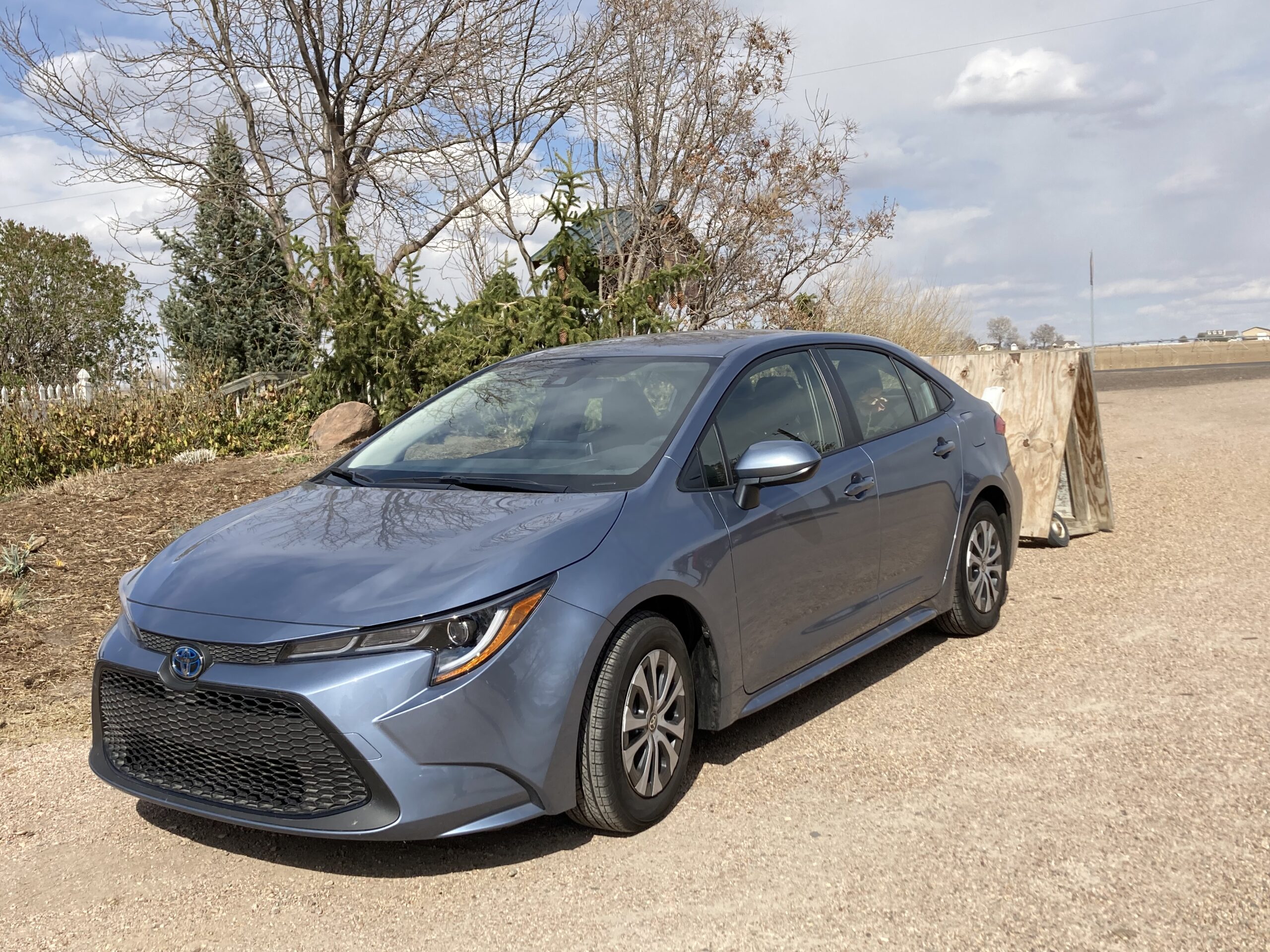
Every time the conversation turns to fuel economy, a familiar question slips in: why do some drivers see better mileage than the sticker suggests—while others feel as if the numbers were written for a different universe? The Toyota Corolla Hybrid sits right at the center of that debate. On paper, its efficiency can look almost too good to be true. In the real world, it can feel even stranger. One minute you’re watching the trip meter tick along with calm inevitability; the next, you’re bracing for traffic stops, cold weather, or a long stretch of highway wind that turns optimism into arithmetic.
So, does the Corolla Hybrid beat the EPA? Sometimes it does. And the fascination isn’t just about saving at the pump. It’s about how a hybrid persuades your daily routine—your habits, your local geography, even your patience at red lights—to behave like an efficiency ally. The deeper story is less about a single magical number and more about a system that rewards the way people actually drive.
The sticker is a snapshot, not a destination
EPA estimates are created through standardized test cycles. Those cycles are meticulous, repeatable, and designed to make different vehicles comparable. But they are not designed to mirror life in a particular city, commute, or weather pattern. Real driving has entropy: traffic rhythms drift, elevation changes appear without warning, and the “typical” route you take might be anything but typical for the test environment.
That mismatch matters because hybrids are profoundly sensitive to conditions. They thrive when the powertrain can rely on its electric component without constantly demanding maximum output. In other words, the circumstances that suit a hybrid are often the very circumstances that vary most from one driver to another.
Why the Corolla Hybrid can outperform EPA in daily use
Imagine a route that includes frequent slowdowns, short distances, and stop-and-go movement. These are precisely the moments when hybrids can work like elegant bookkeepers. Regenerative braking captures energy you would otherwise waste as heat. Then the electric system smooths transitions: it can assist during bursts of acceleration and help maintain momentum at low speeds.
In many real-world commutes, the Corolla Hybrid benefits from a kind of “opportunistic efficiency.” The engine doesn’t run continuously at the least favorable points; instead, it can operate more efficiently when it does engage. The car’s control strategy—its blend of engine, motor, and battery management—acts like a conductor, timing the shifts between sources of torque so that energy is used rather than merely consumed.
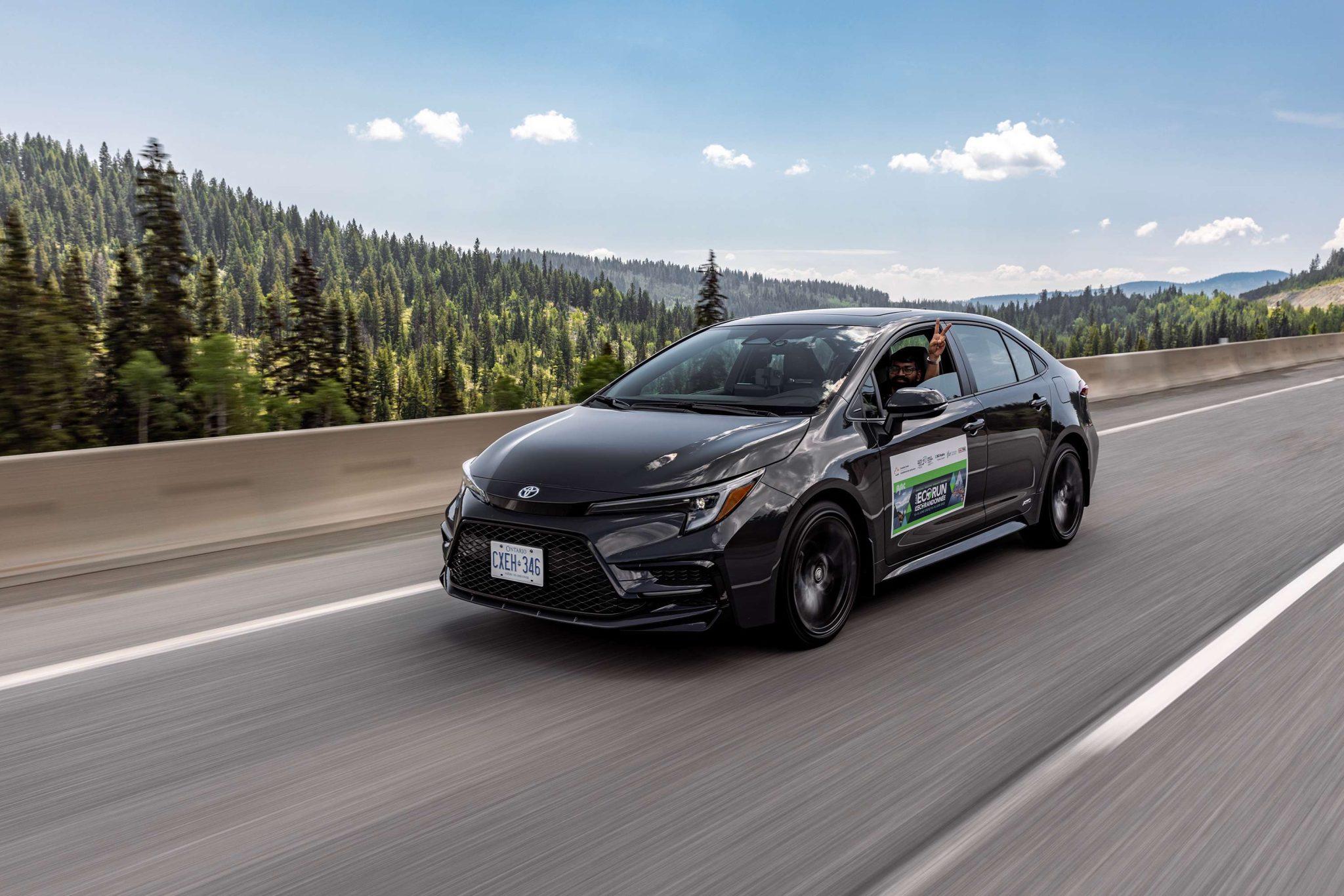
Long, steady highway driving can also deliver strong results, but the advantage tends to appear when the driver avoids the gravitational pull of constant high-speed acceleration. A disciplined throttle—light inputs, anticipatory driving, and reduced aerodynamic stress—lets the hybrid remain closer to its efficiency sweet spots.
The hidden variable: temperature and engine warm-up
Cold weather is often the silent saboteur of real-world MPG. When the cabin and powertrain are cold, the engine may have to run longer to reach operating temperature. The battery’s ability to accept and deliver energy can also shift when temperatures are low. Even if the driver is calm and consistent, physics may still insist on extra energy use.
Conversely, in mild or warmer conditions, the Corolla Hybrid can settle into a more cooperative routine. The engine reaches its efficiency zone sooner, and the hybrid system can spend more time using electric assistance in the first place. This is one reason why some drivers report surprisingly strong numbers in late spring and summer—then feel the drop in autumn and winter.
It’s not that the vehicle “changes personality.” It’s that the environment changes the choreography.
Driving style: the throttle is a storytelling device
Fuel economy isn’t merely a measurement. It’s a behavior you can read. The most efficient hybrid driving often looks subtle: gradual acceleration, careful spacing, and a willingness to coast when conditions allow. Harsh starts may still be possible, but they tend to push the system toward less favorable operating regions—where the engine and battery must work harder, more often, and with less opportunity for recuperation.
Equally important is how you respond to traffic signals. If you brake late and aggressively, you may miss the chance to harvest energy efficiently. If you brake smoothly and allow regenerative systems to do their job, you turn deceleration into a sort of forward planning. The Corolla Hybrid doesn’t just respond to your command. It rewards your timing.
City versus highway: where the hybrid’s character shows
A common observation is that hybrids “make the most sense” in the city. That instinct is not wrong. Urban driving offers frequent speed changes, and speed changes are where the hybrid’s ability to store and reuse energy becomes most visible.
However, it’s equally true that some highway commutes can still produce impressive results—especially if the route is relatively flat, traffic flow is consistent, and speed is kept within a range that doesn’t punish aerodynamics. Wind resistance scales with speed, and the hybrid can only compensate so much with internal efficiency when the car must overcome a constant air burden.
The Corolla Hybrid often performs best when it can blend sources without being forced into a single mode for long periods. Smooth highway driving can sometimes accomplish that more than aggressive highway driving would.

Battery state, regeneration, and the myth of “always on” efficiency
Hybrid efficiency stories can sound like a permanent advantage: one pedal here, a bit of regen there, and the car quietly prints better MPG. Reality is more nuanced. Regeneration depends on the battery’s state of charge and on driving conditions. If the battery is near full, the system may limit how much it can recapture during braking. Likewise, during sustained high-demand periods, the battery can be drawn down and the engine may do more work.
This is part of why some drivers experience dramatic improvements on certain days and more modest results on others. The hybrid system is continuously managing energy flows. Efficiency can be transient, then restored. It’s less like a vending machine and more like a balance sheet.
Why drivers become fascinated: the Corolla makes MPG feel attainable
There’s a subtle psychological hook behind strong real-world figures. When a driver sees the car consistently returning excellent mileage—even if it occasionally misses—confidence replaces cynicism. The Corolla Hybrid becomes less of a distant promise and more of a daily companion.
That sense of agency is rare in modern motoring. Many technologies deliver benefits that feel automatic but difficult to influence. A hybrid, however, makes the driver part of the equation. Your spacing, your coasting habits, and your willingness to modulate speed all feed into outcomes you can measure. In that way, fuel economy becomes interactive.
And once you begin to notice the feedback—how regen responds, how the engine behaves after a stop, how the system transitions at low speeds—you may find yourself curious even on routes you’ve driven a hundred times. Efficiency stops being a chore. It becomes a puzzle with moving parts.
Beating EPA isn’t guaranteed, but it’s plausible
Does the Corolla Hybrid beat the EPA? For many drivers, yes—especially when the commute includes frequent deceleration, moderate temperatures, and a driving style that allows regenerative opportunities to matter. When those conditions align, the Corolla Hybrid can deliver a result that feels almost audacious compared with the sticker.
But the real-world picture isn’t binary. Some days will be better. Some will be worse. When cold weather dominates, when you drive at relentless highway speeds, or when traffic forces abrupt acceleration and braking, the vehicle’s efficiency may drift closer to—rather than above—the estimate.
The point is not to hunt a permanent “win.” The point is to understand the conditions under which the Corolla Hybrid thrives. When you do, the MPG stops feeling like a rumor and starts feeling like a pattern you can learn.
Final thoughts: efficiency as a collaboration
The Corolla Hybrid’s real-world MPG story is compelling because it resists simplicity. The EPA estimate is a useful baseline, but real life is where the hybrid’s strengths reveal themselves. Temperature, traffic flow, throttle discipline, and energy management all conspire to shape the final number.
So when the trip meter looks better than expected, it isn’t just luck. It’s the Corolla’s design meeting your commute’s texture. And that collision—engineering and everyday motion—explains the fascination more clearly than any single MPG statistic ever could.