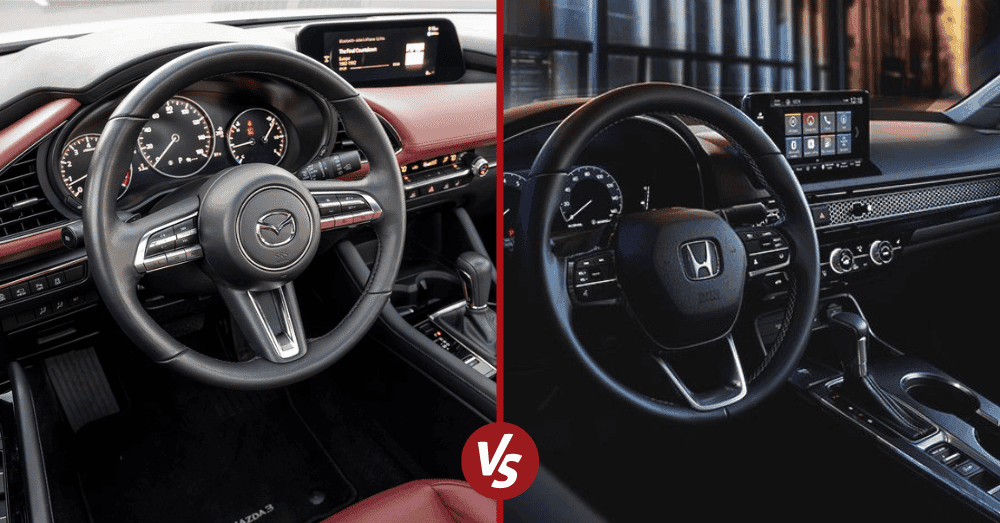
There’s a particular kind of expectation that settles in the moment you slide into a car—an unspoken question: Will this cabin feel composed, or merely adequate? The Honda Civic and the Mazda3 both promise modernity, but they choreograph the experience differently. One leans toward clarity and everyday practicality; the other leans toward an almost artful sense of craftsmanship. And when you compare interior quality, the difference isn’t just in materials. It’s in the philosophy of how the space is arranged, how it sounds when you close a door, and how the cabin makes you feel while you’re living inside it.
Let’s shift perspective. Instead of asking which car has the “better” interior, consider which one makes the most convincing case for taste—the kind of taste you can sense, even before you notice it. In that light, the Civic and Mazda3 become less like competing products and more like contrasting interpretations of comfort, control, and refinement.
First Impressions: The Way a Cabin Introduces Itself
Step inside and the first contrast appears: atmosphere. The Civic’s interior tends to prioritize legibility—controls that feel straightforward, surfaces that look clean, and a layout that aims for instant confidence. It’s the type of cabin that says, Drive now. Learn later. Mazda3 interior styling, by contrast, often carries a softer, more deliberate cadence. Surfaces feel chosen rather than assigned.
That difference matters for perceived quality. Interior quality isn’t only what’s used; it’s how well the design suggests care. When every seam and panel alignment feels intentional, the cabin starts to feel anchored. Even a casual glance becomes a kind of reassurance.
Materials and Touchpoints: Where Quality Becomes Tangible
Interior quality lives in touchpoints—the steering wheel, armrests, and the areas your palms and fingertips habitually claim. The Civic generally offers a solid baseline: plastics and trims engineered to resist scuffs and wear in daily life. You get an experience that feels functional and durable, with surfaces that typically hold up well over time.
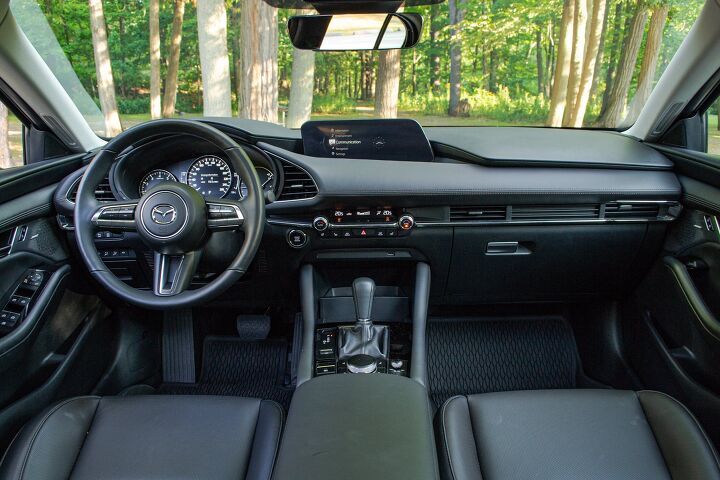
The Mazda3 usually leans into a more tactile sensibility. Even when using materials that are not universally “premium,” the way they’re finished can feel more dimensional. Texture becomes a subtle language; the cabin seems to communicate “precision” rather than “economy.” In practice, that means fewer moments where the interior feels like it’s borrowing from a lower class.
Consider the impression of the door panel. Close it and pay attention—not just the sound, but how the handle region feels when you grip it. Mazda often feels a touch more “tight” and deliberate in the way components meet. The Civic can feel equally confident, but its vibe is more utilitarian—less theatrical, more dependable.
Build Fit and Panel Alignment: The Quiet Proof
There’s a silent metric for interior quality: the gap consistency. Panel alignment, switch fit, and the resistance of trim pieces to looseness can elevate—or undermine—a cabin instantly. A well-built interior doesn’t announce itself. It just stays calm, even when you test it with everyday movements.
Both vehicles can deliver satisfying solidity, yet the Mazda3’s reputation in cabin presentation often traces back to attention to detail. That attention shows up in how the instrument cluster hood, center stack, and console transitions feel integrated. In a Mazda3, the cabin tends to feel like a single composition.
The Civic, meanwhile, frequently balances build quality with cost discipline. The result can be remarkably satisfying for the class—especially for drivers who measure worth in long-term practicality. The Civic’s interior may not always chase the same level of visual theater, but it often delivers a robust, straightforward feel that doesn’t distract from driving.
Ergonomics and Seating Comfort: Quality as Everyday Chemistry
Interior quality is also physiological. It’s about how seats support posture, how steering reach meets your stance, and whether the cabin encourages fatigue or resists it. The Civic typically offers supportive comfort with reasonable adjustability. It’s the kind of interior that doesn’t demand attention—you simply settle in.
The Mazda3 often feels more “curated” in its seating experience. Cushion density, seat contours, and the relationship between the steering wheel and pedals can make the cabin feel tailor-fit. Even when two cars are similar on paper, their ergonomics can diverge in subtle ways that matter over long drives.
Notice the small moments: Does your elbow land naturally on the armrest? Does the seat cushion feel consistent, or does it create pressure points after time? These are the hidden auditions of interior quality.
Dashboard Design and Visual Coherence: A Sense of Order
Visual coherence is the difference between a cabin that feels assembled and one that feels composed. The Civic’s dashboard typically reads as functional and clean. Information is presented clearly, and the layout can feel intentionally uncluttered. It’s a classic approach: reduce friction, increase understanding.
Mazda3’s design language often feels more cohesive and layered. It commonly uses deliberate angles, contrasting textures, and a cockpit-style viewpoint that draws the driver forward. This can create a subtle sense of occasion—especially on night drives when illumination and contrast make the cabin look almost sculpted.
Here’s the curious shift in perspective: interior quality isn’t only “how nice it looks.” It’s how well the design reduces mental noise. A coherent cockpit helps you drive with fewer distractions, which is its own form of luxury.
Technology Presentation: Control, Clarity, and the Rhythm of Use
Modern interiors revolve around screens and interfaces, but their real quality is felt in response time, button logic, and the tactile feedback of physical controls. The Civic typically delivers a user-friendly experience—menus that are easy to navigate, controls that feel broadly intuitive, and an ecosystem designed for daily repetition.
The Mazda3 often emphasizes a driver-focused flow, aiming for a sense of natural rhythm. Even when controls rely on a mix of touchscreen and hardware, the cabin frequently feels engineered to keep your attention on the road. That matters because interior quality is not solely visual—it’s operational.
When you adjust climate settings, change media, or set navigation, does it feel like you’re cooperating with the car or negotiating with it? That question reveals a lot about interior maturity.
Storage, Practicality, and the Hidden Luxury of Space
A truly high-quality interior understands how life is carried inside a car. Storage cubbies, bottle holders, and the usability of compartments can make daily driving feel smoother. The Civic tends to excel here, offering practical storage placements that fit common routines. The cabin often feels like it’s been designed for people who actually use cars—not just admire them.
The Mazda3 can also provide thoughtful storage solutions, though the overall character may feel more “captured” than “open.” Its cabin often encourages fewer distractions from the driver’s perspective, with storage that integrates neatly rather than sprawling.
Quality becomes apparent when you try living with the cabin for a week: where you reach instinctively, how easily items fit, and whether storage feels like an afterthought or a designed convenience.
Sound Insulation and Cabin Calm: The Unseen Differentiator
Interior quality isn’t only about surfaces. It’s also about sound. Cabin calm—road noise, wind noise, and vibration character—shapes how premium the car feels. The Civic generally provides a comfortable ride with adequate insulation for everyday driving. It aims to keep driving pleasant without turning the cabin into an isolated bubble.
The Mazda3 often feels slightly more serene, particularly in how it dampens certain vibrations and maintains a more composed acoustic profile at moderate speeds. That “calmness” can feel like a higher-tier product, even when the rest of the cabin is similarly equipped.
Close your eyes for a moment on a highway stretch. If the cabin seems less busy acoustically, it quietly suggests better interior refinement.
Style Versus Substance: Which Philosophy Fits You?
The Civic and Mazda3 represent two credible philosophies. The Civic typically delivers substance with a straightforward temperament: durable-feeling surfaces, pragmatic layouts, and comfort tuned for everyday use. It’s an interior that grows more reliable the longer you live with it.
The Mazda3 tends to deliver style with a deliberate sense of design intention: a cabin that feels sculpted, often with more tactile satisfaction and a cockpit-like coherence. It can make drives feel more personal—less like commuting, more like participating.
Neither approach is objectively superior in every category. The better question is which emotional response you want from your cabin: calm utility, or crafted ambiance.
Wrap-Up: A Cabin That Either Behaves or Impresses
Honda Civic interior quality often shines through consistency—controls that make sense, materials that serve their purpose, and ergonomics that support routine life. It rewards the driver who values clarity and durability over flourish.
Mazda3 interior quality frequently stands out through presentation—how the cabin feels assembled into a single experience, how materials and textures seem more considered, and how the overall atmosphere can feel gently elevated. It rewards the driver who appreciates design intention and tactile satisfaction.
So, in the end, the comparison isn’t just about who wins. It’s about which cabin aligns with your definition of refinement. One car may feel like a dependable companion; the other may feel like a crafted environment. Either way, the moment you settle in, your perspective changes—and you start noticing what “quality” truly means.