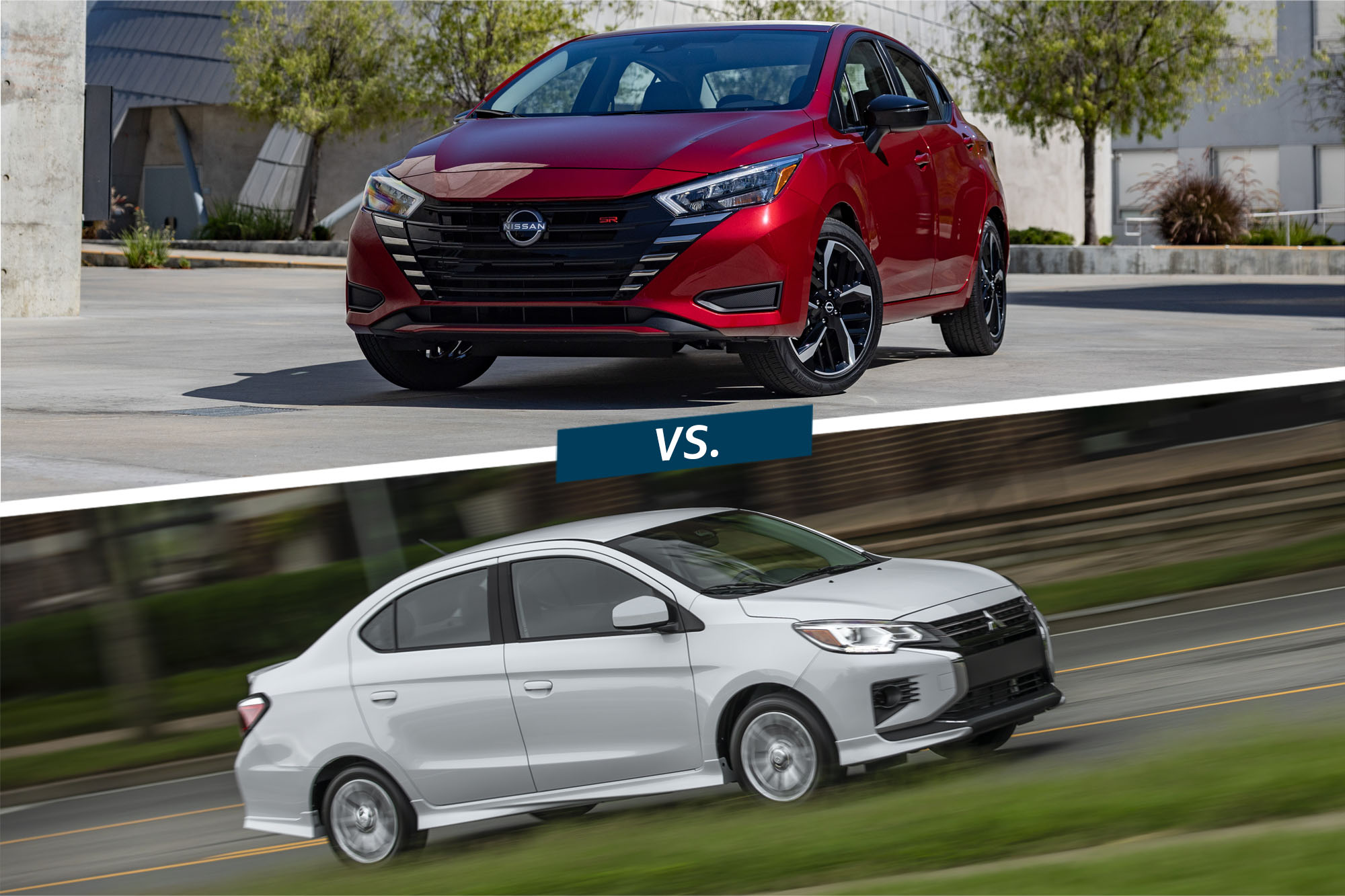
There’s a particular kind of quiet drama in the cheapest-new-car conversation: the one where a driver expects compromise, and the car quietly refuses to cooperate. “Budget” can feel like a synonym for “unfinished.” Yet the 2024 Nissan Versa and the 2024 Mitsubishi Mirage tend to disrupt that assumption almost immediately. Not by becoming luxurious, but by becoming strangely rational—two small cars that turn daily errands into something closer to a controlled experiment. One promises efficiency without ceremony; the other offers affordability with an almost mischievous minimalism. Either way, the price tag changes the temperature of the conversation. What’s left is the real question: which one helps you keep more money while still feeling in command?
To answer that, it helps to shift perspective. Instead of asking, “Which is better?” start with, “Which one is better for my life?” Then notice how the details behave: fuel economy, interior usability, drivetrain choices, everyday comfort, and even the way these cars react to the friction of real roads. Curiosity grows when expectations get renegotiated.
A Shift in Perspective: Cheap Cars, Not Compromised Ones
Cheap new cars often get treated like placeholder objects—stopgaps purchased with a promise to upgrade later. But the Versa and the Mirage challenge the premise that low cost must equal low satisfaction. Their appeal is not rooted in extravagance; it’s rooted in practicality that feels oddly deliberate. The point isn’t that they imitate more expensive vehicles. The point is that they focus on what you actually touch: steering feel at low speeds, visibility through the glass, seat comfort for commutes, and the simple reassurance of a car that starts every time.
Imagine your week as a sequence of errands. Grocery runs, school pickup, the late-morning errand you forgot, the quick detour to grab something you absolutely needed. These cars meet that rhythm. They don’t ask you to slow down emotionally; they ask you to spend less.
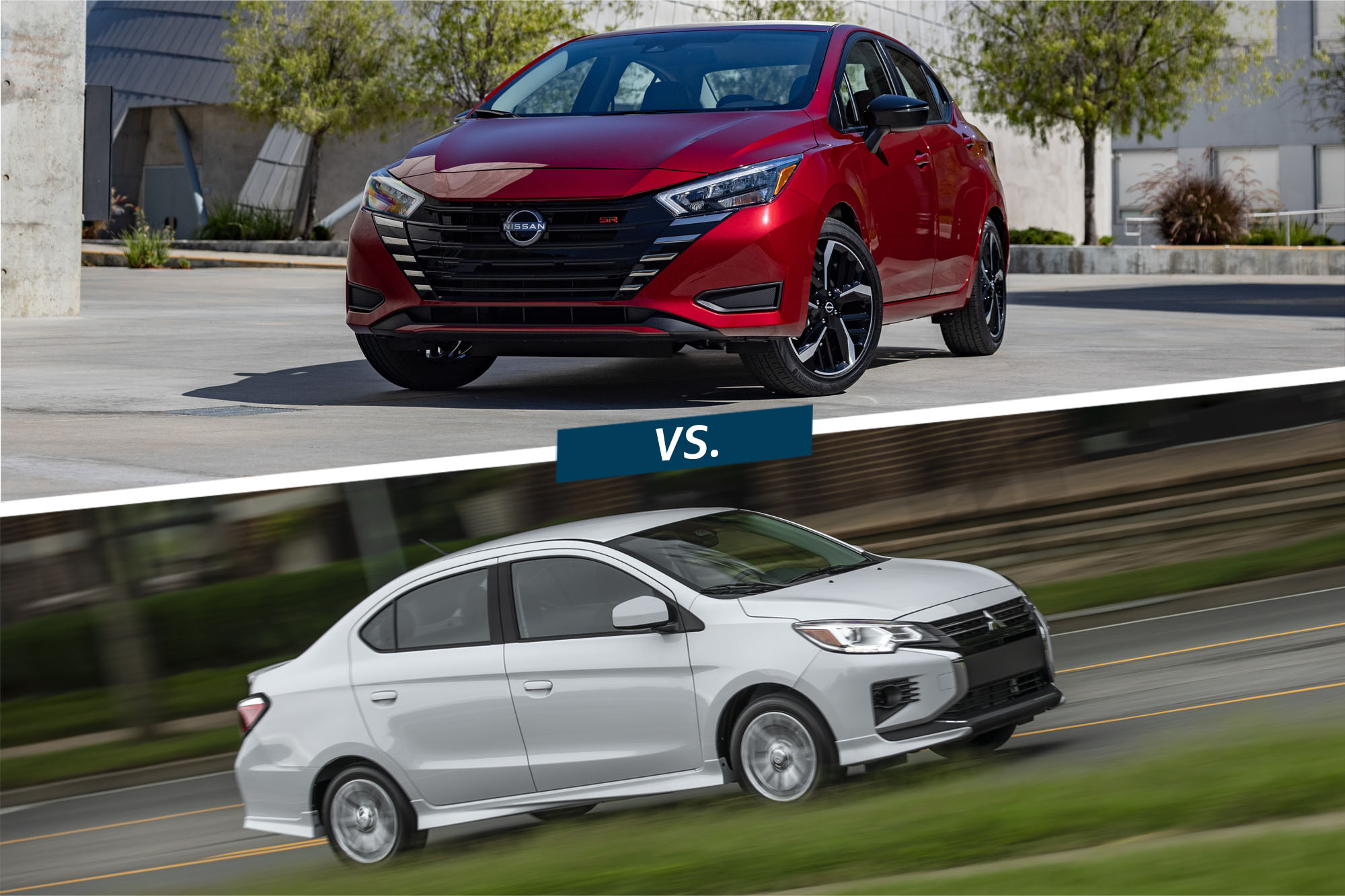
Price as a Starting Line: Who Keeps the Budget Intact?
When the goal is “cheapest new cars,” price isn’t a minor factor—it’s the plot. Both the Versa and Mirage are positioned to undercut many mainstream alternatives. The nuance is that “cheapest” can mean different things depending on how you interpret costs over time. Some shoppers look at the sticker and stop there. Others are more strategic: monthly payments, insurance estimates, and fuel consumption become the real arithmetic.
The Nissan Versa typically aims for a balance of affordability and practicality. The Mirage leans further into value engineering. If your driving life is dominated by short trips and steady city commutes, the Mirage’s efficiency reputation tends to feel like a practical rumor you can verify.
Either way, the key curiosity lies in what you get for the money. A low price is only “good” if it doesn’t quietly steal comfort elsewhere.
Fuel Economy and Efficiency: The Savings You Don’t Have to Think About
Fuel economy is where these cars start to feel like small financial advisors. You may not notice the savings daily, but you feel them when the gas station becomes less of an interruption. The Mirage is frequently associated with impressive efficiency, especially in stop-and-go driving. It’s designed to be frugal, and that frugality shows up most clearly when the calendar keeps you busy and the roads keep asking you to brake.
The Versa, while also engineered for efficiency-minded drivers, can offer a slightly more expansive sense of usability—particularly for shoppers who prioritize cabin room and a less cramped feel. Think of it as a trade-off: the Mirage may reduce your fuel spending more aggressively, while the Versa may reduce the day-to-day discomfort of living with a smaller cabin.
In both cases, the shift in perspective is subtle: instead of treating fuel economy like a technical spec, treat it like breathing room in your monthly budget.
Interior Space and Practical Usability: Comfort Isn’t Always Expensive
Small cars compress everything—expectations, storage, and sometimes your patience. Yet “small” doesn’t have to mean “unusable.” The Versa generally receives praise for offering more comfortable room for typical daily tasks. It’s the kind of cabin that doesn’t make you feel like you’re squeezing into a compromise. Even if the styling isn’t trying to impress a showroom crowd, the ergonomics aim to support real life.
The Mirage’s cabin can feel more compact, but it’s built for straightforward use: commuting, errands, and getting from point A to point B without the drama. If your routines are simple and you don’t expect the car to double as a moving van, the Mirage can feel perfectly adequate—almost refreshing in its lack of pretense.
Storage patterns matter, too. How easily can you stow groceries? Can your phone and essentials fit without becoming clutter? In budget cars, these small details often matter more than the difference between two sets of cup holders.
Technology and Modern Convenience: Enough to Stay Connected
Cheapest new cars shouldn’t feel stuck in the past. Still, “modern” can arrive in degrees. The Versa often leans toward a more satisfying baseline of infotainment usability, with features that align with how people actually navigate today—music streaming, smartphone connectivity, and a quick path to controls while you drive.
The Mirage can also offer a dependable level of connectivity, though the experience may feel more minimal. That minimalism can be attractive if you prefer fewer distractions and simpler interfaces. Curiosity grows here: do you want a cabin that anticipates your preferences, or one that quietly does what you ask and moves on?
In a budget vehicle, the best technology is the kind you don’t have to fight.
Performance and Driving Feel: Two Different Personalities
Performance in the sub-compact economy class isn’t about thrill-seeking. It’s about predictability. How quickly does the car respond when you need to merge? How does it behave on mild hills? How confident does the steering feel during everyday maneuvers?
The Versa tends to deliver a sense of composure that helps it feel more “mainstream” for everyday use. It’s not pretending to be a sports car. Instead, it’s aiming for steady behavior that reduces the cognitive load of driving.
The Mirage can feel lighter and more nimble in urban settings. Its personality is often described as practical, with a focus on efficiency rather than athletic aggression. For city drivers, that can be a strength. For highway-oriented commuters, the comfort level and response during sustained driving become more important.
The curious truth is that both cars can satisfy the “cheapest new” mission. The deciding factor is how your roads match the car’s temperament.
Safety and Confidence: Budget Car, Not Budget Courage
Safety features in modern budget cars deserve attention with the seriousness they require. Drivers should look at available driver-assistance systems and understand what’s standard versus optional. In everyday life, the difference between “I think it’s safe” and “I know it’s designed to help” is enormous.
Both the Versa and Mirage are designed to meet modern expectations for baseline safety. Still, feature availability can vary by trim. The wisest approach is to compare the exact package that matches your budget reality, not just the headline model name.
When you’re buying a cheaper new car, safety isn’t where you should bargain. The goal is to reduce cost without reducing confidence.
Ownership Costs Beyond Fuel: Insurance, Maintenance, and Resale Thoughts
The sticker price gets the spotlight, but ownership costs are the long game. Insurance can vary based on vehicle class, driver profiles, and local rating systems. Maintenance schedules matter, too. Budget-friendly cars can often be relatively straightforward to service, but it’s still worth looking at component reliability and parts availability.
Resale value is another quiet question. You may not care about resale today, but the market does. A car that remains practical and easy to live with often attracts buyers later. Here’s where perspective pays off again: the “cheap new car” purchase can either become a temporary chapter or a sensible long-term choice.
Which One Fits Your Life? A Curiosity-Based Decision
If your priority is efficiency that feels almost automatic, and you’re content with a compact, minimal cabin, the Mirage can be an intriguing match. It’s the kind of car that makes every commute feel less expensive, like a small daily discount.
If your priority is a broader sense of usability—more room for everyday comfort, a more settled driving experience, and an infotainment approach that feels less bare-bones—the Versa may fit more comfortably into your routines.
So the decision isn’t only about who wins on paper. It’s about who aligns with your habits. Ask: Are your trips short and urban? Do you need maximum cabin practicality? Do you value simplicity or prefer slightly more everyday refinement? Your answers determine which one feels “cheapest” in the ways that matter.

Final Word: Cheap Can Be Clear, Not Confusing
The Nissan Versa and the Mitsubishi Mirage both live in the same affordability neighborhood, but they don’t offer identical experiences. The Versa leans toward practicality and comfort-forward usability. The Mirage leans toward frugality and compact simplicity. Neither approach is inherently superior. One simply fits certain lives more naturally than the other.
When you buy a cheapest new car, you’re not just purchasing transportation. You’re choosing what kind of trade-offs you’re willing to make—and which problems you’d rather avoid. Pick the one that makes your daily routine feel lighter, not the one that simply looks economical.
Curiosity should end with clarity: choose the car whose personality matches your roads, your budget, and your expectations for what “value” truly means.