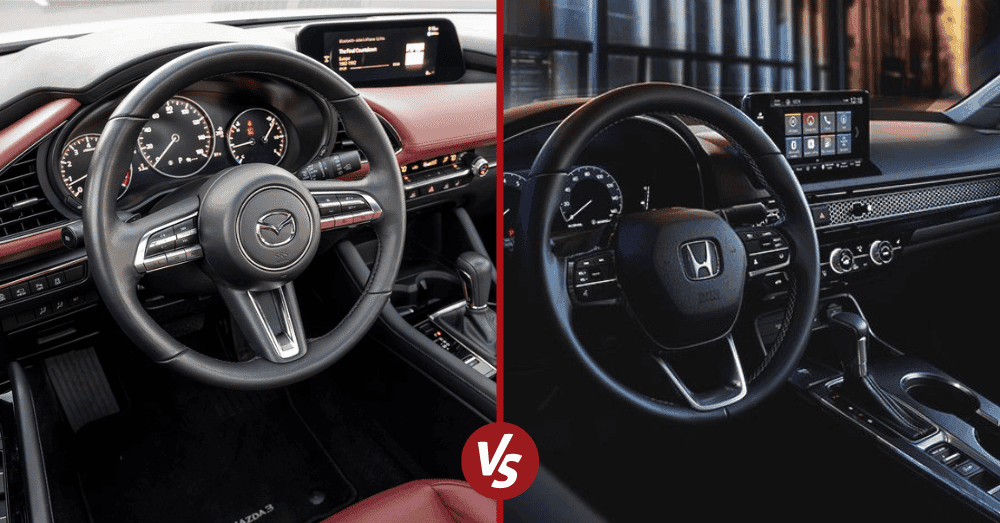
The debate between the Mazda3 and the Honda Civic has become a modern classic—one that plays out not on a race track, but in driveways, commutes, and weekend errands. On paper, both are compact sedans with a talent for stretching value. In real life, they often feel like different philosophies wearing similar badges. The Mazda3 leans toward premium sensibility: tactile controls, graceful styling, and a cabin that encourages you to linger. The Civic, meanwhile, leans into practical certainty: a broad sense of usability, clever packaging, and an ownership experience that’s designed to be effortless.
Pick either one and you’ll get a car that’s competent, comfortable, and ready for daily life. But the question isn’t whether they can do the basics. It’s about what happens when you notice the details—the quiet clink of surfaces, the way a seat supports you, the calm confidence when you merge, and the feeling of having everything where you expect it to be.
First impressions: aesthetics and the “arrival” factor
Great design doesn’t just look good under showroom lights—it shapes the mood of the drive. The Mazda3 often arrives with a sculpted, restrained elegance. Its surfaces tend to feel intentional, as if each line has been appointed a job. Even before the engine starts, the cabin promises atmosphere rather than just function.
The Civic’s visual language is bolder in a different way. It’s modern and crisp, but its primary strength lies in the sense of everyday readiness. The overall look communicates motion and clarity, like a tool that happens to be stylish. In photographs, the gap may seem subtle; on the road, it becomes more pronounced because the Mazda3 feels curated, while the Civic feels optimized.

Cabin craftsmanship: where “premium feel” becomes tangible
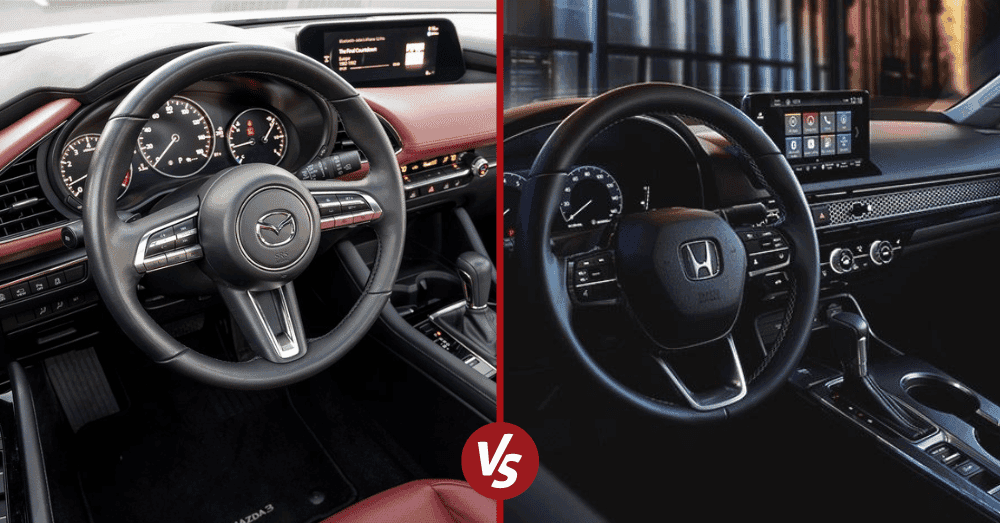
Step inside the Mazda3 and the experience leans toward artistry. Materials are often chosen for how they feel in contact with your hands and how they age over time. The seating position tends to feel slightly more driver-focused, with controls that fall naturally into reach. Small touches matter: the haptic-like confidence of switches, the restraint in the cabin design, and the way the dashboard creates a cohesive visual flow.
With the Civic, the atmosphere is more pragmatic. It’s still well put together, and many trims bring a clean, contemporary look. The layout often prioritizes usability—ports placed with intention, controls that make sense, and sightlines that reduce effort. It’s not that the Civic lacks refinement; rather, its refinement is measured in convenience. One car invites you to enjoy. The other helps you get through the day with fewer frictions.
Infotainment and user experience: intuition versus cleverness
Modern dashboards are not just screens—they’re interfaces between driver and machine. The Mazda3 tends to emphasize an interface style that feels composed and deliberate. Menus can feel less like a labyrinth and more like a conversation. The overall user experience often encourages calm. That matters, especially when you’re navigating, setting audio, or adjusting climate settings with gloves, sun glare, or mid-commute fatigue.
The Civic frequently excels at breadth. Depending on trim, it may offer a strong suite of features with a focus on practicality—connectivity options, driver assistance technologies, and convenience-oriented functions. The menu structure can feel optimized for quick changes rather than aesthetic immersion. Think of it as the difference between a bespoke café and a well-run commuter hub: both are functional, but one feels more curated while the other is engineered for throughput.
Ride quality and driving demeanor: comfort with personality
The Mazda3 often delivers a ride that feels harmonized. Its steering response and suspension tuning can create a sense of composure, especially on uneven pavement. The car may feel eager to communicate road texture—subtly, never harshly—so the drive feels alive without becoming exhausting.
The Civic is designed to do what you need, reliably. Its ride can be composed and comfortable across a wide range of roads, with stability that inspires confidence during everyday driving. Where the Mazda3 can feel like it has a particular “stance,” the Civic can feel like it has a durable rhythm. It’s less about flair and more about consistency.
Performance and power delivery: how each car “shows up”
Both cars offer performance that fits the compact class, but their character can differ. The Mazda3 often feels responsive in the way it meters acceleration—like it wants you to feel engaged. It can reward smooth throttle inputs, and the overall sensation may be described as eager yet controlled.
The Civic typically emphasizes predictability. Its power delivery can be straightforward and friendly for daily use. It may not always deliver the same sense of emotional crispness as the Mazda3, but it compensates with practicality—easy launches, stable highway behavior, and a general willingness to blend into traffic without demanding attention.
Space and practicality: the art of not thinking too hard
Practicality isn’t glamorous, but it’s the difference between “nice to own” and “effortless to own.” The Civic’s strengths frequently show up in cargo utility and rear-seat usability. It tends to feel roomy in common scenarios: grocery runs, weekly errands, and the recurring puzzle of fitting passengers with car seats, bags, and the occasional last-minute detour.
The Mazda3 can still be comfortable and efficient for a compact sedan, but its approach may feel more like deliberate refinement than maximum versatility. The cabin’s layout often emphasizes driver and front-seat comfort, with rear seating that works well for typical use. If your lifestyle includes frequent rear-seat passengers, the Civic often reads as the more accommodating option.
Safety and driver assistance: confidence as a feature
Safety technology is now inseparable from the buying decision. The Mazda3 and Civic both tend to offer robust driver assistance suites on many trims. The real difference is how the systems feel during use—whether alerts are clear, how assistive features behave in traffic, and how smoothly the car supports you during highway stretches.
For many drivers, the Civic’s practical focus can translate into a more straightforward experience with tech, especially when you’re trying to interpret alerts quickly. The Mazda3 often delivers a more cohesive driving feel, which can make assistance features feel integrated rather than bolted on. Either way, it’s worth paying attention to how each car handles lane centering, adaptive cruise behavior, and emergency alerts in real-world conditions.
Ownership and daily upkeep: long-term friction matters
Buying a compact sedan isn’t just a purchase; it’s a commitment to routines. The Civic often shines in the realm of predictable ownership—dealers are common, parts availability is usually straightforward, and the overall reputation for reliability can reduce anxiety. Resale value may also be a consideration, and the Civic’s market presence tends to be strong.
The Mazda3 offers its own brand of confidence, especially for drivers who care about how their car feels every day. While ownership costs depend on trim and driving habits, Mazda’s approach frequently appeals to people who prioritize craftsmanship. If you tend to keep cars longer than average, the “premium feel” advantage can be emotionally significant: a cabin that remains satisfying is a kind of long-term value.
Choosing between them: which mindset fits your life?
Choose the Mazda3 when you want a cabin that feels authored—when you care about tactile detail, cohesive design, and a driving demeanor that feels subtly theatrical. It’s for drivers who notice. It’s for those who want their commute to feel slightly curated.
Choose the Civic when you want clarity, roominess, and an almost administrative sense of convenience. It’s for families, commuters, and anyone who measures value by how smoothly the car handles a week’s worth of tasks. It’s for drivers who prefer practical confidence over emotional flourish.
What to expect from content about this matchup
When readers explore Mazda3 versus Civic, they often look for specific proof. Useful content typically includes trim-by-trim comparisons, cabin screenshots, and practical checklists—things like rear-seat comfort, cargo measurements, and how infotainment responds under real conditions. Strong articles also include “drive-feel” narratives: how steering weight changes at low speeds, how the suspension deals with potholes, and whether the braking system feels linear or abrupt.
Beyond the basics, readers expect guidance on decision-making. That includes scenario-based recommendations: daily commuter routes, road-trip readiness, frequent passengers, and even how each car behaves in stop-and-go traffic. A complete comparison should also cover the emotional dimension—how each cabin makes you feel during the first ten minutes, not just the first ten seconds.
Conclusion: premium feel versus practical certainty
The Mazda3 and Civic both belong to the compact elite, but they crown different priorities. The Mazda3 offers premium feel in the form of refined materials, composed cabin design, and a driving personality that feels engaged. The Civic offers practicality through everyday usability, smart packaging, and an ownership experience that’s built to be dependable.
In the end, the best choice is the one that matches your habits. If you crave tactile delight and a more curated atmosphere, the Mazda3 can feel like a reward you earn every time you get in. If you value space, convenience, and a no-nonsense sense of certainty, the Civic can become the dependable partner you forget you’re relying on—until you try something else.