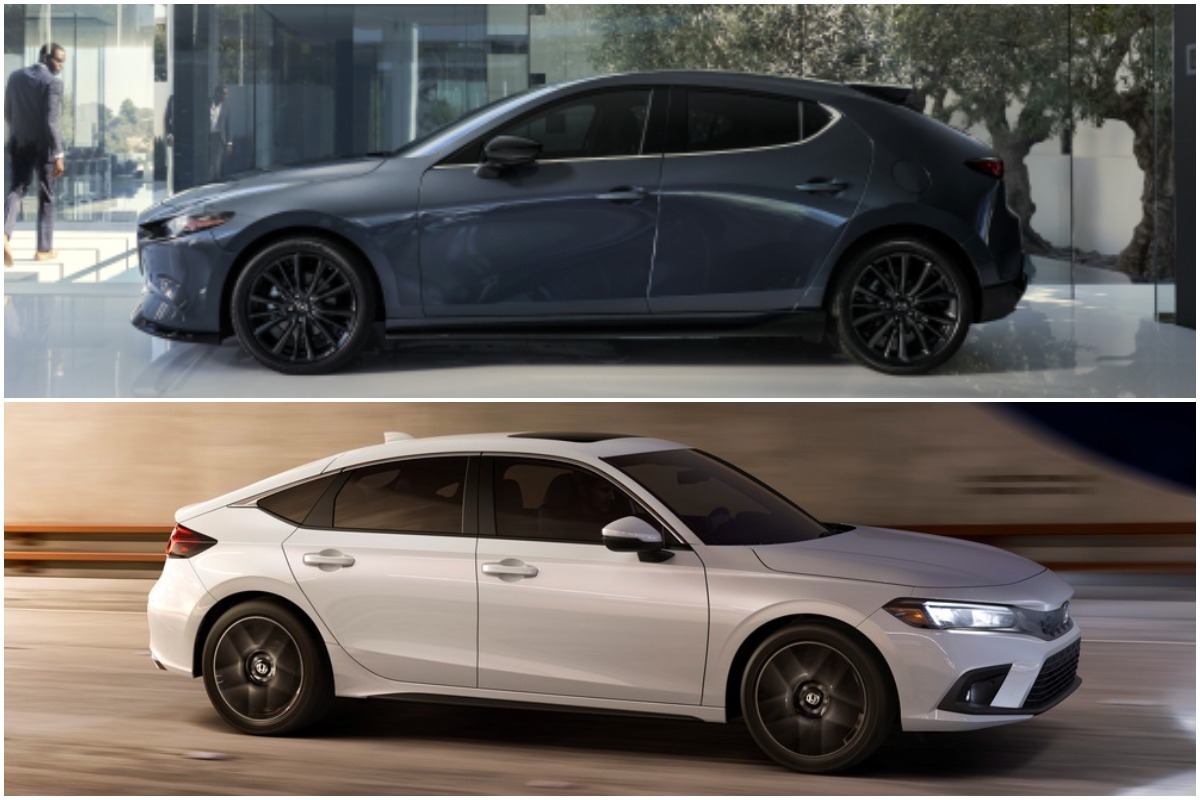
Two hatchbacks, two temperaments—yet one question flickers like a dashboard glow: Honda Civic Hatchback vs Mazda3 Hatchback—Which Wins? At first glance, both cars appear cut from the same automotive cloth—compact proportions, daily-drivable comfort, and the magnetic practicality of a hatch. But step closer, and the differences start to feel less like specs on paper and more like personalities in motion. One car is a sharp-edged tool for the city’s quick turns; the other is a quietly theatrical performer, dressing everyday driving in a more refined kind of drama.
Think of it this way: the Civic is a pocket knife—compact, precise, and ready for anything. The Mazda3 is a poem with a backbone—measured, expressive, and built to linger in memory. Neither is wrong. Yet the winner depends on which kind of experience you crave when the road begins to unfurl.
Design Philosophy: Utility Meets Aesthetic Gravity
The Civic hatchback carries its identity like a confident street musician: energetic, slightly audacious, and never afraid to stand out. Its stance feels purposeful, and the visual language leans toward clarity—creases that read as “ready” rather than “decorative.” Even when parked among taller vehicles, it seems to anchor itself with intent.
The Mazda3 hatchback, meanwhile, arrives like a well-composed photograph taken at golden hour. Its design has a composed silhouette, with details that feel deliberately placed, not merely appended. There’s a sense of aesthetic gravity—subtle lines that guide the eye rather than shout for attention. It can look understated on first pass, then reveal depth on repeat viewing.

Cabin Atmosphere: Civic’s Functional Pulse vs Mazda’s Tailored Mood
Open the doors and the first contrast appears in the air itself. In the Civic, the cabin tends to emphasize practicality and ease—controls feel intuitive, and the space is shaped to reduce friction between you and the drive. It’s a cockpit built to keep your focus on the road. The layout feels like it’s designed to be used, not just admired.
In the Mazda3, the cabin leans toward restraint and tactile pleasure. Materials and design choices aim to feel “assembled,” as though every surface has been considered for how it will be touched. Short drives become longer simply because the environment invites you to stay inside it. The atmosphere is calm, even when the road isn’t.
So which wins here? If you prefer a cabin that behaves like an instrument panel—clear, responsive, and task-oriented—the Civic often feels more immediately satisfying. If you want a cabin that treats commuting as a small ritual—visually and sensorially—the Mazda3 tends to leave a lingering imprint.
Ride Comfort and Handling: Quickness vs Composure
Handling is where personality becomes physical. The Civic’s suspension character typically plays like a crisp playlist: it supports confident cornering, keeps body motions organized, and makes city navigation feel less like a chore and more like choreography. When you change lanes or thread through traffic, it can feel eager—almost impatient in the best way.
The Mazda3, on the other hand, often leans into composure. Road texture may come through differently—less in an intrusive, rattling way, more as a controlled conversation between tires and pavement. The steering and chassis feel tuned to provide stability and poise. It’s the sensation of being guided rather than yanked.
In plain terms: the Civic can feel more lively; the Mazda3 can feel more composed. Neither is a caricature. Both are capable. But their emotional signatures diverge—one wants to sprint between moments, the other wants to glide through them.
Engine and Performance Feel: Straightforward Momentum vs Smooth Character
Performance is not only about horsepower numbers. It’s about how the car responds when your foot makes a decision. The Civic often comes across as direct and immediate. Acceleration feels purposeful, and power delivery typically encourages a driver who enjoys frequent micro-adjustments—small throttle changes that add up to big satisfaction.
The Mazda3’s performance feel tends to express itself with smoother transitions. Instead of feeling like it’s sprinting off a line, it can feel like it’s unfolding speed—less abrupt, more progressive. That can be refreshing on long drives, where consistency beats theatrics.
If your ideal drive involves quick overtakes and spontaneous merges, the Civic’s momentum may feel more rewarding. If your ideal drive involves cruising, then climbing into spirited driving as a secondary act, the Mazda3’s character can feel more harmonious.
Fuel Efficiency and Everyday Practicality: Daily Logic vs Weekend Relaxation
Fuel economy matters because it turns driving into a sustainable habit. Both cars aim to be sensible in real-world use, and the hatchback layout itself adds to practicality. Cargo space, access, and the ability to fold life into the trunk are strengths of the segment—and both models typically do the job with competence.
However, “practicality” isn’t only about cargo dimensions. It’s about how calmly the car fits into your routine. The Civic often feels like a meticulous organizer—easy to live with, straightforward to navigate, and simple to maintain as part of a busy life.
The Mazda3 can feel like a weekend philosopher—still practical, but with a softer touch. Its charm may not be the loudest, but it can make everyday commutes feel less monotonous.
Technology and Driver Experience: Digital Clarity vs Human-Centered Ease
Modern cars have screens. Yet the best technology doesn’t just light up—it reduces cognitive load. The Civic’s infotainment tends to emphasize clarity and user-friendly navigation. Menus usually feel logical, and the system aims to keep you connected without making you wrestle with controls.
The Mazda3’s tech often feels integrated into the driving experience rather than bolted on. It can be a little more refined in how it presents information and how it guides you through common tasks. The result is a cabin experience that feels more “considered” than simply updated.
In this contest, neither car is behind. The difference is in attitude: the Civic wants to be an efficient assistant; the Mazda3 wants to be a composed companion.
Safety and Confidence: Predictable Protection in Different Wrappings
Safety systems are the quiet guardians behind the scenes. Both hatchbacks are typically equipped with a suite of modern driver-assistance features. What matters most is how those features behave in everyday scenarios—lane confidence, adaptive awareness, and how smoothly warnings appear when attention needs reinforcement.
In general, the Civic’s safety posture often feels straightforward and dependable—like a reliable seatbelt you don’t have to think about. The Mazda3’s systems often feel similarly capable, but the overall cabin calm can make the experience feel less stressful, even when the road gets chaotic.
For many drivers, confidence is the real trophy. And confidence comes from predictability more than spectacle.
Resale Value and Long-Term Ownership: The Practical Mathematics of the Future
Long-term ownership is where emotions should meet spreadsheets. Both brands have reputations that typically help with market confidence, and both Civic and Mazda3 models often attract buyers who appreciate their strengths. Resale value is influenced by demand, trim popularity, condition, and service history.
The Civic usually carries a broad base of loyal buyers and a strong reputation for mainstream dependability, which can help when it’s time to move on. The Mazda3, while still in good standing, often draws a slightly more design-minded audience—drivers who value the “feel” as much as the function.
Think of it as two investment styles: the Civic is the steady index fund; the Mazda3 is the boutique stock with a more personal appeal.
Which One Wins? A Matchmaking Answer, Not a Final Verdict
So, which wins: Honda Civic Hatchback or Mazda3 Hatchback? The answer depends on what you want your car to do to your day.
Choose the Civic Hatchback if you crave a lively driving pulse, quick responsiveness, and a cabin that prioritizes clarity and everyday usefulness. It fits like a well-tailored work jacket—ready, practical, and always appropriate.
Choose the Mazda3 Hatchback if you want composed road manners, an elegant cabin atmosphere, and a more refined sense of calm. It feels like a well-written story—less about speed for speed’s sake, more about enjoying the narrative.
In the end, neither is merely “better.” They are better for different roads inside different drivers. The winner is the one that matches your rhythm—whether that rhythm is quick-footed city agility or smooth, deliberate cruising with style.
Outro: The Hatchback That Fits Your Life
Hatchbacks are small worlds you carry with you—places where groceries become easy, weekends become flexible, and daily commutes gain texture. The Civic and the Mazda3 both offer that kind of versatility, but they wrap it differently. One leans into efficiency with an eager grin. The other offers refinement with a quiet confidence.
When you’re ready to decide, don’t just compare numbers. Compare feelings. Take each for a test drive and notice what your hands prefer on the steering wheel, what your mind appreciates in the cabin, and how the car makes time pass. That’s where the real verdict lives.