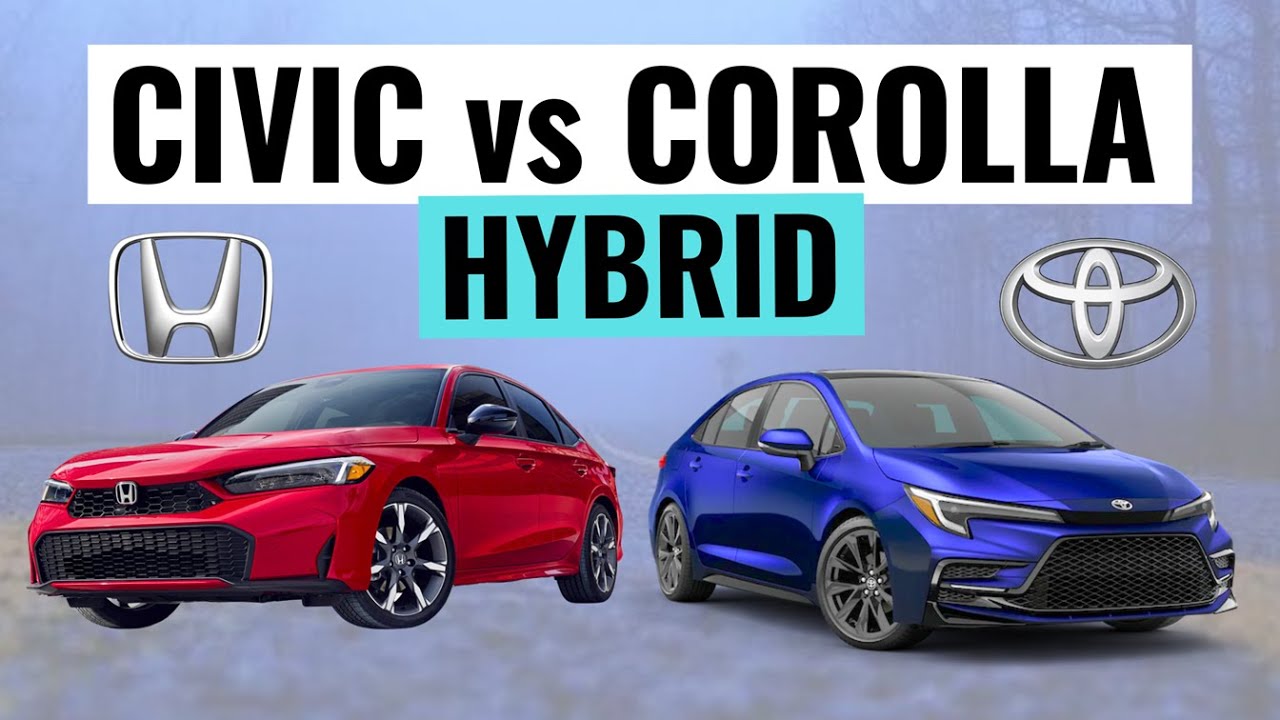
In the quiet hours of a commute, two badges gleam like twin constellations—one the Honda Civic Hybrid, the other Toyota Corolla Hybrid. Both promise efficiency, both arrive wearing the language of MPG, yet they feel like different kinds of travelers. One moves with a composed, almost civic poise; the other carries the steady pragmatism of a well-worn map. The question isn’t simply which one posts the higher number. The question is which one turns miles into momentum with a rhythm that fits your life.
This MPG battle unfolds like a duel fought with paperwork instead of sabers. Every mile per gallon becomes a quiet victory—earned by aerodynamics, disciplined power management, and the way each drivetrain chooses when to sip and when to sprint. Let’s follow that rhythm, step by step, and see how these hybrids earn their reputation.
Two Hybrids, Two Philosophies: Efficiency as a Mindset
Hybrid systems can be thought of as orchestras. The first baton is engine intelligence; the second is battery stewardship. The Honda Civic Hybrid leans toward a feel of smooth coordination—like a conductor who keeps the tempo fluid, allowing the engine to appear only when needed. Meanwhile, the Toyota Corolla Hybrid often reads like a methodical craftsman—measuring, anticipating, and settling into an efficient cadence with minimal fuss.
Both use gasoline engines supported by electric power. Both are designed to reduce wasted energy. Yet the driving experience carries a distinct texture: one can feel more responsive at certain moments, while the other can feel more consistently economical across varied trips. It’s a subtle distinction, but it matters—because your real-world MPG is built from the countless micro-decisions made during acceleration, cruising, and deceleration.
MPG Basics: What the Numbers Are Really Saying
MPG isn’t just a figure; it’s a story written in friction, wind resistance, and throttle behavior. A higher MPG rating often reflects how efficiently the vehicle can maintain speed with less engine load. But the most “meaningful” MPG emerges when your commute matches the hybrid system’s strengths.
In an ideal world, you’d glide through traffic like a canoe on glass. In the real world, you deal with stoplights, reroutes, and the occasional impatient lane change. Hybrids generally reward drivers who soften sudden inputs. They benefit from anticipation—coasting with intention and using regenerative braking like a sponge that captures momentum before it evaporates.
In the Honda vs. Corolla conversation, think of MPG as a compass. The models may point toward efficiency, but they might do so with slightly different tolerances for your daily style—whether you drive with calm restraint or a more energetic cadence.
Engine and Battery Strategy: When Each One Drinks, When It Resting
Hybrid efficiency hinges on orchestration: the car decides whether the engine should run, whether the electric motor should assist, and how to replenish the battery. The timing of those transitions is where MPG gains can widen into visible gaps.
The Honda Civic Hybrid’s power management tends to emphasize seamless blending. In practical terms, this means the engine can feel like it stays out of the way during light acceleration while still providing enough torque to keep the vehicle from feeling sluggish. That characteristic can translate into higher efficiency—especially when traffic flows in stop-and-go patterns where frequent power changes occur.
The Toyota Corolla Hybrid, known for reliability and steady operation, often reflects a system that aims to stay in efficient operating windows. The battery’s role can feel more consistently predictable, which may help drivers maintain a smoother throttle profile. Smoothness is fuel economy’s secret sibling; it turns every acceleration into a less wasteful event.
Aerodynamics and Weight: The Invisible Opponents
Not all MPG battles are decided by technology alone. The body of the car is a wind negotiator. Even small improvements in drag coefficients can reduce the energy required at highway speeds.
Both vehicles are engineered with modern styling that also serves function—curves, airflow management, and underbody design. The result is that highway MPG can diverge more than city MPG, because wind resistance grows with speed. If your commute includes sustained freeway driving, the aerodynamic story becomes louder.
Weight matters too. Hybrids carry battery components, and the distribution of mass affects acceleration efficiency and braking behavior. Still, both models strive to balance structure and usability so that the extra equipment translates into stable driving rather than perpetual energy debt.

City Versus Highway: Where the Duel Changes Pace
City driving is where hybrids often shine, like sparrows finding lift in every gust. Frequent stops allow regenerative braking to harvest energy that would otherwise be lost as heat. This is a place where the Corolla and Civic can both look impressive, but the “winner” can depend on how each system reacts to rapid changes in speed.
Highway driving is the counterweight. The vehicle must overcome drag steadily, and the engine may run more frequently. In this environment, the efficiency battle can narrow or broaden depending on how each hybrid maintains optimal engine load and how effectively the drivetrain reduces parasitic losses.
So, if your daily route is mostly city streets, the MPG advantage often becomes a question of stoplight discipline and how gracefully the car transitions between electric assist and engine operation. If your route is highway-heavy, expect efficiency to hinge more on aerodynamics and continuous power management.
Real-World Driving Psychology: The Driver Is Part of the System
An MPG rating is a snapshot. Your routine is the film reel. The same hybrid can perform differently in the hands of different drivers—because energy management starts at your right foot and your attention to the road ahead.
Think of efficient driving as writing with lighter pressure. Smooth acceleration reduces energy spikes. Early deceleration converts momentum into electricity. When you drive like a careful editor, the hybrid has fewer corrections to make.
Both the Honda and Toyota hybrid platforms reward calm inputs. But their personalities may nudge you toward slightly different habits. One may feel more eager to respond, which can either help you maintain momentum or tempt you to accelerate aggressively. The other may feel more composed, encouraging steady progress that naturally aligns with high MPG.
Cabin, Comfort, and the Hidden Cost of Efficiency
Efficiency is only half the equation; daily comfort is the other half. If a vehicle’s climate control, visibility, and seating position make you relax, you drive more steadily. Steady driving is efficiency’s understudy.
A quieter cabin can reduce fatigue. Better ergonomics can help you maintain a consistent posture, which subtly influences how you modulate pedals. Even storage convenience matters. When you’re not juggling clutter, you can focus on the road and anticipate traffic flow earlier—another stealth MPG advantage.
Neither the Civic nor the Corolla is simply a spreadsheet on wheels. They’re intended to be lived with. The “best MPG” is the one you can actually repeat without resentment.

Maintenance, Longevity, and the Long Game
Hybrid efficiency isn’t just about the moment. It’s about how the system ages. Battery health, tire wear, brake maintenance from regenerative braking, and cooling system integrity all play a role in long-term economy.
Tire choice and inflation pressure can be the difference between “close” and “excellent.” A vehicle that sips efficiently at the start can lose momentum if alignment drifts or tires are underinflated. In this sense, the best MPG winner is the one whose owner lifestyle supports consistent care.
Both brands have reputations built on durability, yet the real differentiator is how the powertrain is treated: timely service, careful tire management, and sensible driving habits that keep the system in its efficient operating rhythm.
The Verdict: Which MPG Champion Fits Your Life?
After all the numbers and metaphors, the choice narrows into a simple truth. The Honda Civic Hybrid often appeals to drivers who want smooth orchestration and a lively, coordinated feel—efficiency that doesn’t dull the experience. It can feel like a well-tuned instrument, producing thrift without sacrificing engagement.
The Toyota Corolla Hybrid often attracts those who prefer dependable, steady efficiency—like a metronome that keeps time faithfully. It can feel less like a performance and more like a reliable cadence, ideal for commuters who value consistency.
If your commute is stop-heavy, either vehicle can make you feel like you’re borrowing energy from the braking moments you used to waste. If your commute is freeway-centric, aerodynamic polish and sustained power control become the key tell.
So the MPG battle isn’t a single knockout. It’s a matchup between two kinds of efficiency: one with a smooth, responsive flair; the other with a calm, methodical steadiness. Choose the hybrid whose personality matches your driving reality, and the mileage will follow like a promise kept.
Outro: Miles as Meaning
Efficiency can be hard to measure, but it’s easy to feel. The day you realize your tank lasts longer, your expenses shrink, and your stress softens is the day hybrid technology stops being technical and starts being personal.
Whether you fall for the Civic Hybrid’s coordinated momentum or the Corolla Hybrid’s steady thrift, you’re not just choosing an MPG figure. You’re choosing a calmer relationship with distance—a new way to turn ordinary commutes into small, repeatable victories.