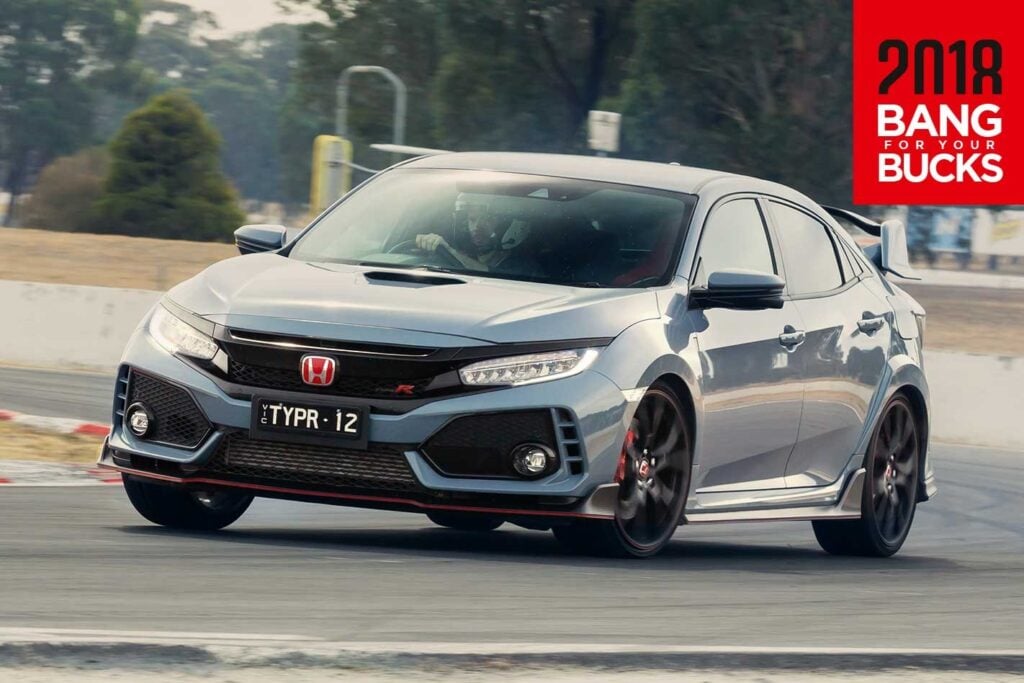
The Honda Civic Type R doesn’t merely arrive at the track—it conjures one. In a world where turbocharged horsepower often feels like a blunt instrument, this front-wheel-drive battlemage works with a quieter kind of confidence. Its rear may be absent in the action, but the drama is very much there: a long, magnetized pull out of slow corners, the steering loading up with intent, and a chassis that behaves like a well-trained athlete—responsive, disciplined, and strangely forgiving until you ask for more.
Driving it on circuit is like listening to a jazz solo built on precision rather than volume. The notes are distinct. The rhythm is deliberate. And when the car reaches for grip, it does so with a theatrical flourish—without losing composure. This is the FWD track king’s spell: it turns limitations into a signature, and it does it with a grin you can’t quite suppress.
The Type R’s Character: A Knife-Edge Personality
Some hot hatches feel fast in a straightforward way: press the pedal, chaos follows, then you correct. The Civic Type R feels fast in a more sophisticated manner. It’s as if the car is constantly negotiating between traction and tempo, offering a handshake with the front tires every time you rotate into a corner.
The steering communicates through your fingertips like a skilled translator. It doesn’t just tell you where the grip is—it frames it. There’s a distinct sense of when the front end is loading, when the tires are approaching their adhesion threshold, and when a small adjustment will bring everything back into equilibrium. Short bursts feel immediate. Long stabs feel composed.
That personality matters on track. Not because every lap is polite, but because the car maintains clarity when the driver’s inputs become frantic. It’s a confidence machine, yet it doesn’t erase consequences. Instead, it teaches them.
Front-Wheel Drive as Theatre: The Grip Dance
Front-wheel drive is often treated like an asterisk beside a headline. On the Civic Type R, that asterisk becomes a drumbeat. The car’s power delivery and chassis tuning turn traction management into an art form.
Under acceleration, the front tires do double duty: they guide the turn-in and propel the car forward. It’s a balancing act, and it’s precisely where the Type R becomes intriguing. You can feel torque biasing your intent. You can sense how throttle application influences the car’s attitude—sometimes tightening the line, sometimes asking for a cleaner exit.
What makes the FWD setup special is not simply the presence of grip, but the way grip arrives. It’s not a single moment of “now it sticks.” It’s a sliding scale, a conversation between driver and front axle. The Civic rewards finesse more than brute force. Get the weight placement right, and the car responds like it’s been waiting for that exact input.
Powertrain Feel: Turbo Precision with Purpose
The turbocharged engine in the Type R has a pulse that’s less about sudden fireworks and more about controlled urgency. Power arrives with conviction, and the car’s behavior stays remarkably cohesive even as you build speed lap after lap.
Listen closely to the cadence and it feels like the drivetrain is working toward the next corner rather than simply pushing you faster down the straight. The gearbox ratios tend to encourage purposeful acceleration—short enough to keep momentum alive, spaced enough to avoid feeling busy. Upshifts don’t feel like interruptions; they feel like seamless transitions.
On track, that matters. You’re not just chasing peak power. You’re chasing consistency—keeping the car in the sweet spot where response feels crisp and controllable. The Civic does that work quietly, so your attention stays on line selection and braking points.
Braking and Confidence: Where Fear Goes to Retire
Braking on the Type R is a reassuring handshake. The pedal is not merely an on/off switch; it offers progression. Modulate it and the car follows your intention. Firm it up and it decelerates with authority, maintaining composure rather than lurching into drama.
There’s a subtle tactility to the brakes that helps you stay committed. You can brake later without needing to become a guesser. Trail braking feels like a tool you can shape, not a gamble you hope lands well. This is one of those cars where confidence isn’t a marketing slogan—it’s embedded in the physics.
That confidence becomes emotional fuel. With each lap, the driver learns that the car will give warning before it gives up. It doesn’t vanish. It communicates.
Chassis Dynamics: Tight, Lively, and Unusually Coherent
The Civic Type R’s chassis doesn’t chase drama; it manages it. The body stays composed when you attack uneven surfaces and changing cambers. The suspension feels tuned for rhythm, letting the wheels track the pavement instead of bouncing through it.
In quick direction changes, the car feels agile without being nervous. Roll is present, but controlled—like a gymnast flexing at the right moment rather than flailing mid-performance. The platform also seems to hold onto its shape under load, which makes turn-in feel accurate even when the lap becomes chaotic.
What surprises many drivers is how well the car recovers after mistakes. Over-enthusiastic throttle? The front end talks back, and with a correction you can reclaim the line. Too much entry speed? The chassis can absorb the shock and guide you back toward the exit. It’s not a cheat code, but it’s a car that keeps your momentum alive when you need it most.
Aerodynamics and Stability: The Subtle Spoiler Effect
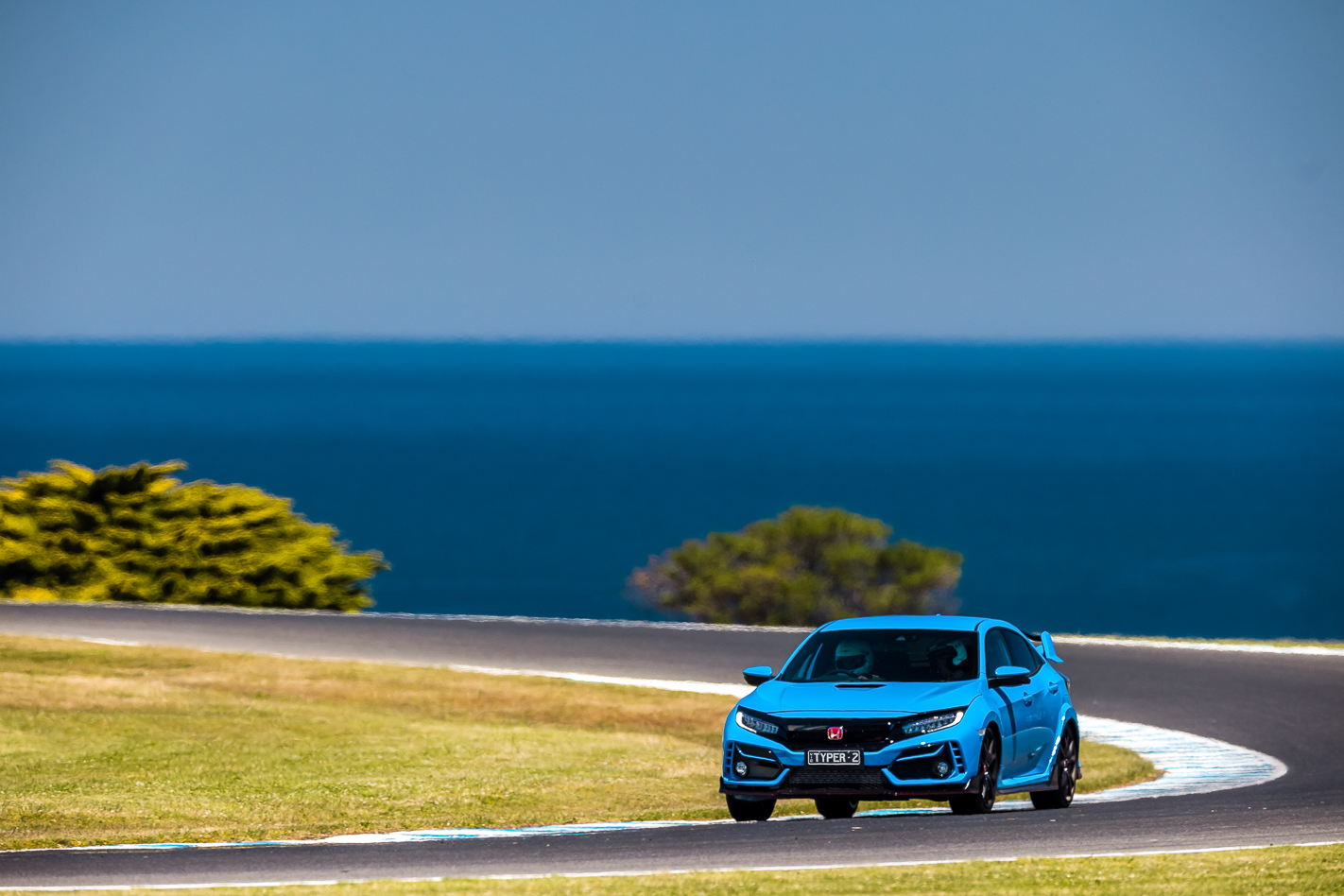
A track car is a promise of stability at speed, and the Type R feels built to keep that promise. Aero isn’t just about top speed numbers; it’s about steering certainty when the car is moving fast enough that your hands start to wonder who’s steering whom.
The high-speed behavior is planted. The car doesn’t feel like it’s “floating” at the edge of grip. Instead, it feels like it’s connected—like the tires are reading the surface and translating it into traction. That confidence helps you carry momentum rather than constantly adjusting for instability.
Even small improvements in stability change your lap times indirectly. Less time spent correcting means more time spent accelerating out of corners with authority.
Tyres, Traction, and Heat: The Real Season Starts on Lap Two
On track, performance is not a single number—it’s a relationship between tyres, temperatures, and your driving style. The Civic Type R has a way of inviting repeatable runs. You can push, back off, adjust your approach, and push again without the car feeling strangely unpredictable.
Front tires tend to do the heaviest lifting. As laps accumulate, they communicate through steering feel and throttle response. The grip doesn’t disappear abruptly; it transitions. That evolution is crucial because it allows the driver to adapt.
If you respect the thermal arc—if you understand when grip is coming and when it’s fading—the car feels remarkably consistent. If you ignore it, the FWD layout becomes less forgiving. In that sense, the Type R is honest. It rewards awareness.
Driver Interface: Comfort with a Competitive Edge
Track performance isn’t only hardware. It’s also the ergonomics of attention. The Civic Type R’s cockpit encourages you to stay focused on the important things: braking markers, apex geometry, throttle discipline.
Controls and visibility support a driver’s situational awareness. Short routes to information reduce hesitation. When you’re pushing close to the limit, hesitation becomes a lap-time tax. The car helps you avoid that by keeping communication clear.
Even the cabin’s feel contributes to the narrative of the car. It’s not a lounge pretending to be a racer. It’s a cockpit that understands you’re here for the tachometer to sing.
The Unique Appeal: FWD Winning by Mastery, Not Convention
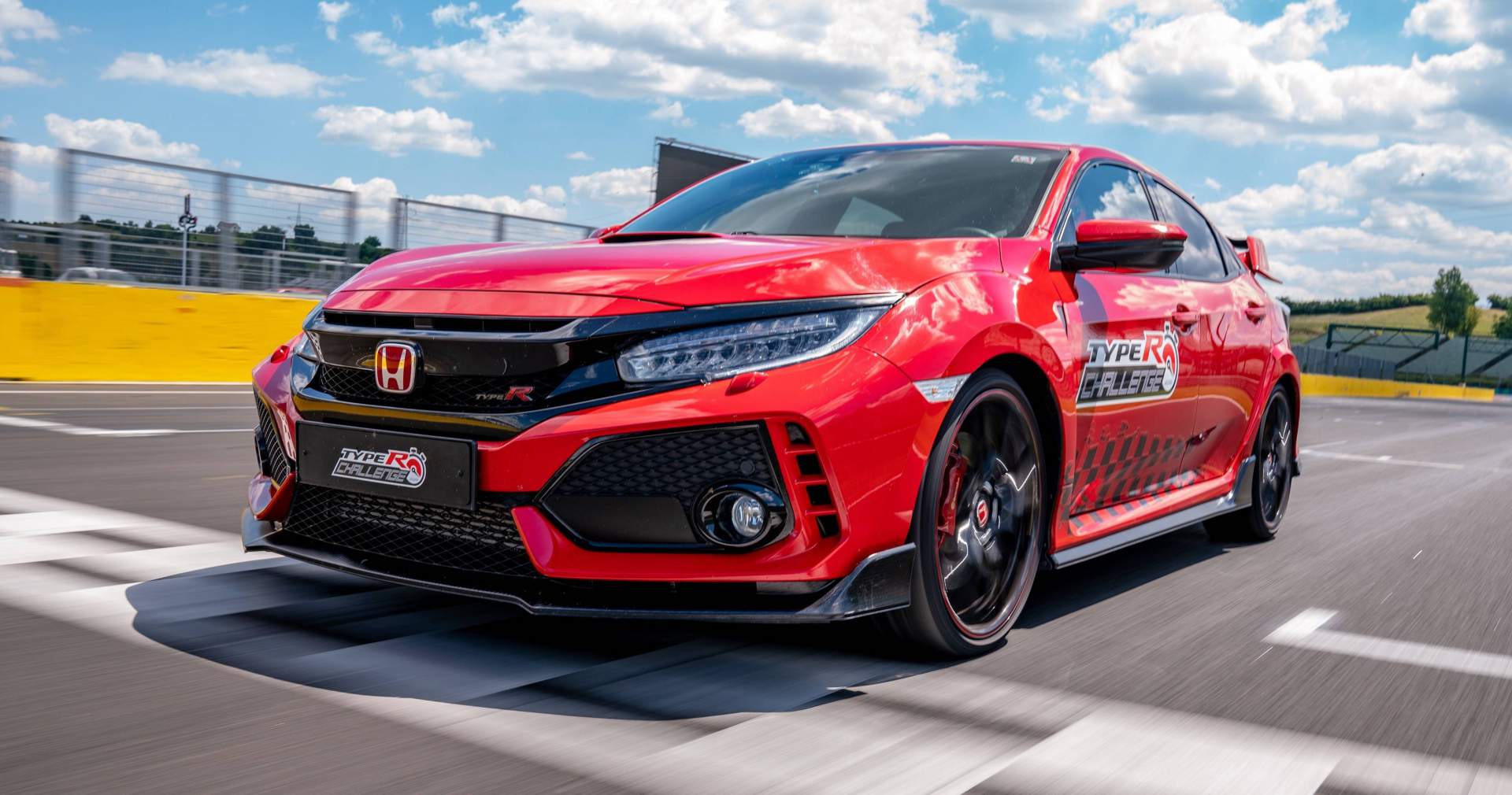
The Civic Type R’s charm is not only that it’s fast. Plenty of cars are fast. Its charm is that it insists on mastery. It asks the driver to understand how weight, steering angle, and throttle interact—how the front tires can be both a guiding hand and a propulsive engine.
It’s a kind of motorsport education disguised as a hot hatch. You learn faster because the feedback is immediate. You improve because the car doesn’t hide its limits. You become more deliberate because the physics are legible.
And there’s something emotionally satisfying about that. The Type R doesn’t celebrate power for its own sake. It celebrates control. On track, control is what turns speed into victory.
Outro: A Lap Written in Grip
When the Civic Type R circles back to the pit lane, it leaves you with a specific kind of impression: the feeling that front-wheel drive can be more than a compromise. It can be a craft. A philosophy. A rhythm.
It stands as a reminder that track dominance doesn’t always come from traction all-wheel drive can distribute easily. Sometimes it comes from a chassis that interprets your inputs with precision, an engine that provides usable urgency, and a driver-car dialogue so clear it feels like you’re reading the road through the steering wheel.
The Type R doesn’t just chase lap times. It writes them—lap by lap—out of grip, courage, and a surprisingly elegant kind of aggression.