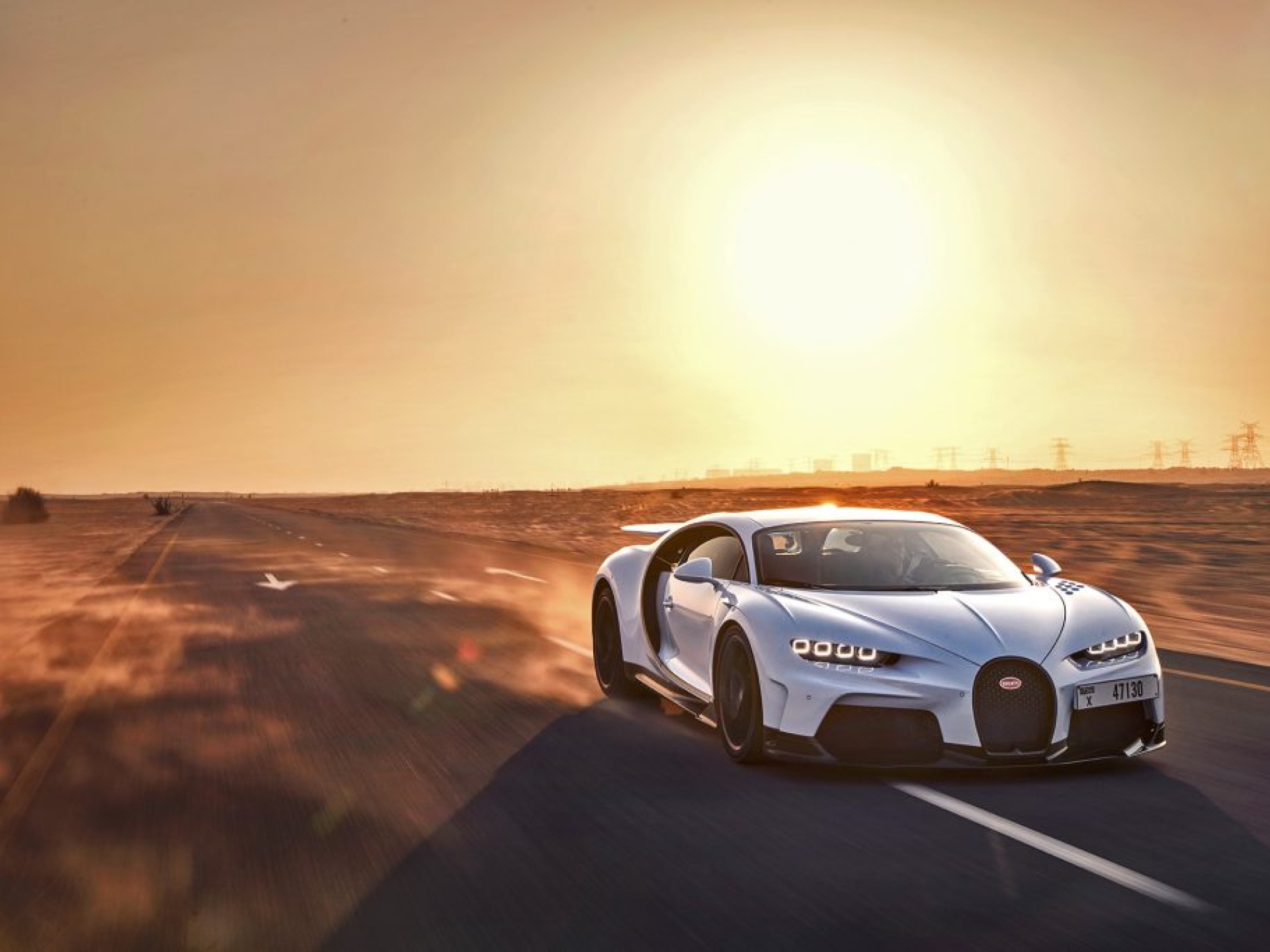
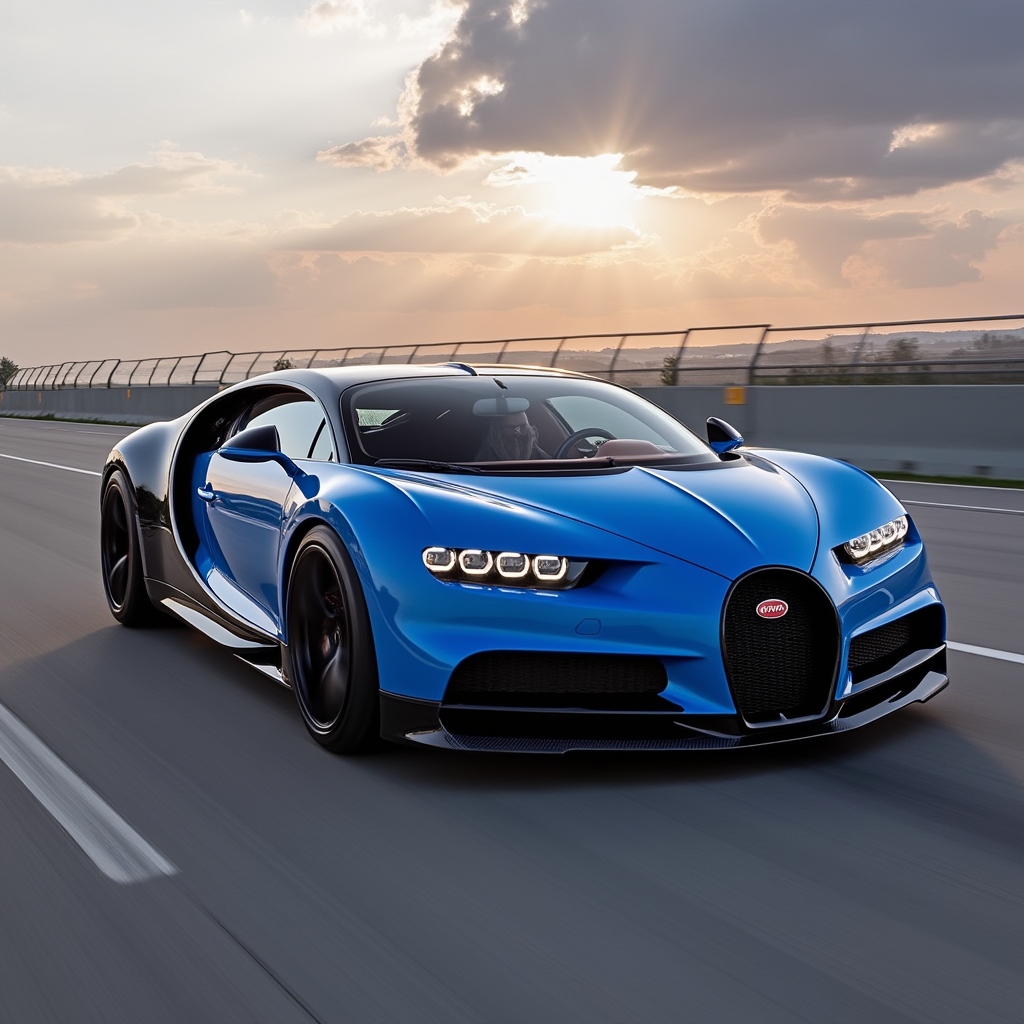
The question arrives the moment the Bugatti Chiron Super Sport 300+ is mentioned: is it truly the fastest luxury car in the world, or does the figure merely masquerade as spectacle? In a culture that often confuses velocity with virtue, the Chiron Super Sport 300+ refuses to be reduced to a number. It is a hypercar that feels engineered to be admired—yet it still begs for the straight line, the uninterrupted breath of acceleration, the kind that turns mathematics into muscle memory.
There’s a common observation around cars like this: they are too extreme to be meaningful. Too loud to be refined. Too fast to be usable. And yet, fascination persists. Not because drivers can always exploit its limits, but because the machine offers a rare aesthetic of restraint—materials, surfaces, and systems working in a choreographed conspiracy. Speed, here, is not merely performance. It’s a language.
What “Super Sport” Really Means in 2026 Context
The name “Super Sport” is not a decorative flourish. It points to a philosophy of racing application translated into grand touring form. In 2026, that distinction matters more than ever, because “luxury” is no longer defined solely by comfort. Modern buyers expect refinement without surrendering performance credibility.
The Chiron Super Sport lineage takes that expectation seriously. It’s not about reaching a headline speed once; it’s about making the act of going fast feel inevitable. That inevitability is engineered: the aerodynamic posture, the cooling strategy, the stability margins, and the transmission calibration. Together, they create a sense of inevitability behind the wheel, like the car is listening for an instruction it already understands.
The 300+ Claim: More Than a Marketing Number
“300+” can sound like a dare, but there’s a deeper story behind the claim. A speed record is often described as if it’s a single moment—an instant where the odometer tips and the world applauds. In reality, the journey is a sequence of controllable variables: thermal management, drivetrain loading, tire behavior, stability under drag, and fuel delivery consistency.
Achieving and sustaining that level of velocity requires a chassis and powertrain that don’t simply endure strain; they interpret it. The car must remain coherent—no vague oscillations, no disconcerting feedback, no loss of composure as airflow thickens and the wind turns into a physical force.
In short, the fascination isn’t the number alone. It’s the competence it implies. The car demonstrates that hyper-speed can be made repeatable, not merely possible.

Design Language: Aerodynamics as Quiet Drama
One of the most underappreciated aspects of the Chiron Super Sport 300+ is how quietly it communicates its purpose. From a distance, the bodywork reads like high couture. Up close, it reveals that every crease has a job.
A common observation is that hypercars look aerodynamic mainly because they have aggressive lines. But the deeper reason for admiration is that the aerodynamics are functional, not ornamental. The car’s shape is tuned to handle the aerodynamic tradeoffs that appear at extreme speed—drag reduction, downforce management, airflow attachment, and stability under yaw.
At 300+ territory, stability is not an accessory. It becomes a requirement for both driver trust and component longevity. The bodywork works like an invisible regulator, keeping the car’s attitude aligned with the physics of the moment.
W16 Power and the Art of Controlled Ferocity
The Chiron Super Sport 300+ is powered by a W16 engine, a configuration that has become almost mythic in automotive circles. Yet myth is not the same as precision. The W16’s real magic lies in how it delivers power: consistently, with a sense of modulation that feels surprisingly civilized for a car that can shatter speed expectations.
A common assumption is that such power must translate into chaos. Instead, the car’s engineering aims for a particular sensation: ferocity with governance. That means torque delivery is managed so traction and stability can remain predictable. It also means the engine’s thermal and lubrication systems are orchestrated to resist fade.
Luxury at this level is not just leather and sound deadening. It’s the refusal to let performance degrade into unpredictability.
Transmission, Response, and the Feeling of Precision
Speed records often focus on the top end, but the journey to that end depends on driveline behavior. The transmission mapping and shift strategy determine how smoothly the car climbs through its power bands. At extreme velocity, each gear’s effectiveness affects the overall run.
Long sentences are tempting when describing hypercars, but the best description is often crisp: it is controlled. The throttle response is engineered to be immediate yet not twitchy. Steering feel is calibrated to help the driver remain composed when airflow loads rise and the chassis becomes a moving platform for physics.
There’s also a subtler effect. When a supercar feels precise, it invites confidence, and confidence unlocks the ability to drive with finesse rather than brute intent. That’s where fascination becomes deeper than admiration—it becomes a kind of trust between human and machine.
Cooling and Durability: The Hidden Backbone
Luxury cars are often praised for what you can see—trim, comfort, finish. For a car built for 300+ performance, the real luxury is what you cannot see: the thermal choreography. Engines at this output generate heat that threatens both performance stability and component integrity. Cooling isn’t just a system; it’s an insurance policy.
The Chiron Super Sport 300+ relies on airflow management, cooling circuit efficiency, and material selection to maintain operation under extreme load. The goal is sustained power delivery without the throttling or instability that would turn a record attempt into a compromise.
This is where the deeper fascination lives. The public often celebrates speed as if it were a single talent. Engineers understand it as a continuous negotiation with heat, friction, and stress.
Tire Technology and Road Contact at Extreme Velocity
At 300+ speeds, tires stop being “just tires.” They become contact patches that must survive heat build-up, maintain grip coherence, and remain structurally consistent. The rubber’s response to load and temperature is a silent but decisive factor in stability.
A common observation is that hypercars feel unstoppable in straight lines. The deeper reason is that the tire system is tuned to minimize unpredictable deformation. That tuning requires discipline from the entire ecosystem: wheel design, pressure strategy, and suspension calibration.
When it works, it’s almost invisible to the driver. The car feels anchored, as if the road is holding it in place, even while the air tries to pry it loose.
Interior Luxury: A Cabin Built for Both Calm and Consequence
Step inside and the atmosphere shifts. Hyper-performance can be confrontational, yet the Chiron’s cabin is designed to feel composed. Materials are selected not merely for appearance but for tactile satisfaction and long-duration comfort.
Even more interesting is how the cabin supports concentration. Ergonomics guide the driver’s attention, while controls are placed to reduce cognitive friction. In high-speed driving, clarity is a form of luxury. It helps a driver anticipate rather than react.
There’s a paradox here. The outside speaks in velocity. The inside whispers in readiness—because speed without composure is not luxury. It’s danger wearing a costume.
So, Is It the Fastest Luxury Car in the World?
“Fastest” invites comparisons, and comparisons are never simple. Track conditions, measurement methods, and even aerodynamic and temperature variables influence outcomes. Yet if the question is about capability demonstrated at the edge of modern engineering, the Chiron Super Sport 300+ stands as a benchmark.
But the deeper answer to the title question is this: it’s not merely the fastest luxury car in the world because it can reach extreme speed. It’s the fastest luxury car because it makes extreme speed feel refined—because it turns mechanical aggression into something deliberate.
The fascination doesn’t fade when the run ends. It persists because the car embodies a rare synthesis: theatrical performance delivered with technician-level discipline.
Why Fascination Endures Beyond the Speedometer
People love fast cars. That’s obvious. What’s less obvious is why certain hypercars become obsessive subjects in conversations years after their milestones. It’s because they represent a particular kind of intelligence: the ability to solve problems that most machines would avoid entirely.
The Chiron Super Sport 300+ fascinates because it suggests that luxury can be engineered rather than assumed. It proves that refinement can coexist with brutality, and that elegance can be functional.
When you see it as a whole system—airflow, heat, traction, stability, and sensation—the record becomes only one chapter. The story is really about mastery.
Outro: Velocity as a Form of Craft
In 2026, the Bugatti Chiron Super Sport 300+ continues to raise the bar for what “luxury” can mean at the edge of physics. The common observation is that its speed is the headline, the stunt, the proof. The deeper truth is more compelling: this car is a cathedral of controlled ferocity, built so that breathtaking speed can be approached with composure.
Ultimately, the fastest luxury car in the world isn’t defined only by how fast it can go. It’s defined by how beautifully it remains itself while doing it—how it keeps dignity under pressure, and how it convinces you that mastery can still look effortless.