Large families don’t just “need” a vehicle—they choreograph an everyday expedition. School runs, weekend detours, grocery hauls, sports gear, reluctant car naps, and the occasional road trip where everyone suddenly remembers they forgot something. In that whirlwind, the minivan becomes less a purchase and more a logistical system. And in 2025, plug‑in hybrid minivans are drawing attention for a deceptively simple reason: they promise the emotional reassurance of a roomy, familiar family hauler while adding the efficiency and flexibility that used to feel out of reach for people who tow their lives behind them.
Yet there’s a deeper fascination at play. Many drivers notice the headline numbers—electric range, fuel savings, charging options—and think that’s the whole story. It isn’t. The real allure is how plug‑in capability reshapes routines. Short drives begin to feel frictionless. Long days feel less expensive. And the minivan’s space—once used only to carry passengers—starts to carry possibility.
Why 2025 Plug‑In Hybrid Minivans Fit “Big Family” Reality
For large families, space isn’t a luxury. It’s the difference between a calm departure and a ten‑minute search for a missing backpack. A plug‑in hybrid minivan must excel in three areas at once: practicality, predictability, and everyday economy.
Practicality shows up in second‑row comfort, third‑row usability, and cargo geometry. Predictability is about how the vehicle behaves when everyone piles in—power delivery that doesn’t feel hesitant, ride quality that smooths the uneven patchwork of real roads, and climate comfort that doesn’t punish long trips.
Economy, especially in a plug‑in hybrid, is both measurable and psychological. When you can drive the first part of a day on electric power, the cost of commuting shifts from a recurring worry to a controllable variable. That’s why families often describe plug‑in vehicles as “easier to live with,” even before they quantify savings.
The Common Observation: “A Minivan Is a Minivan”—Until It’s Plug‑In
It’s common to hear, “A minivan is a minivan.” That viewpoint has logic—minivans are famously straightforward. Sliding doors, flexible seating, and a low step‑in height are the blueprint. But plug‑in hybrid models introduce a twist that changes how minivans feel over time.
Instead of only optimizing for space and convenience, plug‑ins add a power‑management layer. That layer turns routine commutes into electric excursions when conditions allow. The experience can be quietly transformative: fewer gas station stops, smoother low‑speed response, and a “clean start” feeling in the morning—especially for families with dense schedules and frequent short trips.
This is where fascination deepens. Plug‑in hybrids aren’t merely greener on paper; they can be greener in habit. The vehicle nudges daily life toward smarter timing—charging at home, planning around departure, and exploiting the natural rhythm of family life.
2025 Chrysler Pacifica Plug‑In Hybrid: Comfort Meets Versatility
The 2025 Chrysler Pacifica Plug‑In Hybrid stands out as an appealing fit for large families because it treats comfort and flexibility as non‑negotiables. In a minivan, third‑row access and everyday usability matter more than occasional showroom gloss. The Pacifica’s design philosophy emphasizes a cabin that’s ready for passengers first—then ready again for cargo, which is where real family life spends most of its time.
When you’re ferrying multiple age groups, you want a predictable experience: easy entry, seats that support long durations, and a layout that adapts when the schedule mutates. That’s the hidden value of a well‑resolved minivan interior. It’s not just spacious; it’s orchestrated. The way seats fold, the way people move through the aisle, and the way luggage fits without turning the trunk into a game of Tetris—these details quietly reduce stress.
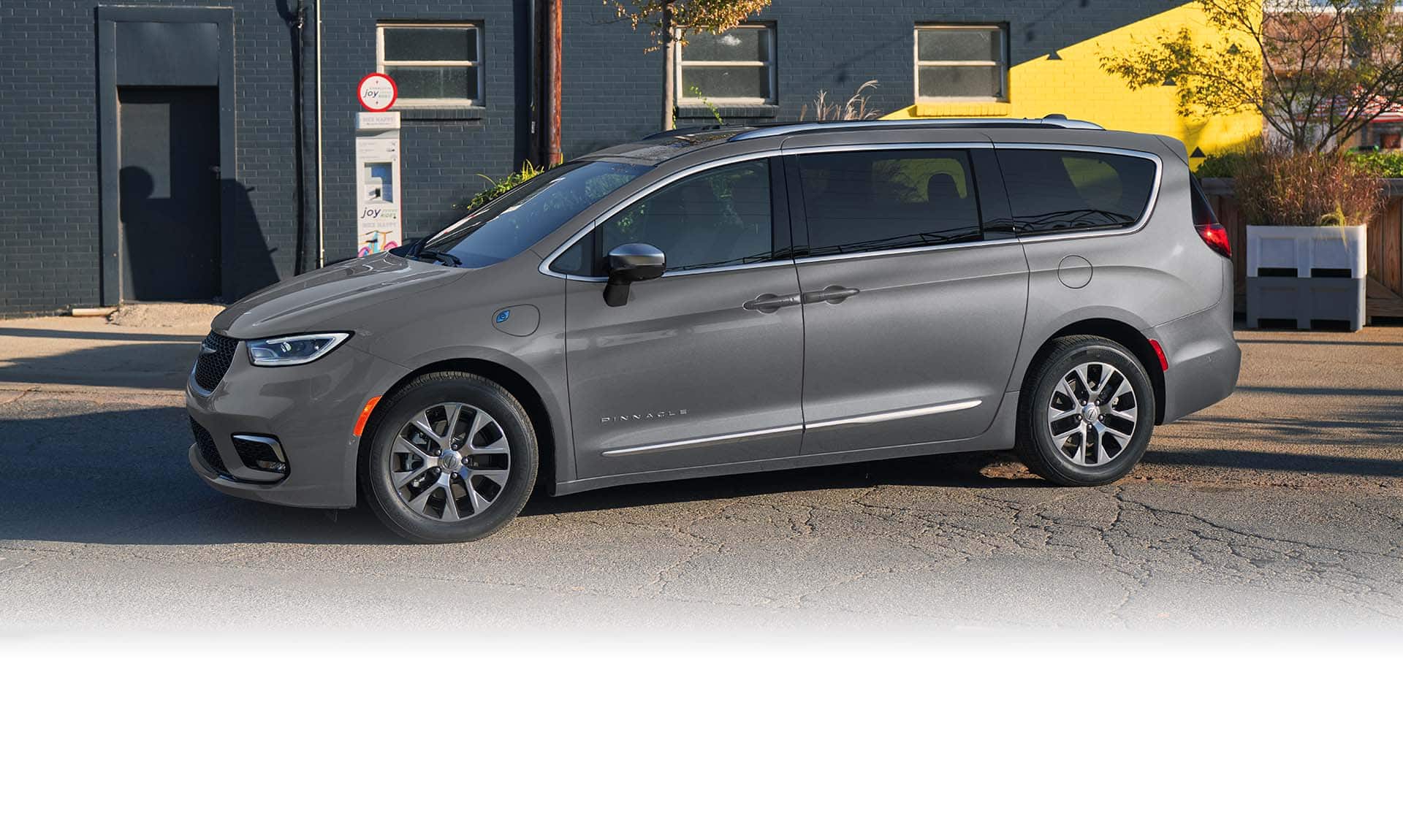
Plug‑in capability adds the extra dimension: electric driving for daily errands and errands that love to multiply. When you live in the kind of urban‑suburban overlap where destinations are close but not walkable, electric starts can make a noticeable difference. Over time, that becomes a habit—one of the best reasons families stick with plug‑in models.
How Charging Works for Real Schedules (Not Perfect Ones)
One of the biggest barriers for large families is not whether charging is possible—it’s whether charging feels like homework. The best plug‑in hybrids for 2025 respect imperfect schedules. Some homes can support a dedicated charging setup; others rely on convenient options. The goal is simple: make electricity available where life already happens—at home, near predictable parking, or during off‑peak windows.
For families, charging is often most effective when it becomes routine rather than a project. Plug in after dinner. Wake up with a full “budget.” Then run errands on electric power where it counts. Even if you can’t charge every day, the plug‑in nature of the vehicle can still turn ordinary trips into a fuel‑savvy pattern.
The deeper fascination lies in how charging reframes expectations. It transforms efficiency from an abstract concept into a daily lever you can pull. That shift in agency is addictive in the most practical way.
Fuel Economy and Family Economics: The Math Meets the Mood
Fuel savings matter. Large families feel every gallon because mileage adds up fast—especially with multiple drivers, after‑school activities, and weekend commitments. A plug‑in hybrid is often judged by its electric range, but its true value is frequently found in the blended total: electric portion plus efficient hybrid operation when the battery runs low.
What makes 2025 plug‑ins compelling is the way they reduce “fuel anxiety.” Instead of thinking only in terms of cost per mile, families start thinking in terms of total trip efficiency. That’s why many owners describe the experience as steadier and calmer. Long road stretches still run smoothly, but the spending patterns can feel more manageable.
There’s also a strategic benefit: when gas prices spike, the ability to rely partly on electricity can act like a financial buffer. It’s not magic, but it’s meaningful—particularly for households that don’t have the luxury of minimizing driving.
Space, Safety, and the Art of Being Ready for Anything
Plug‑in hybrids for large families must do the foundational work: accommodate passengers comfortably and keep cargo accessible. A minivan’s best feature isn’t just seating—it’s readiness. The ability to pivot from one plan to another without reorganizing the entire vehicle like an escape room.
Safety and driver confidence are essential. Families notice not only crash protection, but also how the vehicle assists in everyday maneuvers: lane keeping, blind‑spot awareness, and parking aids. When you’re driving with kids, gear, and changing schedules, those features become an invisible co‑pilot. The vehicle begins to feel like a guardian of time and attention.
And then there’s comfort: the kind that prevents the “everyone is miserable” moment after 45 minutes. Good climate distribution, manageable road noise, and seating that doesn’t turn long drives into fatigue marathons—these are the qualities that make a minivan feel like a home on wheels.
The Deeper Reason People Fall for Plug‑Ins: Control Over Daily Motion
Efficiency is only part of the appeal. The larger reason plug‑in hybrid minivans capture attention is that they offer a sense of control over daily motion. You’re not trapped in a single fuel strategy. You can tailor how the vehicle uses energy based on routine.
For large families, that flexibility matters because life rarely follows a neat schedule. One day is school‑to‑soccer. Another day is unexpected errands. Another day is a road trip. Plug‑in systems meet the family where it is—electric when it makes sense, hybrid when it’s needed. The transition between modes often feels seamless, which helps the vehicle blend into life instead of interrupting it.
In a way, this is the same reason people love a well‑organized kitchen or a closet with labels. It’s not just function—it’s reduced friction. Less friction means more time for what matters.
Buying Considerations: Choosing the Right Fit for Your Household
Even when models share the plug‑in hybrid concept, the best choice depends on personal realities. Consider how far your family typically drives on a normal day. Evaluate whether home charging is feasible, and whether workplace charging exists. Then look at seating needs: how often you use the third row, how frequently you carry sports equipment, and whether cargo space is a daily requirement.
Also think about how you want the vehicle to feel. Some families prioritize smooth, relaxed cruising; others want a more responsive driving character. In everyday use, these preferences determine satisfaction just as much as numbers do.
Finally, examine total ownership fit—insurance costs, maintenance expectations, and the practical availability of charging access. A plug‑in hybrid is at its best when it’s integrated into a household’s routine rather than added as an extra chore.
Conclusion: A Smarter Kind of Family Confidence for 2025
Best 2025 plug‑in hybrid minivans for large families aren’t simply efficient alternatives to gas minivans. They’re a different approach to how family logistics unfold. They offer space and comfort where minivans always shine, but they also add the quiet satisfaction of electric driving for daily routines. The fascination grows because the benefit isn’t only at the pump—it’s in the rhythm of the day.
When your household runs on motion, a plug‑in hybrid can make that motion feel more manageable. Less cost pressure. More flexibility. And a cabin built for the lived‑in chaos that defines large families. That’s the kind of practicality that feels like progress.