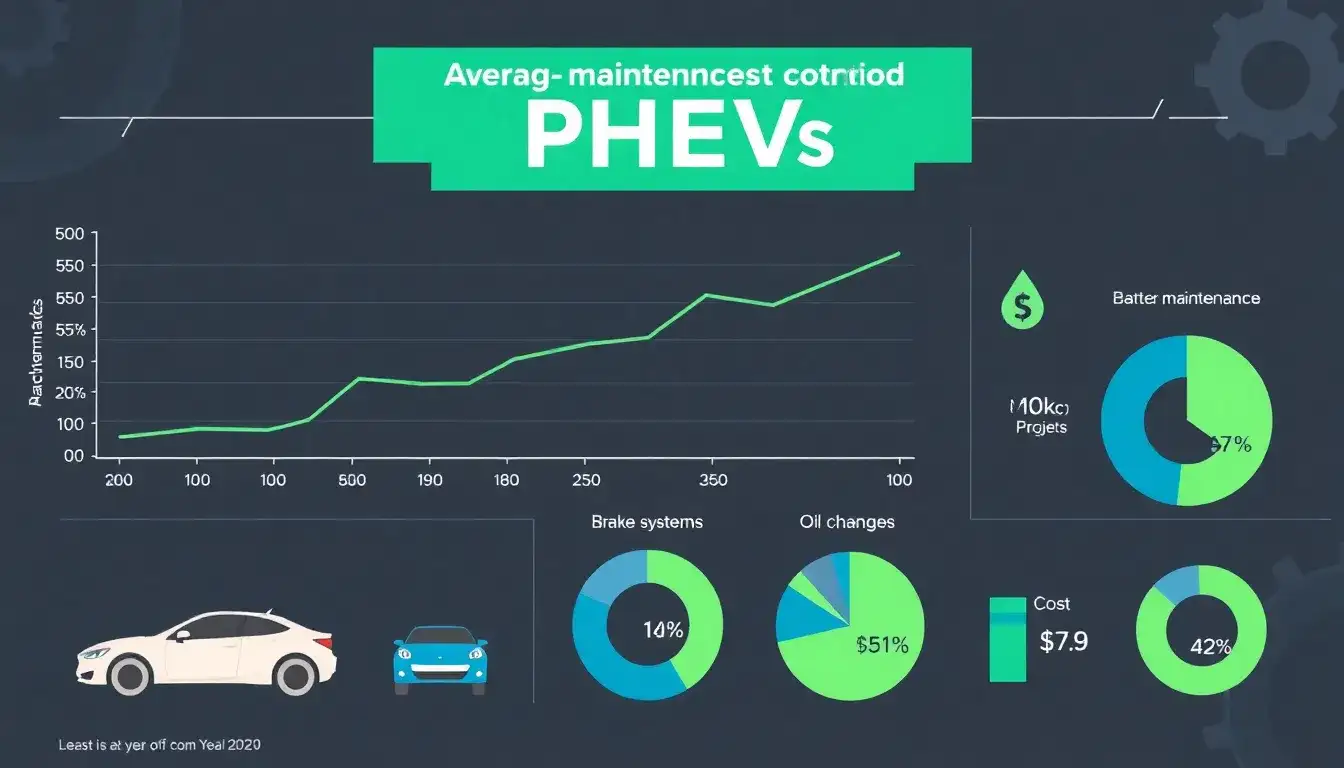
It’s a curious thing about plug-in hybrids: people often treat them like a compromise without asking what that compromise really costs—especially after the warranty fades, after the novelty wears thin, and after the dashboard stops feeling like a futuristic promise. A common observation is that PHEVs “should be cheaper to maintain” because they reuse familiar gasoline components and add the electric drivetrain’s quiet efficiency. Yet real-world experience can feel more complicated. Maintenance costs don’t rise or fall for a single reason. They emerge from a choreography of systems—some shared with conventional vehicles, some wholly new, and others that quietly interact in ways most drivers never anticipate.
There’s also a deeper fascination hiding in the details. PHEVs aren’t merely vehicles with two power sources. They’re mobile ecosystems. When you understand how those ecosystems age, you start to see why costs can look both predictable and surprising at the same time.
Why PHEV Maintenance Can Feel Both Familiar and Mysterious
Most maintenance conversations begin with what people already know: oil changes, brake wear, tire rotations, and occasional battery-related concerns. PHEVs fold those known steps into a drivetrain that also includes an electric motor, a traction battery, and a charging interface. That combination invites a straightforward expectation—fewer engine hours should mean fewer engine-related expenses.
But the “mystery” part comes from the fact that PHEVs don’t simply run two separate systems. They constantly arbitrate between them. The engine may start more or less often depending on battery state, temperature, driving pattern, and the vehicle’s energy-management strategy. This arbitration can change wear patterns. Components you never think about—like coolant pathways, thermal management valves, and hybrid-specific sensors—can become more prominent in the maintenance story.
Engine-Related Costs: Less Runtime, Different Wear
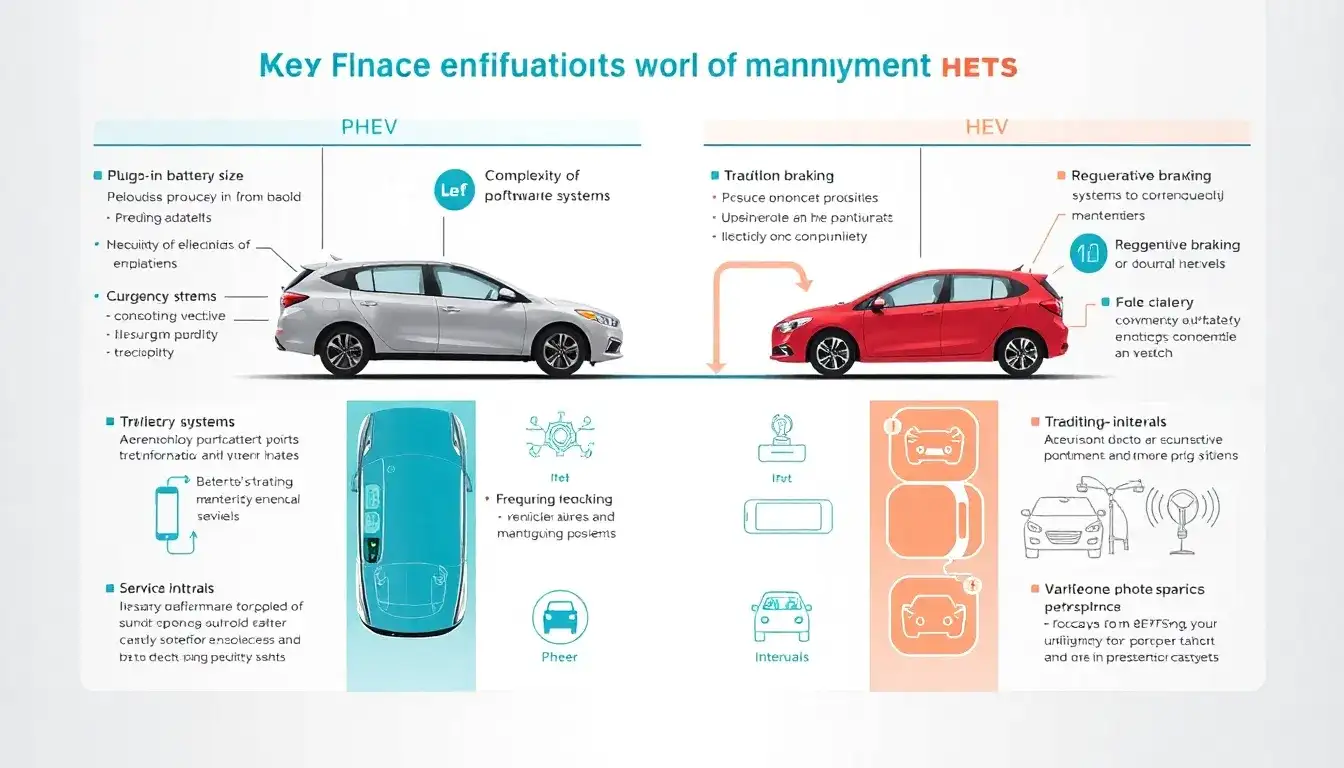
One reason drivers become enamored with PHEVs is the possibility of reduced engine wear. Because electric power can cover a portion of daily driving, the engine often experiences fewer start cycles and fewer total operating hours. In ideal usage, that can translate into longer intervals between certain service items.
Still, “less runtime” doesn’t mean “no wear.” Engines in PHEVs can idle differently due to hybrid control logic, and they still require proper lubrication, scheduled oil service, and coolant care. In addition, modern engines depend on sophisticated emissions hardware. Even if you drive on electricity more often, these systems remain critical; they simply accumulate mileage at a different pace. That difference can be subtle, but it matters.
Consider the deeper reason fascination returns: maintenance timing becomes a blend of time-based and usage-based intervals. The calendar doesn’t care that the engine was dormant for weeks. Fluids age. Filters clog slowly, even if mileage is modest. The result is a cost pattern that may not align with a simple “electric equals cheap” narrative.
Brakes and Rotors: Regenerative Deceleration’s Quiet Savings
PHEVs often reduce brake wear through regenerative braking. Instead of relying entirely on friction brakes, the vehicle captures some of the vehicle’s kinetic energy and channels it back into the battery. The immediate payoff is a reduction in pad replacement frequency.
Yet there’s a less obvious consequence: friction brakes may be used less frequently, which can contribute to surface rust on rotors and a need for occasional brake “exercise.” In wet climates or in vehicles driven mostly on gentle urban routes, this can become noticeable. When friction brakes are finally demanded—during hard stops or aggressive maneuvers—performance depends on rotor condition.
Think of it as an uncommon balance: your costs may shift away from consumables like pads, and toward inspections, rotor maintenance, or brake fluid service. Brake fluid remains hygroscopic, meaning it absorbs moisture over time. Regenerative braking doesn’t pause chemistry.
Battery Maintenance: The Real Center of Gravity
The traction battery is the heart of a PHEV, and it’s also where drivers often project both hope and anxiety. The most reassuring reality is that these batteries are typically engineered for longevity, with thermal management systems designed to keep operating conditions within safe bounds.
However, “battery warranty” can create a false sense of certainty. Costs can appear later, not because the battery suddenly fails, but because related components—cooling pumps, sensors, contactors, and high-voltage wiring—may require attention. Even software updates can influence how efficiently the battery is used, indirectly affecting heat generation and stress.
Another deeper layer: battery degradation is sensitive to charging habits and climate. Frequent fast charging, high state-of-charge storage, and consistently hot conditions can accelerate aging. That doesn’t mean a battery is fragile. It means the battery is a living material that responds to thermodynamic and electrochemical rhythms.
Cooling and Thermal Management: Where Hidden Complexity Lives
Thermal systems are the unsung accountants of PHEV life. Electric components generate heat differently than combustion engines. As a result, PHEVs include cooling circuits that coordinate between battery, motor, inverter, and engine. These circuits rely on pumps, thermostats, valves, and refrigerant loops.
Maintenance costs can rise when any part of this thermal architecture requires replacement. A weak pump can cause unnecessary heat cycling. A faulty valve can create inefficient temperature distribution. In normal driving, such issues might show up as warnings, reduced charging performance, or limited power modes rather than immediate mechanical symptoms.
This is where fascination deepens: the cost is often not tied to dramatic breakdowns. It’s tied to small efficiency losses. Over time, inefficiency becomes wear, and wear becomes service.
Charging Equipment and Electrical Components
Drivers frequently focus on vehicle maintenance and overlook a key factor: charging infrastructure. While many maintenance concerns belong to the vehicle, the charging ecosystem includes cables, connectors, and sometimes home wall-mounted equipment. Loose connections, worn cable ends, or moisture intrusion can create intermittent charging faults that feel like “battery problems” but may originate elsewhere.
On the vehicle side, the onboard charger and related cooling components deserve attention. When chargers underperform, charging time stretches, and that can tempt drivers into more frequent charging sessions. More sessions don’t automatically mean more wear, but they can increase opportunities for connection issues and thermal stress.
Fluids, Filters, and Routine Service: A PHEV’s Maintenance Interval Reality
PHEVs still require routine service intervals for oil, transmission-related components where applicable, coolant inspection, brake fluid changes, cabin air filters, and engine air filters. The engine’s reduced usage can influence how quickly contaminants accumulate, but it doesn’t eliminate service tasks.
Some drivers reduce oil changes because the odometer grows slowly. That can be costly later. Modern engines rely on oil that resists breakdown. Even with fewer miles, the oil still collects condensation and experiences time-related degradation. Fluids age even when combustion events are fewer.
Therefore, the most cost-effective approach usually isn’t “drive less, service less.” It’s “service according to both time and vehicle guidance.” The vehicle’s maintenance schedule is designed to respect how systems degrade in real conditions, not how a spreadsheet predicts your driving habits.
Tires, Suspension, and Wear Items: The Same Physics, Different Weight Distribution
A PHEV is often heavier than a comparable gasoline vehicle because it carries a battery pack. That extra mass influences tire wear, suspension stress, and sometimes wheel alignment frequency. It can also change braking distances in extreme scenarios even with regenerative braking.
So while you may save on brakes, you may pay elsewhere. Tires can be the stealth billing line. The best strategy is proactive alignment checks and careful attention to driving style. Smooth acceleration and controlled deceleration preserve traction, reducing the micro-stresses that shorten tire life.
Common Cost Triggers and How to Anticipate Them
Several events tend to drive PHEV maintenance costs upward: unexpected cooling-system service, battery-adjacent sensor replacements, brake inspections after long low-use periods, and onboard charger diagnostics. Another hidden trigger is neglected software maintenance. Updates can recalibrate thermal strategies and battery management behavior, which can change how systems operate under load.
What’s compelling is how prevention resembles a ritual rather than a single purchase. Keeping charging ports clean, avoiding extreme charge states for long storage periods, monitoring warning lights promptly, and ensuring that scheduled service is respected can all shape the cost curve.
How to Think About Cost: Total Cost of Ownership, Not Single Repairs
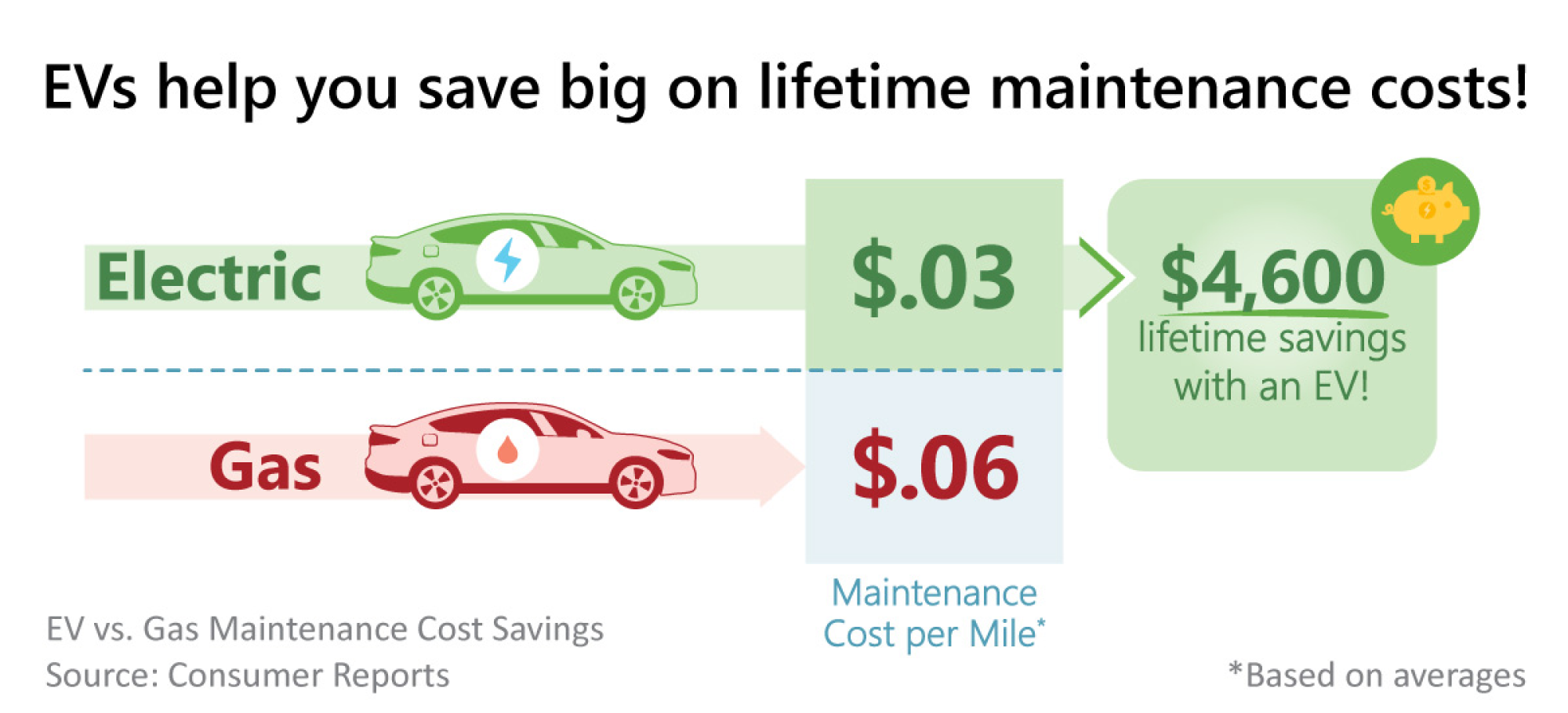
The most useful perspective is the total cost of ownership lens. A PHEV may deliver reduced frequency in certain services while introducing complexity in others. That complexity can be intimidating on day one, but it can become predictable once you understand what typically fails and what tends to be self-protective.
In many cases, the “cheaper to maintain” claim holds partially true—especially for drivers who plug in regularly, drive short daily distances, and maintain consistent charging habits. Yet the deeper truth is that maintenance costs are not just about mileage. They’re about energy patterns, thermal cycling, time-based aging, and component interactions.
Outro: The Cost Story Is Also a Learning Story
PHEV maintenance costs are best understood as a narrative with multiple chapters. Yes, regenerative braking can reduce some wear. Yes, electric operation can lessen engine runtime. But the battery, thermal management, and charging ecosystem add new variables that influence where costs appear and when they arrive.
The fascination is that the vehicle teaches you how power behaves across contexts. Once you view maintenance through that lens, the costs stop feeling like random surprises. They become the natural outcome of how a complex machine lives—quietly, intelligently, and, occasionally, with a few bills that arrive only after you’ve learned the pattern.