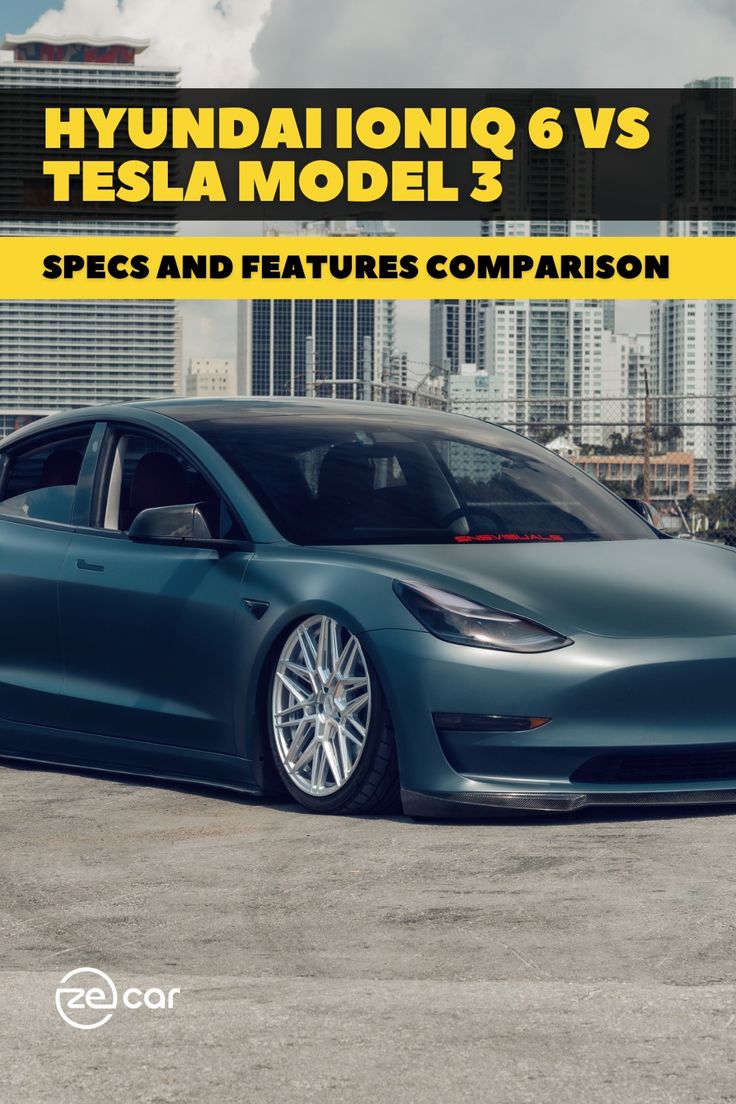
The sedan EV battlefield is no longer a quiet backroom; it’s a crowded arena with bright lights, fast reflexes, and technology that seems to blink in and out of reality. Two names keep resurfacing in the conversation—Tesla Model 3 and Hyundai Ioniq 6. On the surface, the comparison feels inevitable: both are sleek, electric, and aimed at drivers who want efficiency without surrendering charisma. Yet the deeper fascination comes from something more subtle. People aren’t just choosing a car; they’re choosing a philosophy of motion. And that philosophy reveals itself in the way each vehicle balances software confidence with aerodynamic discipline.
Some owners make the easy observation that these are both “efficient EV sedans.” Others reduce the rivalry to horsepower charts or charging speeds. But the more intriguing truth is how each model turns everyday driving into a kind of ritual. The Model 3 approaches the road with a blade-like directness—tight feedback, crisp acceleration, and an interface that feels like a software product. The Ioniq 6, by contrast, carries itself like a comet that learned to be comfortable—less about drama, more about glide, with aero efficiency that’s almost aesthetic.
A Common Observation: Efficiency Is the Hook, Not the Finish
It’s easy to notice range numbers first. Both cars are engineered to stretch kilometers with minimal fuss, and both benefit from modern battery management and efficient drivetrains. But the shared spotlight on efficiency can hide a deeper distinction: efficiency is not just a metric; it’s a design language.
Take aerodynamics. The Ioniq 6’s shape is famously intent—an intentional reduction of air resistance that helps it feel eerily stable at speed. The Model 3 also works hard in the aero department, yet its character tends to be communicated through responsiveness. One feels like it’s cutting through the air by geometry alone. The other feels like it’s carving through the air with acceleration and control.
Then there’s the matter of real-world behavior. Efficiency is shaped by how the car predicts driver intent. If your driving leans toward sudden surges—tight passes, spirited merges, “just one more” corner—one vehicle may appear thriftier. If your driving is more of a steady glide—long freeway stretches and deliberate pacing—another may look more efficient. The numbers change because the worldview behind the vehicle changes.
Design and Presence: Minimalism vs. Meteorology
When people describe the Model 3, they often sound slightly awed, as if the exterior is a clean idea that somehow gained wheels. The Ioniq 6’s styling, conversely, invites comparison to something atmospheric. It’s not just sleek—it’s wind-aware. The sedan profile looks tuned for low drag, like the car has already negotiated its relationship with the atmosphere.
Inside, the narrative flips. The Model 3’s cabin is dominated by a large central screen and a sense of software-first ergonomics. It feels streamlined, almost architecturally austere. Hyundai’s cabin, while also modern, tends to feel more traditionally “inhabitable.” It’s comfortable with the idea that the driver and passengers should live in the space, not merely operate it.
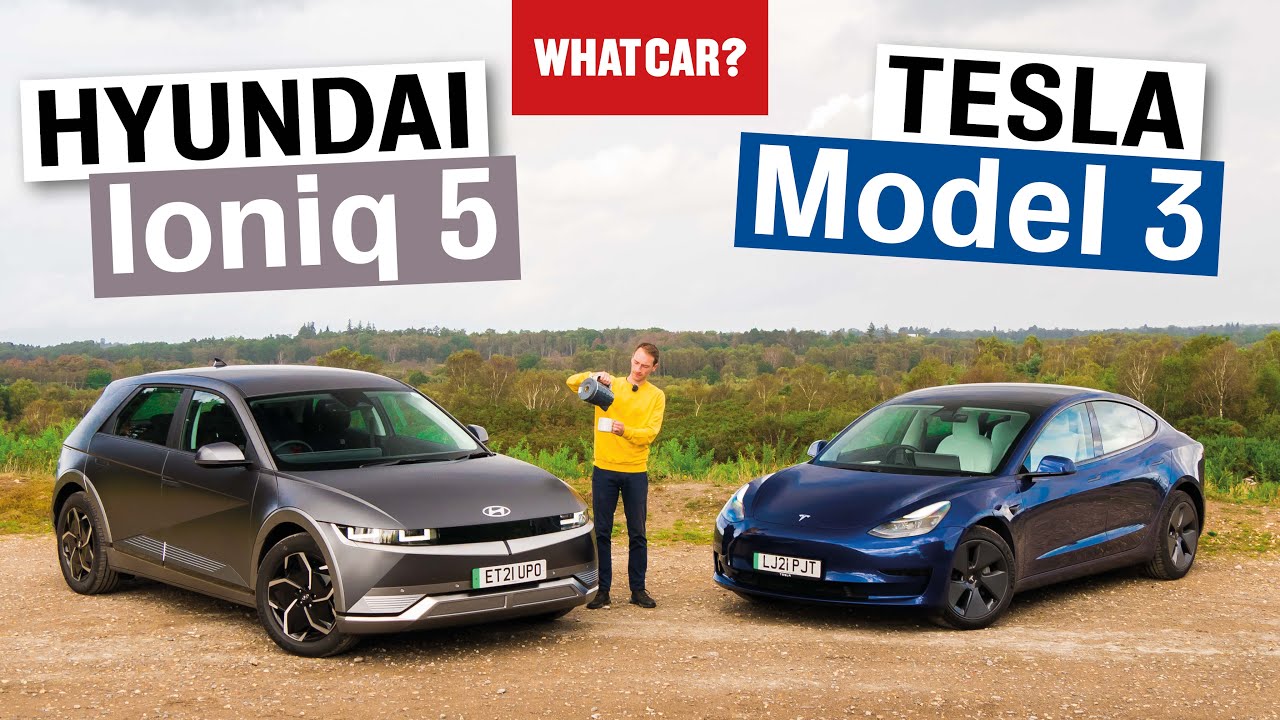
Performance and Power Delivery: Impulse vs. Smooth Momentum
On paper, both vehicles can satisfy the need for speed. In practice, the experience differs in tone. Tesla acceleration is often described as immediate—an electrical shove that turns intention into motion with startling fidelity. Even when you’re not pushing hard, the car feels ready. It carries a kind of mental throttle: quick to obey, fast to re-center.
The Ioniq 6’s performance personality is more about momentum and calm confidence. Acceleration can still be satisfying, but it often arrives in a smoother arc—like the car is preserving energy and traction rather than treating speed as a sudden event.
This distinction matters more than it sounds, because it shapes driver perception. Drivers who enjoy micro-adjustments may prefer the Model 3’s quick, surgical behavior. Drivers who value a relaxed rhythm—less sensation, more flow—may find the Ioniq 6’s approach more satisfying.
Driving Dynamics: Steering Feel and Road Texture
One common misconception is that electric cars all feel similar. They don’t. Steering weight, regenerative behavior, and chassis tuning create distinct “personalities” that show up over potholes, expansion joints, and highway seams.
The Model 3 often feels tighter, more connected. The pedal response and regenerative settings can create a strong sense of deceleration control. When the road changes, it seems eager to translate that change into action.
The Ioniq 6 can feel composed and planted. It’s designed to be tranquil at speed, and its aero-led character can make long drives feel less fatiguing. Road noise isn’t the only factor; there’s also how the suspension communicates imperfections. Some cars tell you everything. Others filter the message and keep the driver in “flow state.” The Ioniq 6 tends toward the second approach.
Charging and Energy Strategy: The Meaning of Time
Charging isn’t only about peak rates. It’s about confidence, predictability, and how the vehicle helps you plan your day. Tesla’s charging network and software integration typically create a smoother user experience—especially for drivers who want the least mental math possible.
Hyundai’s strategy is different. The Ioniq 6 is designed to be broadly compatible with fast-charging ecosystems, and it rewards efficient driving with real-world range that feels usable. Where Tesla often wins on seamlessness, Hyundai often wins on a blend of daily practicality and efficiency-minded engineering.
The deeper fascination here is psychological. Charging time feels longer when the process feels uncertain. It feels shorter when the car communicates clearly and the driver feels supported. Each brand’s ecosystem has its own tempo.
Software, Infotainment, and Driver Assistance: Two Different Types of Confidence
Many shoppers notice the screen first. The Model 3’s interface is direct and tightly integrated with the car’s core functions. It can feel like controlling a device rather than operating a machine. That’s part of its appeal—and part of why it can feel polarizing.
Hyundai’s approach is often more traditional in its layout while still being modern. It tends to deliver a broader sense of comfort and familiarity, even as it advances toward increasingly capable assistance features.
Driver assistance systems are where the philosophical divide becomes obvious. Some drivers prefer a system that feels bold and centralized, providing strong guidance and frequent software refinements. Others prefer systems that feel more measured, with a user experience that emphasizes clarity and steadiness.
It’s not just technology. It’s trust design. A driver’s confidence is shaped by how the vehicle behaves when it’s unsure and how it communicates uncertainty without drama.
Comfort, Quiet, and Daily Usability: The Hidden Contest
In daily life, the most important performance isn’t always 0–60. It’s how the car handles errands, stop-and-go traffic, and the subtle stress of parking garages. The Model 3 often feels efficient in movement and in software guidance—an “active” presence in your routine.
The Ioniq 6 often feels optimized for serenity. The aerodynamic focus translates into a more relaxed auditory environment at speed. It also tends to feel thoughtfully packaged for passengers, which matters more than people expect when the comparison is no longer theoretical.
Even visibility, seat comfort, and climate response become deciding factors. The fascination grows when the car disappears into the background. A vehicle that feels calm and composed invites longer drives. A vehicle that feels interactive invites confidence—and a little joy.
Ownership Experience: Maintenance Mindset and Long-Term Appeal
Both cars remove many traditional maintenance anxieties thanks to electric drivetrains. Yet ownership isn’t only about what you don’t do—it’s about what you regularly engage with. Software updates, charging routines, app integration, and service experiences all shape how ownership feels.
Tesla ownership is often described as digitally intimate. Hyundai ownership is often described as operationally pragmatic, with a comfort-first stance toward everyday use. Neither is universally superior. The “best” choice depends on whether you want your car to feel like a tech platform or a refined appliance that happens to be fast and silent.
This is where the fascination becomes almost anthropological. Drivers choose the vehicle that mirrors the way they want to live: one that thrills through immediacy, or one that charms through measured grace.
So, Which Sedan EV Wins the Battle?
The Model 3 is a decisive contender for drivers who want sharp responsiveness, a software-centric cockpit, and a driving experience that feels instantly legible. It appeals to those who enjoy a car that reacts quickly—like it’s reading the road through your intentions.
The Ioniq 6 is a compelling counterpoint for drivers who value aerodynamic elegance, serene highway manners, and a calm sense of efficiency. It often feels tailor-made for long stretches and a lower-stress commute.
If you’re chasing excitement and immediacy, Tesla’s philosophy may feel more satisfying. If you’re chasing effortless glide and tranquility, the Ioniq 6’s aero-first design can feel like a revelation.
Outro: Two Vehicles, One Shared Dream—A New Kind of Motion
Ultimately, the Tesla Model 3 vs Hyundai Ioniq 6 debate isn’t just about who has the better spec sheet. It’s about what you find mesmerizing in the act of driving. One seduces with directness and software confidence. The other seduces with aerodynamics, poise, and a quietly obsessive attention to calm.
Both deliver the EV promise—clean acceleration, fewer mechanical rituals, and a driving experience that feels like the future arrived early. The choice is the part that turns fascination into commitment. Pick the car whose personality matches your own, and the sedan EV battle stops being a contest. It becomes your daily story.