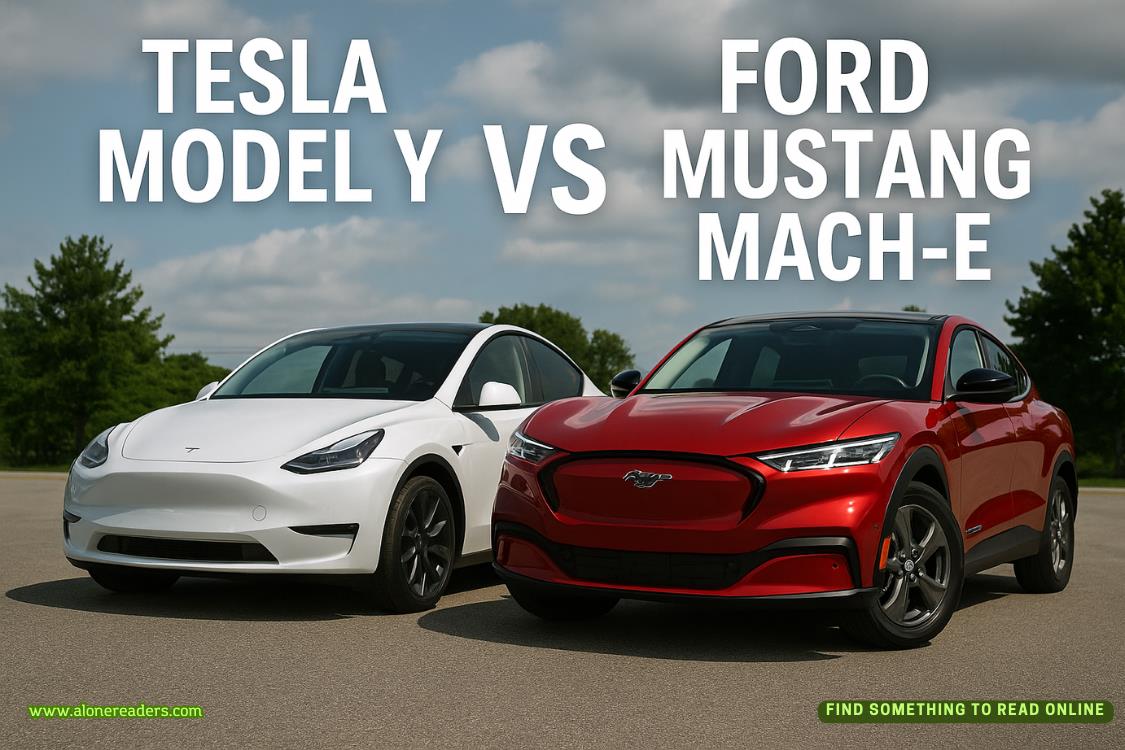
The question “Tesla Model Y vs Ford Mustang Mach-E—Which EV SUV Wins?” feels simple at first. Two popular electric SUVs. Two distinct philosophies. Yet the moment you look closer—at driving feel, charging behavior, software temperament, interior design, and real-world ownership costs—the answer becomes less about a single spec sheet and more about which experience fits your lifestyle.
Some drivers want an EV that behaves like a finely tuned instrument. Others prefer an SUV that feels familiar, with comfort-forward ergonomics and a softer learning curve. In the world of electric crossovers, fit can matter as much as raw performance. Let’s trace the rivalry step by step, so you can choose with clarity instead of guesswork.
First Impressions: Design Language and Presence
Both the Tesla Model Y and the Ford Mustang Mach-E wear the EV badge proudly, but they project different moods. The Model Y’s design language is clean and aerodynamic, with a minimalist, almost aerospace-like restraint. Its proportions read as confident and slightly sculpted, like it was drafted with wind tunnel logic in mind.
The Mach-E, by contrast, carries a more conventional SUV stance, even when it moves with electric immediacy. It looks styled rather than merely streamlined. That difference matters when you’re parked at a curb, strolling through a parking lot, or choosing what your driveway “feels” like every morning.
If you care about how the vehicle photographs, both deliver. If you care about how they feel standing beside them—materials, visual weight, and cockpit sightlines—the Mach-E and Model Y can tug you in opposite directions.

Cabin Experience: Tech-First Minimalism vs Human-Centered Ergonomics
Open the door and the interior philosophy becomes obvious. Tesla leans toward a tech-first minimalism. Fewer buttons, more screen real estate, and a sense of software-defined everything. For some drivers, that is intoxicating—everything feels coordinated under a single interface. For others, it can feel like the car is constantly “updating,” even when you’re simply trying to adjust climate settings quickly.
The Mach-E tends to feel more familiar to drivers who’ve lived with traditional dashboards. It offers an ergonomic flow that many people find intuitive on day one. Long commutes can feel less cognitively demanding because the controls, while still modern, are not attempting to replace muscle memory with a touchscreen learning curve.
Ask yourself this: do you prefer interacting with a car through one dominant digital hub, or through a cockpit that balances tactile comfort with digital depth?
Driving Dynamics: The Instant Response Debate
Electric SUVs often share a common trait: instant torque. Yet “instant” is not identical across every model. Tesla’s propulsion mapping can feel brisk and linear, like the throttle translates intention without friction. The result can be a sensation of effortless acceleration that’s hard to get bored with.
The Mach-E’s drive feel, depending on configuration, can feel sporty and poised, with a personality that emphasizes control and composure. It’s less about raw “space launch” theatrics and more about confident momentum—an EV that feels willing to play, but also comfortable behaving like an everyday vehicle.
In daily driving, the difference often shows up in how each car rewards gentle inputs. Tesla tends to feel immediate and finely responsive at low speeds. The Mach-E often feels grounded and predictable, which can be a blessing on twisty roads or during parking maneuvers.
Range and Efficiency: Which SUV Plays Better in the Real World?
Range is the spreadsheet champion for most shoppers, but real-world efficiency is where the story gets nuanced. Weather, tire choice, speed, elevation, and even driving style can turn a “good” range number into a “good enough” outcome—or the reverse.
Tesla is known for optimizing efficiency across many conditions, and it generally performs well in scenarios where drivers maintain steady cruising. Ford’s approach can be highly competitive too, especially when drivers match driving patterns to the vehicle’s strengths.
Rather than treating range as a single number, think in terms of how you live. If your schedule includes frequent highway runs, you’ll care about sustained efficiency. If your life is more suburban with stop-and-go commutes, you’ll care about energy recovery and predictable consumption during frequent acceleration.
Charging Experience: Convenience, Networks, and Anxiety Management
Charging is where ownership becomes emotional. Charging sessions can be effortless rituals or occasional stress tests, depending on infrastructure and how quickly you can locate dependable chargers.
Tesla owners often experience a more cohesive ecosystem, particularly when using Tesla-compatible infrastructure where available. The workflow can feel smooth—navigation, routing, and charger access presented in a single coherent system.
The Mach-E benefits from a broad charging approach as well, and the experience continues to improve as charging access expands. What matters most is whether your daily routine aligns with the chargers you can rely on. If home charging is your foundation, both vehicles can make electric driving feel frictionless. If your routine is road-trip heavy, your charging network coverage becomes the deciding factor.
In short: evaluate charging not as a concept, but as a daily itinerary problem.
Technology and Software: Living with an EV That Learns (or Updates)
Tesla’s software identity is unmistakable. The car’s interface and features often feel like they’re living in a digital ecosystem—capable of evolving over time. That can be exhilarating. It can also mean that the vehicle’s “feel” changes subtly as features refine.
The Mach-E’s software direction is more traditional in the sense that it aims to blend modern features with familiar usability. Updates, when they come, tend to feel incremental rather than transformational. Many drivers appreciate that stability, especially for those who want their car to be consistent rather than perpetually dynamic.
Here’s the emotional crux: some people enjoy owning a device on wheels that evolves. Others prefer a stable product that behaves the same way every time.
Safety, Driver Assistance, and Confidence on Long Miles
Safety is never “just a feature.” Driver assistance is what turns highway fatigue into manageable alertness. Both vehicles offer advanced driver-assist capabilities, and both aim to reduce workload during monotonous stretches.
The real question isn’t whether each SUV has assistance—it’s how well that assistance matches your driving style and tolerance. Some drivers prefer more hands-on control with fewer surprises. Others welcome more automation, especially when traffic patterns turn repetitive.
In this category, the best choice is the one that encourages calm confidence rather than constant supervision.
Space, Storage, and Family-Fit Utility
An EV SUV wins when it fits the rhythm of hauling, loading, and living. Cargo capacity matters, but so does the layout: whether bags sit easily, whether you can stow gear without wrestling with odd angles, and whether rear-seat access works smoothly for passengers.
The Model Y tends to feel like a clever space optimizer—practical without being fussy. The Mach-E brings a more traditional SUV practicality, with an emphasis on comfort-forward usability that many families find intuitive.
Long road trips reveal the truth quickly: the vehicle that feels easiest to load and unload is the one you’ll appreciate most, even if peak range or peak performance slightly favors the rival.
Cost of Ownership: Buying Price, Maintenance, and Financial Weather
Ownership cost is where the discussion becomes adult and grounded. The purchase price matters, but so do insurance costs, tire wear, brake-system usage patterns, and the likelihood of needing repairs outside typical maintenance.
Electric vehicles generally reduce some traditional maintenance requirements. Still, differences exist in parts pricing, labor, and how easily service networks can handle your location. If your community has strong dealer support for one model, that advantage can become more meaningful than any single acceleration figure.
Consider also how quickly depreciation might play out in your market. While no one can predict the future with perfect precision, shoppers can often infer trends based on demand and brand momentum.
Who Should Choose the Tesla Model Y?
Choose the Model Y if you want a driving experience that feels instantly responsive, a cabin that prioritizes screen-based control, and a software-forward ownership style. It’s a strong fit for tech enthusiasts, frequent highway drivers, and people who value a coherent digital ecosystem.
If you’re the type who enjoys efficiency and appreciates a vehicle that feels like a living platform, the Model Y tends to feel like the natural habitat.
Who Should Choose the Ford Mustang Mach-E?
Choose the Mach-E if you prefer a more traditional, comfort-friendly interface, an SUV stance that feels familiar, and a driving experience that balances sporty willingness with everyday practicality. It’s a solid fit for families, commuters who want intuitive control, and buyers who value a less software-intense interaction style.
If you want an EV SUV that feels like a conventional car improved by electrification—rather than a rolling computer—Mach-E ownership can feel remarkably sane.
So, Which EV SUV Wins?
“Winning” depends on what you refuse to compromise. If your priority is a streamlined, tech-centric ecosystem with quick responsiveness and efficiency-minded driving, the Tesla Model Y often takes the lead in the emotional and practical sense.
If your priority is familiar ergonomics, balanced daily usability, and an EV that feels grounded and accessible, the Ford Mustang Mach-E can emerge as the better match.
The most sensible way to decide is simple: align the vehicle with your routine. Where will you charge? How often do you road-trip? Do you want automation to reduce workload or do you want human familiarity to stay in control? The winner is the SUV that makes those answers feel effortless.
Final Thoughts: The EV SUV That Fits Your Life
Electric SUVs are no longer just novelty machines. They’re daily companions, and the best choice is the one that turns charging, driving, and comfort into a coherent routine rather than a series of tradeoffs.
Whether the Model Y’s minimalist tech aura pulls you forward, or the Mach-E’s familiar SUV practicality steadies you, both vehicles bring serious capability to the road. Make your decision by matching temperament—yours—to the vehicle’s character. When that alignment clicks, ownership stops being a debate and becomes a pleasure.