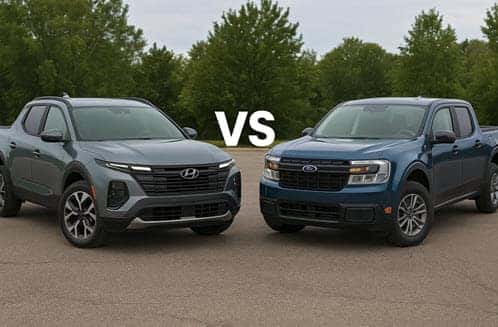
In the rapidly evolving world of compact trucks, two titans have emerged to captivate enthusiasts and practical drivers alike: the 2025 Ford Maverick and the 2025 Hyundai Santa Cruz. Both vehicles uniquely blend versatility with innovation, creating a compelling narrative for those seeking a smaller truck that doesn’t skimp on capability or modern convenience. This extensive face-off dives deep into every nuance, helping discerning buyers decode which model reigns supreme in this burgeoning segment.
Design and Exterior Appeal
The visual language of both trucks reveals distinct philosophies. The 2025 Ford Maverick asserts its presence with a robust, muscular silhouette—angular lines meet a bold grille that exudes confidence. Its design harks back to traditional trucks but wrapped in a contemporary package tailored for urban drivers who crave rugged appeal without bulk. In contrast, the Hyundai Santa Cruz takes a more avant-garde approach, blending a sleek, crossover-inspired profile with the functionality of a pickup. Its smooth contours and distinctive lighting elements create an aura of refinement, appealing to those with an eye for aesthetics and innovation.
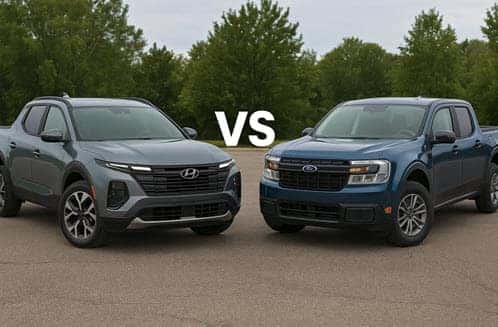
Both trucks offer practical dimensions that are perfect for city environments, with compact footprints allowing for ease of parking and maneuverability. However, the Maverick’s slightly taller stance and rugged accents emphasize its readiness for tougher terrain, while the Santa Cruz leans into polish and aerodynamic efficiency.
Powertrain and Performance
The heart of any truck lies beneath the hood, and here, both contenders showcase impressive yet divergent engineering marvels. The 2025 Ford Maverick champions efficiency without surrendering muscle—powered by a standard hybrid powertrain combining a 2.5-liter four-cylinder engine with an electric motor. This setup delivers a commendable balance of power and fuel economy, ideal for drivers seeking an eco-conscious option. For those craving more throaty performance, an optional turbocharged 2.0-liter EcoBoost engine steps in to provide an exhilarating punch with spirited acceleration and towing capabilities.
Hyundai’s Santa Cruz follows a slightly different drumbeat, emphasizing multi-faceted capability. The base engine is a spirited 2.5-liter inline-four, known for its reliability and smooth power delivery. Buyers can upgrade to a potent 2.5-liter turbocharged four-cylinder engine, elevating horsepower and torque output considerably. This powertrain dynamic offers a satisfying blend of spirited driving and practical workhorse abilities. Notably, both vehicles provide all-wheel-drive options, but the Maverick’s standard front-wheel-drive architecture underscores its urban orientation, while Santa Cruz’s AWD system enhances off-road confidence.
Interior Experience and Technology
Step inside, and the divergence continues in design ethos and execution. The Ford Maverick embraces a straightforward, utilitarian approach with an emphasis on durability and user-friendly interfaces. The interior layout is clean and purposeful; materials have been carefully selected to withstand the rigors of daily utility yet remain comfortable for long drives. Technology plays a starring role with an available 8-inch touchscreen infotainment system featuring Apple CarPlay and Android Auto compatibility, designed to keep drivers connected without distraction.
In contrast, the Hyundai Santa Cruz indulges occupants with a more upscale cabin ambiance, reminiscent of a premium crossover rather than a traditional pickup. Soft-touch surfaces, bold design elements, and a minimalist aesthetic create an inviting environment. Its technology suite is equally impressive, boasting a larger available touchscreen—up to 10.25 inches—paired with an intuitive interface. Advanced driver-assistance systems are seamlessly integrated, enhancing both safety and convenience. The Santa Cruz’s rear seating area offers generous legroom and practical sliding rear windows that provide a subtle nod to classic truck design.

Utility and Cargo Capabilities
In the small truck battle, utility remains imperative. The Ford Maverick impresses with its versatile truck bed, measuring approximately 4.5 feet in length and featuring a composite bed liner resistant to dents and scratches. Its bed offers clever innovations like a multi-position tailgate and built-in storage compartments that accommodate diverse cargo securely. The Maverick’s payload and towing capacities are competitive in the segment, with the EcoBoost variant capable of towing up to 4,000 pounds, making it the choice for those needing serious hauling prowess in a compact form.
The Hyundai Santa Cruz reimagines the cargo experience by blending features of a truck bed and a cargo box. Its bed is slightly shorter but thoughtfully designed with integrated tie-down hooks and a sliding tonneau cover for added security. The unique “open-air” experience paired with a closed cab provides a level of flexibility uncommon in this category. While its towing capacity falls just short of the Maverick’s maximum, it still manages respectable numbers, making it an ideal companion for weekend adventures or light-duty work.
Safety and Driver Assistance Features
Both the 2025 Ford Maverick and Hyundai Santa Cruz come equipped with an arsenal of safety technologies, underscoring the modern demand for advanced driver assistance. Ford equips the Maverick with features like automatic emergency braking, lane-keeping assist, and adaptive cruise control. These systems are calibrated to offer a seamless fusion of safety and usability, delivering peace of mind whether navigating congested city streets or cruising highways.
Similarly, Hyundai has woven a comprehensive safety net around the Santa Cruz, including forward collision avoidance, blind-spot collision avoidance assist, and rear cross-traffic alert. The level of sophistication caters to tech-savvy drivers who prioritize cutting-edge interventions. Hyundai’s safety suite also integrates a driver attention warning system, which subtly encourages secure driving habits during extended journeys.
Pricing and Value Proposition
When it comes to pricing, both trucks are positioned to offer significant value in the compact pickup market. The Ford Maverick’s starting price is undeniably attractive, particularly given its hybrid powertrain as a standard offering—a bargain for those focused on long-term fuel savings and ecological impact. Optional upgrades and higher trims introduce premium touches and performance enhancements without veering into luxury pricing territory.
The Hyundai Santa Cruz, while generally positioned slightly above the Maverick in starting MSRP, offers a rich package of technology, design finesse, and safety features that justify its value proposition. Hyundai’s reputation for reliability paired with an extensive warranty adds an extra layer of confidence to ownership, appealing to buyers who seek peace of mind and sophistication rolled into one.
Conclusion: Which Compact Titan Triumphs?
The 2025 Ford Maverick and Hyundai Santa Cruz represent an exhilarating chapter in the evolution of compact trucks. Each vehicle offers a distinctive blend of traits tailored to different buyer priorities. The Maverick champions efficiency, rugged utility, and user-friendly innovation, geared toward those who want a dependable workhorse with a green conscience. Meanwhile, the Santa Cruz stands as a stylish and technologically advanced alternative—an ideal choice for drivers who desire versatility melded with comfort and flair.
In this face-off, the true victor is the consumer, as these two dynamic trucks expand the definition of what a small pickup can be. Whether it’s the raw practicality and hybrid efficiency of the Maverick or the refined design and tech sophistication of the Santa Cruz, both deliver compelling reasons to embrace a new generation of compact, capable trucks.