The word “safety” can feel abstract—an umbrella term that never quite holds still. Yet the moment you shift your perspective, safety becomes something tangible: a set of engineered decisions, verified through rigorous testing, distilled into results you can actually compare. For drivers shopping for a crossover in 2025, that shift is happening right now. The IIHS Top Safety Pick+ program doesn’t simply reward vehicles for being “good.” It scrutinizes how they behave under pressure—how they protect bodies, how they reduce the odds of severe outcomes, and how consistently they perform across crash scenarios and crash-avoidance systems.
And once you start paying attention, curiosity takes over. Which crossovers earned the coveted Top Safety Pick+ designation? What does that achievement really mean in day-to-day life? More importantly, how does it change the way you think about the cars you invite into your daily routine—commutes, school drop-offs, late-night freeway merges, and those ordinary moments when safety is usually invisible until it isn’t?
What “Top Safety Pick+” Really Signals
Top Safety Pick+ is not a vague compliment—it’s a badge of comprehensiveness. It implies that a vehicle met stringent IIHS requirements across multiple categories, including crashworthiness and the sophistication of forward collision prevention systems. The “plus” isn’t decorative. It suggests the vehicle didn’t merely scrape by; it achieved excellence in areas where safety benefits can either compound or evaporate.
To understand the implications, consider how safety is layered like a well-constructed narrative. Passive protection works like a well-written last line—when the impact arrives, the structure, restraints, and energy management attempt to keep forces survivable. Active safety works like earlier chapters—steering, braking support, and collision avoidance help prevent the plot from turning tragic in the first place.
In 2025, the most promising crossovers aren’t just styled for comfort; they are calibrated for restraint, mitigation, and restraint-under-stress. That’s the perspective shift: safety isn’t only about what happens during a crash. It’s about how often the crash gets a chance to happen.
The 2025 Crossovers That Earned a Safety Halo
Within the 2025 lineup, certain makes and models rose above the noise to secure IIHS Top Safety Pick+ recognition. Among the notable winners are Audi, Buick, and Nissan crossovers and related offerings, each bringing its own safety philosophy to the table—some emphasizing structural integrity and restraint systems, others leaning into advanced driver-assistance calibration.
What ties these winners together is not branding rhetoric. It’s consistency. When a vehicle earns Top Safety Pick+, it signals that safety performance is not a one-category act. The result reads like a system that doesn’t forget to protect you just because the scenario changes.
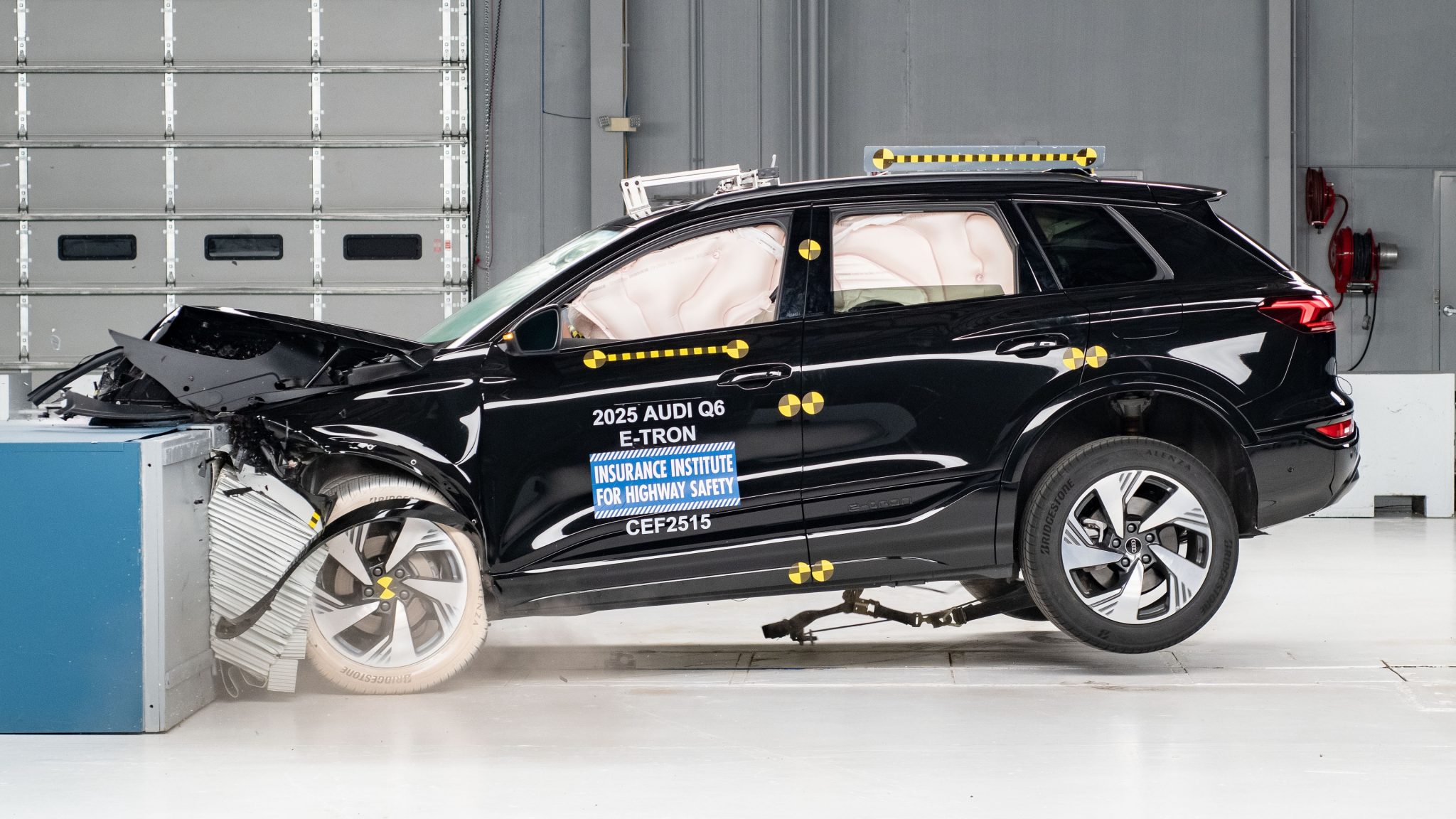
Take the Audi e-tron family as an example of how modern engineering pairs with verification. The vehicle’s IIHS testing imagery hints at the meticulous nature of the process—an environment designed to reveal weaknesses you might never notice in normal driving. That difference matters, because the real-world safety experience is shaped by decisions made far before the first warning beep.
How Crashworthiness Becomes a Daily Advantage
Crashworthiness can sound like a technical phrase, but it translates into something deeply human: how your body feels in the moments that follow sudden deceleration. A Top Safety Pick+ crossover is engineered to reduce the chance of intrusion, manage energy flow, and maintain survival space for occupants.
In practical terms, that means better performance in frontal and side impact scenarios, where structures must coordinate like synchronized choreography. When parts work together—crumple zones absorbing energy, stronger cabin cells protecting occupants, and airbags deploying with calibrated timing—the vehicle becomes an active participant in your survival.
It’s easy to underestimate this. Yet most drivers spend years learning the feel of steering and brakes, while never studying the way a car distributes forces in a collision. The IIHS program flips that equation by measuring what truly matters: the vehicle’s ability to protect under stress.
Collision Avoidance: The Art of Preventing the Moment
Active safety systems have evolved into something closer to a vigilant co-pilot. But vigilance isn’t just about features existing—it’s about features working properly across varied conditions. That’s where IIHS rigor tends to separate advanced marketing from credible engineering.
Top Safety Pick+ winners typically perform strongly in categories that evaluate forward collision prevention and related driver-assistance technologies. These systems aim to detect hazards early, warn the driver at appropriate times, and apply braking when required to reduce impact severity or avoid collisions altogether.
The curiosity here is warranted: does the system behave predictably on highways? Does it respond reasonably to vehicles cutting in? How does it handle changing lighting or sudden speed differentials? When a crossover earns Top Safety Pick+, it implies the software-hardware ecosystem was tuned to perform—not merely to exist.
Side-Impact Protection and the Geometry of Safety
Side impacts often feel like the kind of scenario you assume won’t happen—until it does. Safety systems that perform well in these circumstances are designed around geometry: where the vehicle’s structure strengthens, how doors and pillars respond, and how restraint systems work to keep occupants within safe boundaries.
The perspective shift is subtle but powerful. Instead of thinking of safety as “airbags,” think of it as geometry plus timing. A well-designed structure can limit intrusion; then restraint systems can align the occupant with forces that are less likely to cause catastrophic injury. When these elements are integrated, the vehicle becomes harder to “defeat,” even when the forces are unpredictable.
For crossover shoppers, this means your daily route is safer not just because the car is large, but because its protective architecture has been validated.
Why Crossovers Matter: Height, Visibility, and Real-World Risk
Crossovers occupy a unique emotional space. Drivers often choose them for practical reasons—cargo capacity, seating position, and the confidence that comes with a commanding view. Yet that height and visibility also influence accident dynamics: different crash angles, different force absorption behavior, and different driver perception patterns.
Top Safety Pick+ recognition helps correct for the assumption that “bigger” always means “safer.” A safer crossover is not simply taller; it’s better engineered. The IIHS evaluation framework pushes manufacturers to prove that their crossovers protect occupants across the scenarios that matter.
That’s especially relevant for family routines and commutes that include unpredictable merging patterns, sudden braking, and distracted driving trends. In such environments, a safety system that prevents or mitigates collisions can be the difference between a near miss and a catastrophic event.
Beyond the Test: What to Look for When Buying in 2025
Even a Top Safety Pick+ winner deserves thoughtful selection, because equipment levels can change. Trim matters. Options matter. Some safety performance depends on having the correct sensors, camera systems, and driver-assistance packages installed as configured for the evaluation.
When comparing crossovers, prioritize configuration details, not just model names. Ask what safety suite is included. Confirm the presence of forward collision prevention and the specifics of braking assistance. Look for how blind-spot monitoring and lane support are integrated, and whether the vehicle includes driver monitoring features that improve system reliability.
Short and decisive actions help: verify the build you’re buying matches the safety package that earned the designation. It’s a small effort with a big payoff.
Exploring a Second Winner’s Story: Mazda CX-30
Safety excellence doesn’t belong exclusively to luxury silhouettes. Some of the most intriguing winners come from the mainstream, where value meets serious engineering. The 2026 Mazda CX-30 crossover, highlighted in safety recognition imagery, represents how compact crossovers can still compete at the highest protection level.
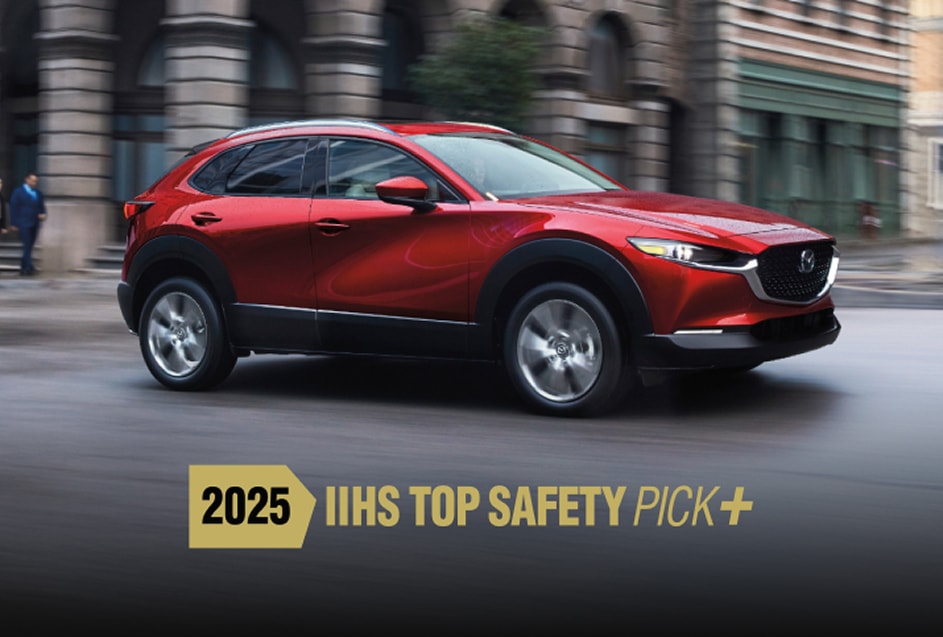
This is where curiosity deepens into practicality. Compact crossovers are often chosen for agility and ease—tight parking lots, city traffic, and daily stop-and-go driving. Yet safety isn’t a trade you should accept as the price of convenience. A strong IIHS performance suggests the vehicle’s design counters the compromises people assume must exist.
When the brand story includes safety credibility, shopping feels less like guesswork and more like selection.
The Safety Shift: Choosing with Intention, Not Habit
Most people buy cars on routine. They compare payments, evaluate cabin comfort, and assess infotainment intuitiveness. Those factors matter, but Top Safety Pick+ wins invite a different kind of selection logic—one that begins with the question: When things go wrong, what happens?
That question changes how you interpret test results. It turns safety from a checklist item into a narrative of protective intent. It also makes your shortlist sharper. Instead of “which crossover is nice,” you start asking “which crossover has earned validated protection in the areas that keep outcomes survivable?”
In 2025, the IIHS Top Safety Pick+ winners offer a rare convergence: modern technology, disciplined engineering, and measurable performance. That combination is more than a credential. It’s a promise that the vehicle was built to meet danger with preparation.
Final Thoughts: A Safer Drive Starts Before the Drive
Safety doesn’t begin at the moment of impact. It begins in design decisions, in testing protocols, in the careful calibration of systems that aim to reduce risk rather than merely respond after risk arrives. The safest 2025 crossovers recognized as IIHS Top Safety Pick+ winners reflect that philosophy—layered protection, credible active safety, and a commitment to measurable performance.
So when you shop, don’t let safety stay abstract. Let it become a compass. Choose the crossover that earned the verification, ensure the configuration matches what was tested, and move forward with the kind of confidence that feels earned—not assumed.