There’s a particular moment in every automotive reveal when the familiar starts to feel unfamiliar. The newest Hyundai Kona arrives with that sensation—like a well-known street you suddenly recognize in a different light. Yes, it’s still a compact crossover built for busy days and spontaneous weekends. But this redesign widens the frame of the Kona’s character, especially for shoppers who keep bouncing between two worlds: the quiet pragmatism of an EV and the familiar rhythm of gas power.
It’s common to dismiss the Kona as “just another small SUV.” That observation isn’t entirely wrong—compact crossovers are crowded, and consumers have become fluent in marketing gloss. Yet the deeper fascination lies elsewhere. The Kona’s evolution suggests a careful recalibration: a push toward relevance, a redesign aimed at daily usability, and a powertrain philosophy that doesn’t treat electrification as a fashion statement. It treats it as a practical alternative. That’s where the intrigue begins.
Design that Looks Purposeful, Not Imitative
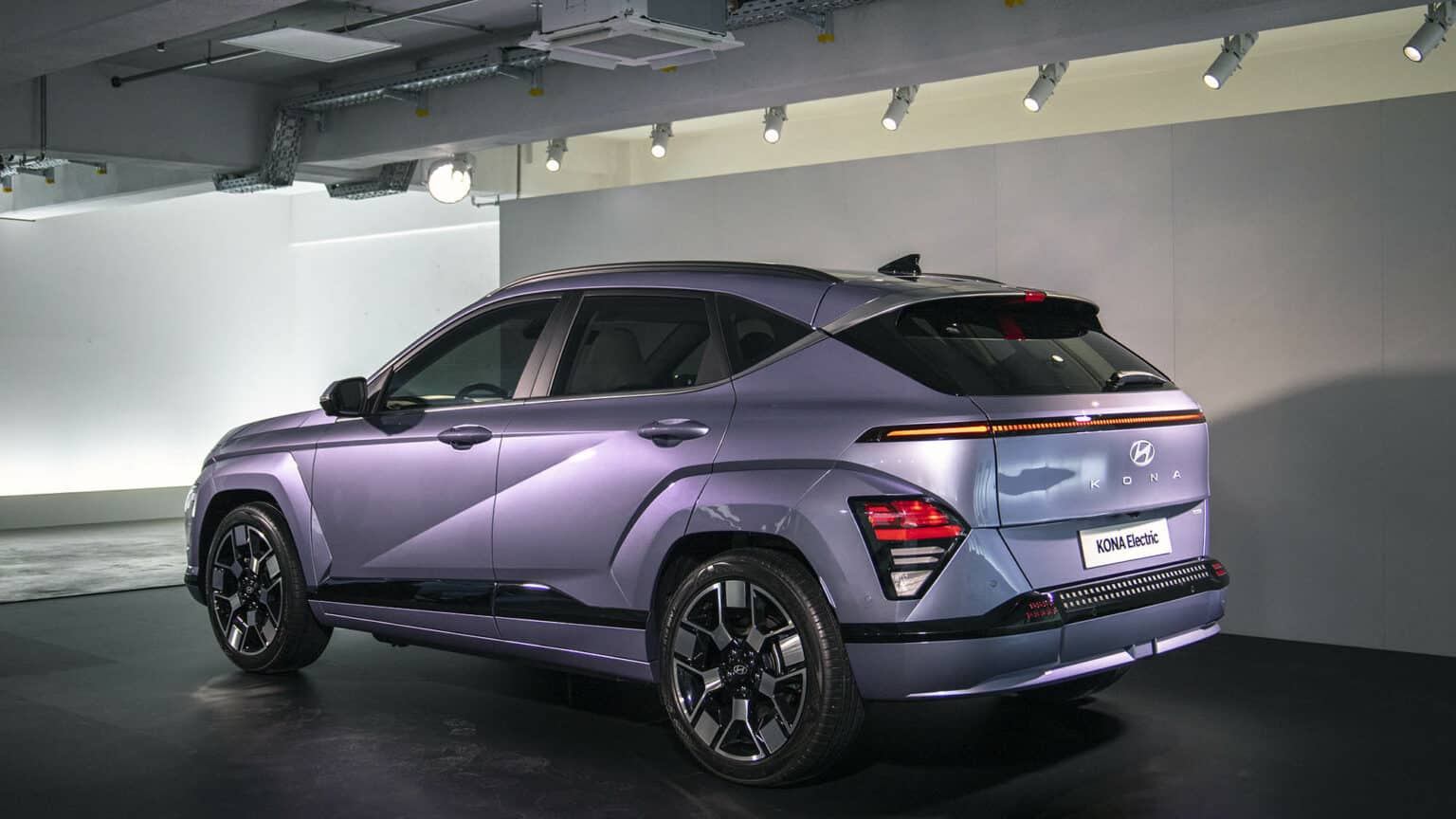
At first glance, the redesigned Kona presents itself with a bolder posture. The stance feels more composed, less “small car in a big costume.” Lines are tighter; surfaces look less like they’re trying to be aerodynamic by accident. The visual language communicates intent—sharp elements, clean proportions, and a front end that seems designed to catch attention without shouting.
In the EV context, that matters more than people think. Battery packaging and mounting points impose engineering constraints, but styling can either disguise them or harmonize with them. The Kona’s bodywork does the latter. Even from a distance, it reads as cohesive, not patched together by compromises. The result is a crossover that feels engineered for everyday scenes: parking lots, curbside deliveries, and winter commutes.
Style isn’t merely aesthetic here; it’s functional theater. Better visibility and a more driver-centered stance make the vehicle feel easier to live with. When a compact crossover looks confident, drivers tend to perceive the cabin space as more generous. That psychological effect is real—and it’s part of why the Kona’s redesign lands.

Interior: The Subtle Art of Making Space Feel Bigger
Step inside and the Kona’s designers appear to have studied a familiar pattern: people don’t just want more room—they want more calm. In compact vehicles, clutter amplifies stress. The controls, surfaces, and sightlines can either reduce mental friction or add to it.
In the redesigned Kona, the cabin aims for a more deliberate layout. Ergonomics feel considered: commonly used functions sit where the hand naturally drifts. That doesn’t sound revolutionary, but it changes the experience of long drives. Small usability improvements become cumulative comfort, like smoothing a rough page in a well-loved book.
Materials and trim choices also play a role. The cabin’s textures feel more cohesive, less like mismatched components. Even when the crossover remains compact, the interior gives an impression of continuity—fewer awkward transitions, fewer visual dead zones. And continuity, strangely enough, tends to make drivers feel more in control.
For EV shoppers, the interior carries a quiet implication: the vehicle is meant to be lived with daily, not admired from afar. The cabin’s atmosphere supports that idea. It’s focused, uncluttered, and built for routine motion—turns, accelerations, and the steady cadence of commuting.
EV Performance: Instant Response Meets Real-World Considerations
The Kona Electric’s appeal isn’t only about “faster than you expect.” It’s about responsiveness that makes mundane driving feel effortless. Electric torque arrives without the drama of gear changes. The result is a drive that feels immediate and composed, particularly in stop-and-go traffic.
But fascination deepens when you consider why the Kona Electric feels relevant rather than merely futuristic. Many EVs impress briefly, then reveal complexities: charging anxiety, range calculations that feel too brittle, and power delivery characteristics that can surprise in tricky conditions. The Kona’s task is to reduce that friction.
What stands out is the way the crossover translates battery power into predictable behavior. It’s not trying to be a track weapon. Instead, it aims for confidence: smooth throttle mapping, stable handling dynamics, and braking feel that lets drivers modulate speed with minimal guesswork.
Range discussions often dominate EV conversations. Yet in daily life, the more meaningful question is how range translates into planning. A realistic EV should support normal errands without turning every outing into a spreadsheet exercise. The redesigned Kona is positioned to serve that type of ownership—practical, not performative.
Gas-Powered Kona: Familiar Motion, Refined Character
The gas-powered Kona retains the strengths of the compact crossover formula: quick refueling, an accessible driving feel, and predictable long-distance capability. Still, the redesign suggests that Hyundai isn’t resting on nostalgia. The goal is refinement—smoother delivery, improved driving composure, and a chassis feel that feels less “lightweight” and more assured.
There’s a deeper reason people gravitate toward gas options even when they’re intrigued by EVs. Many drivers don’t want to choose between technology and convenience. They want both. The Kona with internal combustion becomes a bridge product—an option that keeps the familiar ease of fueling while introducing updated design language and modern cabin usability.
In motion, the gas Kona’s personality feels tuned for daily practicality: comfortable around town, easy to place in traffic, and not overly fussy on typical roads. It’s the kind of vehicle that disappears into your routine. That disappearance is a compliment. It means the car doesn’t demand attention; it provides it.
Handling and Ride Comfort: The “Not Too Busy” Philosophy
Compact crossovers often struggle with a paradox. They’re expected to be agile, yet they carry tires, suspension components, and weight that can magnify road harshness. The redesigned Kona attempts to thread the needle. Ride quality feels tuned toward everyday comfort, with handling that remains responsive without becoming nervous.
Steering feel and suspension behavior work together to produce a drive that feels stable rather than floaty. Over imperfect pavement, the Kona aims to control impacts instead of replaying every ripple. This matters most during the moments drivers don’t think about: the subtle lane changes, the semi-urban speed bumps, the long stretches of uneven asphalt.
Road manners aren’t only about comfort. They’re also about trust. When a crossover feels predictable, drivers relax. Relaxed drivers see hazards earlier, anticipate better, and generally make fewer micro-mistakes. The Kona’s calibration appears to support that quiet confidence.
Technology and Driver Assistance: Confidence Through Clarity
Modern safety and convenience tech can be a blessing or a distraction. The best systems don’t feel like gadgets; they feel like extensions of awareness. The redesigned Kona’s tech emphasis centers on that principle: clearer visibility, intuitive interfaces, and driver assistance that supports rather than interrupts.
In daily scenarios—merging, navigating crowded parking lots, and handling highway monotony—technology becomes less about features and more about timing. Alerts should arrive with appropriate urgency. Lane guidance should feel consistent. Displays should be readable without requiring a focused performance behind the wheel.
For EV owners, tech also contributes to the emotional side of driving. Smooth energy management displays and comprehensible driving information reduce uncertainty. The less uncertainty you carry, the more you enjoy the drive.
Charging, Ownership, and the Real Psychology of Switching
Electrification isn’t only technical; it’s psychological. Drivers worry about range, charging availability, and the feeling of being tethered to infrastructure. Even those who support EVs can hesitate. It’s not resistance to technology—it’s a desire to avoid inconvenience.
The Kona Electric’s broader appeal comes from its attempt to normalize EV life. A well-considered EV experience reduces the emotional tax of owning a new powertrain. That includes practical charging guidance, usable navigation support, and a driving feel that doesn’t exaggerate differences from gas vehicles.
Meanwhile, gas buyers aren’t simply choosing tradition. They’re often selecting peace of mind. If the Kona’s redesign offers anything, it’s a coherent sense that both powertrains serve the same lifestyle mission: get from point A to point B without drama.
Who Should Buy the Redesigned Kona?
The Kona is a compelling fit for drivers who want a compact crossover with identity—something more specific than “it’s small and it works.” The EV model suits shoppers who value quiet acceleration, enjoy energy-efficient commuting, and prefer a modern driving routine. It’s ideal for urban dwellers, suburban commutes, and anyone who wants less complexity from the moment the light turns green.
The gas model suits drivers who travel farther, rely on flexible schedules, or simply want the convenience of conventional fueling. It’s also an attractive entry point for those who like the Kona’s design and cabin improvements but aren’t ready to reshape their daily habits around charging.
In either configuration, the redesigned Kona makes a subtle promise: the car won’t overwhelm you. It will accommodate your life. That’s not flashy. It’s rare.
Final Thoughts: Fascination Comes from Practical Courage
The Hyundai Kona’s redesign doesn’t chase attention with gimmicks. It earns attention through coherence. The EV and gas variants feel like two expressions of the same underlying idea: modern compact crossovers should be usable, confident, and designed around real routines.
That’s why the common observation—that the Kona is “just another” small SUV—doesn’t capture the full story. The fascination isn’t in novelty for its own sake. It’s in the vehicle’s quiet courage to be relevant. It tries to make the transition between fuel types feel less like a leap and more like a continuation. And for many drivers, that continuity is the real luxury.