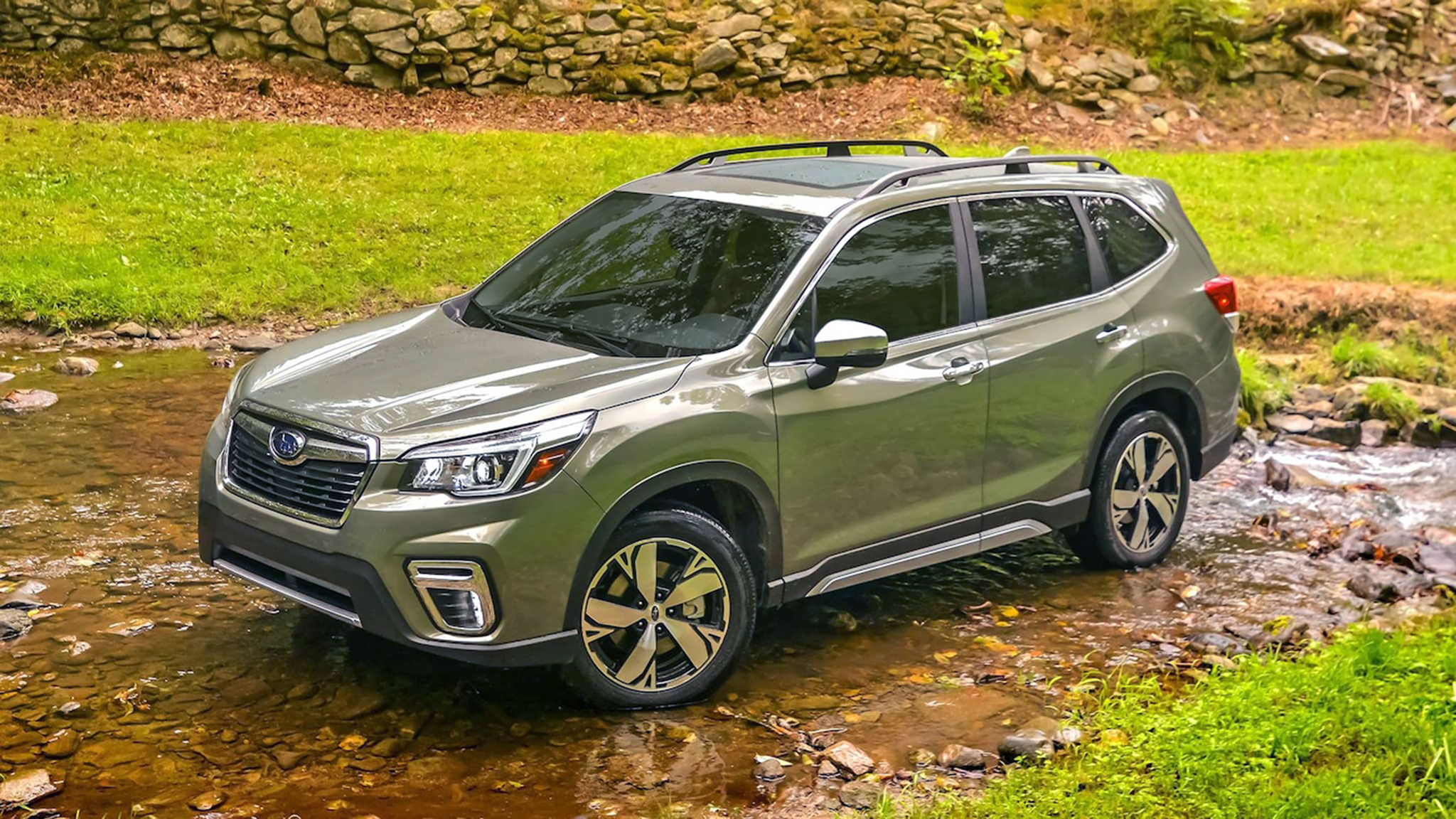
What if a compact SUV could feel both unflappable and mischievous—confident on the commute, yet oddly eager when the road starts to misbehave? The Subaru Forester has always flirted with that idea, and with its standard AWD ethos, it doesn’t so much “promise traction” as it quietly dares you to test it. Consider the Forester as a friendly mechanic hiding under a sensible coat: it looks practical, sounds reasonable, and then—when conditions get damp or temperamental—shows you it has more tricks than you expected.
Yet here’s the playful challenge: imagine you’re halfway to somewhere important when the weather turns. Not just a light drizzle. We’re talking uneven patches, oily intersections, and a few stubborn puddles that seem strategically placed. Can the Forester remain composed without turning the drive into a tense negotiation? Let’s put that question to work.
First Impressions: A Calm Exterior With a Curious Backbone
From the outside, the Forester wears its identity with restrained confidence. It’s not trying to outshine the road; it prefers to outlast it. The stance is upright and purposeful, and the proportions suggest stability—an attribute that matters more than people realize when roads become unpredictable.
In everyday life, that translates to a posture that helps you feel “located” on the road. Vision is generally clear, with a driving position that doesn’t ask for guesswork. Short bursts of steering input feel intuitive. Long drives feel composed. The suspension setup supports that kind of serenity—there’s a clear intention to iron out imperfections rather than announce them.
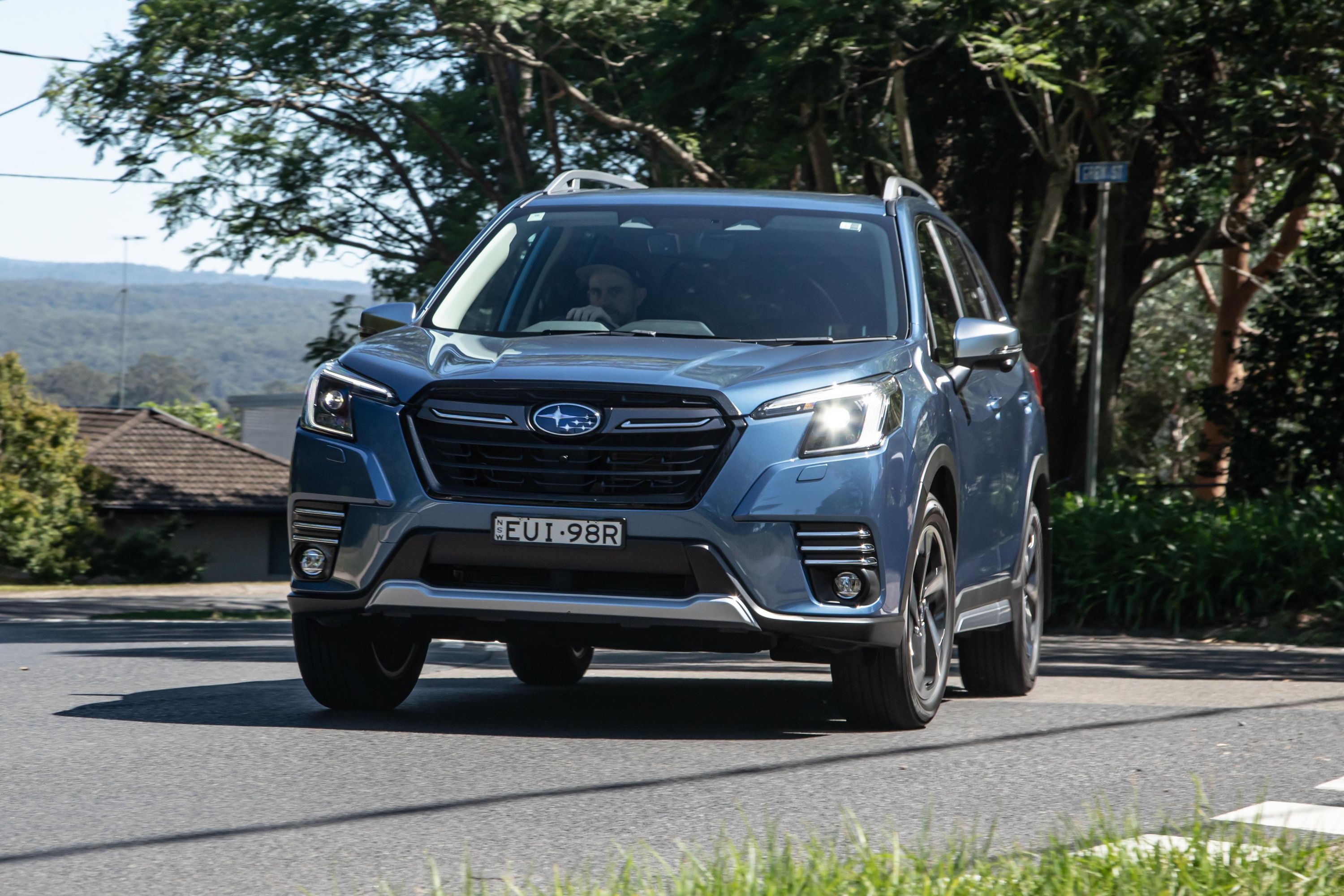
Standard AWD: The System’s Quiet Confidence
The Forester’s standard AWD isn’t a novelty feature; it’s the foundation. The magic is less about dramatic, wheel-spinning theatrics and more about how power is metered and distributed when grip is inconsistent. You might not always feel the system “activate” in a cinematic way. Instead, you feel the outcome: the car stays aligned with your intention.
On dry roads, AWD can be nearly transparent—like a helpful colleague who doesn’t interrupt. But when the surface becomes unpredictable, the Forester’s character becomes more apparent. Traction feels less like a lucky draw and more like a disciplined routine. The car helps you avoid that slightly unnerving sensation of the front or rear end trying to audition for traction during corner exits.
And here lies the earlier challenge: if your route includes a wet roundabout, a gravelly driveway edge, or painted lines that turn slick when it rains—this is where the Forester’s AWD stance stops being abstract and becomes practical.
Testing the Myth of “It’ll Be Fine”: Wet Handling and Grip Management
Let’s talk about wet-weather dynamics, because reality is rarely dry. In conditions like these, most SUVs either become politely cautious or downright vague. The Forester tends to hover in the middle ground: it remains predictable. Steering response does not devolve into nervous flickering, and the chassis keeps its composure when you change direction mid-corner.
Cornering on slick surfaces can feel like walking a tightrope with slightly forgiving ropes. The Forester’s balance helps you keep your inputs smooth rather than panicked. There’s a certain “anti-surprise” character to it—like the vehicle is tuned to resist dramatic overreaction.
Even if you accelerate earlier than you probably should (a habit that many drivers—perhaps secretly—retain), the AWD system works to reduce wheel slip. It may not feel like a sports car, but it does feel like a car that refuses to be bullied by poor surface conditions.
Powertrain and Transmission: Adequate Energy, Mature Delivery
Under the bonnet, the Forester’s engine character leans toward calm usefulness. It’s not designed to shout. It’s designed to go—reliably, steadily, and with enough willingness to handle everyday overtakes without turning them into a melodrama. Throttle response is generally straightforward, and drivability is friendly even when traffic compresses your time and patience.
The transmission logic supports that intention. It aims to match engine output to load, which helps the car feel coherent across town driving, highway stretches, and the occasional climbing detour. In the context of AWD, a smooth power delivery matters. If torque arrives abruptly, traction becomes harder to manage. The Forester’s delivery tends to be civilized—less jerk, more glide.
Steering, Braking, and Stability: The “Confidence Triangle”
Braking is where confidence is earned. The Forester’s pedal feel is usually consistent, and the vehicle’s deceleration response is easy to modulate. That matters most when you’re braking for uncertain surfaces—like an intersection where the pavement looks dry but behaves wet.
Stability under braking and cornering remains reassuring. It doesn’t feel overly eager to intervene; rather, it offers help without turning the driver into a passenger. The steering provides a readable sense of what the front end is doing, and that readability is crucial when the road texture changes abruptly—something you learn to watch for once the novelty of “light rain” becomes “this is real rain.”
In short: the Forester aims for an equilibrium of traction, braking control, and steering clarity. It’s not chasing drama. It’s pursuing predictability.
Ride Comfort and Practicality: Where the Forester Earns Its Daily Keep
A review of the Forester shouldn’t ignore comfort, because AWD is only part of the story. The other part is how the car handles the hours you spend inside it. The ride quality tends to smooth out everyday imperfections, and cabin noise is generally kept in check for a vehicle in this class.
On rougher roads—those patches of asphalt that look fine until you drive over them—the suspension behaves with restraint. Small impacts are absorbed without turning into constant agitation. Bigger irregularities still register, but the overall ride character stays composed.
Practicality is where the Forester quietly wins arguments. There’s typically enough room for passengers and everyday cargo, and the overall packaging encourages use. It’s the kind of SUV that doesn’t just transport people; it facilitates errands, weekend plans, and the spontaneous decision to take the scenic route even when the map says otherwise.
Interior Features and Tech: Intuitive Without Feeling Ironic
The Forester’s cabin layout emphasizes usability over gimmickry. Controls are typically positioned with a sense of logic, which reduces the cognitive load during driving. That matters because a driver’s attention should stay on the road—not on hunting for the right setting.
Infotainment systems, connectivity options, and driver-assistance features are designed to support real-world use. Menus shouldn’t feel like puzzles. They should feel like tools. The best version of “tech” is the one you almost forget because it never gets in your way.
If there’s a potential challenge, it’s the temptation to overthink settings while driving. The Forester encourages a “set it and focus” approach—especially when the weather makes every moment feel slightly more urgent.
Real-World Scenarios: The Forester’s Favorite Kinds of Trouble
Let’s get specific. The Forester is well-suited to the kinds of conditions that most drivers deal with more often than they admit: wet suburban roundabouts, damp tree-lined roads, gravelly shoulders after a storm, and that one driveway where the surface always looks stranger than it should.
On these routes, AWD feels like a safety net that also helps you feel less constrained. You don’t drive like you’re tiptoeing across a fragile surface. You drive with a calmer rhythm, making adjustments based on traction rather than fear.
And yes—the earlier playful question remains relevant: when the road becomes inconsistent, the Forester doesn’t demand that you become a traction expert. It works to keep the challenge within your comfort zone.
Potential Downsides: What to Watch Before You Commit
No vehicle is perfect, and the Forester’s “standard AWD tested” story includes a few caveats. Depending on configuration, fuel economy can be influenced by driving style and conditions—particularly if you lean into aggressive acceleration on lower-grip surfaces. Also, if you compare the Forester’s ride feel to sport-focused SUVs, you may notice a more comfort-oriented approach rather than a track-minded one.
Some drivers may expect more theatrical steering feedback. Others may want stronger urgency from the engine during high-demand situations. But those expectations can be adjusted once you remember the Forester’s real mission: reliable movement, manageable dynamics, and everyday confidence.
Verdict: A Forester That Treats AWD Like Responsibility
The Subaru Forester Review – Standard AWD Tested takeaway is simple: the AWD isn’t just there for marketing. It’s embedded in the way the car behaves when conditions refuse to cooperate. The Forester feels balanced, predictable, and—most importantly—less brittle when the weather and surfaces get annoying.
So, what happens when you accept the playful challenge? You drive with fewer assumptions and more trust. You discover that “normal” roads can still be complicated, and yet the Forester tends to keep you aligned with your intent—whether you’re commuting in drizzle or taking the road less traveled because curiosity beats certainty.
If you want an SUV that approaches traction as a practical duty rather than a dramatic event, the Forester makes a compelling case. And perhaps that’s its most charming trick: it doesn’t need to be loud to be capable.